

On Friday, GM University in Davanagere conducted its observance of National Science Day, anchoring the event to the state-sanctioned theme “Women in Science: Catalysing Viksit Bharat”. The proceedings, held at the GM Hallamma Auditorium, functioned as a junction for academic hierarchy and student competition. Vice-Chancellor S.R. Shankapal insisted on the necessity of cultivating research habits and innovation within the student body, while Raghuraj J., a scientist from Taralabalu Krishi Vigyan Kendra, occupied the role of chief guest.
"The nurture of scientific research and temperament remains a primary institutional goal," suggested the administration, framing Scientific Innovation as a tool for national development.
Institutional Distribution of Awards
While the Davanagere event prioritized the "Viksit Bharat" narrative, other campuses processed the day through standardized academic contests. The metrics of "creativity" were measured through various lenses:
| Institution | Key Figure | Primary Activity | Core Outcome |
|---|---|---|---|
| GM University | S.R. Shankapal | "Frames of Knowledge" | Visual expression prizes |
| PDM University | Bakhshi (Chief Guest) | Essay & Debate | Academic ranking |
| Sangam University | C.V. Raman (Honoree) | Scientia 24 | Project/Quiz logic |
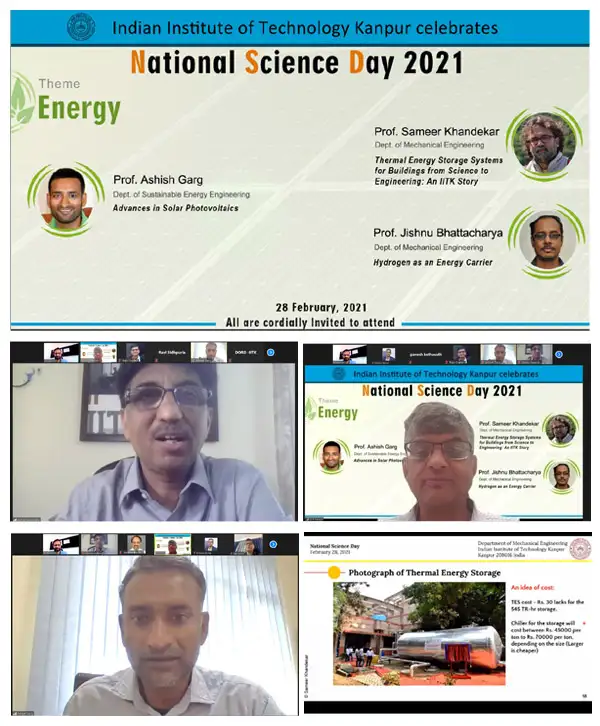
| IIT Kanpur | Prof. Sameer Khandekar | Technical Lectures | Energy storage data |
Fragmented Observances
The landscape of the day shifted between visual arts and hard engineering. At PDM University, the hierarchy of achievement was solidified with Mansi Dahiya (BDS) securing first in essay writing, followed by Aditi Gupta in Pharmaceutical Sciences. The Debate Competitions saw Jeremia of the Faculty of Humanities taking the lead, suggesting a crossover of rhetoric into the scientific calendar.
Read More: NSW Schools Allow Keffiyeh After Student Formal Ban Settlement
Sangam University hosted "Scientia 24," a two-day structure involving 100 students from various colleges.
Their format utilized live science projects and documentary screenings to honor the legacy of Dr. C.V. Raman.
The shift from lecture to "paper presentation" reflects an ongoing move toward performance-based science education.
Technical Applications vs. Symbolic Gestures
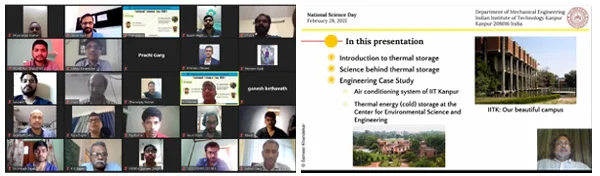
Older data from IIT Kanpur highlights a contrast to the prize-giving ceremonies of 2024. In the premier technical sphere, the focus remained on the physics of Thermal Energy Storage. Prof. Sameer Khandekar presented on phase-change materials for building design, moving the conversation from "temperament" to the cold management of peak air-conditioning loads. This reveals a gap between the rhetorical science of newer universities and the material science of established engineering hubs.
Background: The Raman Effect
National Science Day exists to mark the discovery of the Raman Effect by Sir C.V. Raman in 1928. While the original intent was to celebrate a specific breakthrough in light scattering, modern iterations have morphed into a multi-tiered State Narrative used to validate institutional growth and national industrial goals.
Read More: India's subsidy bill rises by ₹9,200 crore, affecting public spending
The 2024 cycle appears heavily tethered to the "Viksit Bharat" (Developed India) framework, positioning the student-scientist as a specific gear in the machinery of national progress.