Global Survey Reveals Critical Oxygen-Carbon Dioxide Imbalance
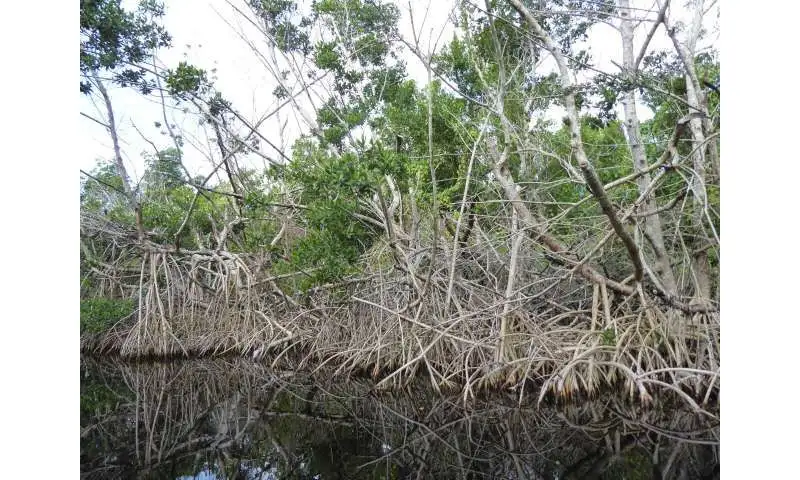
A sweeping international study has laid bare a grave reality for mangrove ecosystems: these vital coastal forests are facing an unprecedented struggle for air. Researchers from the University of Gothenburg have concurrently measured oxygen and carbon dioxide levels across 23 mangrove regions globally. The findings, published in Geophysical Research Letters, paint a stark picture of impending environmental stress, particularly a phenomenon known as 'hypercapnic hypoxia'. This condition, characterized by the dual assault of diminishing oxygen and surging carbon dioxide, is intensified by rising sea temperatures, posing a significant threat to the intricate web of life these forests support.
The concurrent measurement of oxygen and carbon dioxide dynamics at a global scale provides essential insight into the multifaceted stressors operating within mangrove habitats. This dual measurement reveals an emerging threat of intensified hypercapnic hypoxia that jeopardizes marine biodiversity, fisheries resources, and coastal livelihoods. The tidal ebb and flow, traditionally a life-giving rhythm, is becoming increasingly difficult for marine species. At high tide, incoming seawater normally replenishes oxygen and dilutes carbon dioxide. However, altered oceanic conditions are disrupting this balance.
Read More: Amazon Land Use Changes Cause Disease Clusters in Brazil
Tides Turn Against Marine Life
The study details how low tide, a period of natural carbon dioxide buildup and oxygen depletion in these shallow waters, is being exacerbated. This makes it demonstrably harder for fish and other marine organisms, many of which rely on mangroves as critical nurseries, to survive. The implications extend beyond the immediate ecological disruption, directly impacting 'coastal fisheries' and the livelihoods that depend on them. The biogeochemical cycles within these sensitive areas are being thrown into disarray, with far-reaching consequences for marine ecosystems.
A Global Alarm for Coastal Habitats
The 'groundbreaking global survey' by the University of Gothenburg offers a vital, large-scale perspective on a problem previously understood in localized terms. The research underscores that 'climate change' is not a distant specter but an active agent of environmental stress, directly impacting the health of these critical coastal habitats. The keyword 'ocean warming' emerges as a primary driver behind the observed 'oxygen depletion' and increased 'carbon dioxide' concentrations.
Read More: New Small Blue Octopus Found in Ocean Depths
Background: The Essential Role of Mangroves
Mangrove forests, found along tropical and subtropical coastlines, are uniquely adapted to intertidal zones. Their complex root systems provide critical habitat and breeding grounds for a vast array of marine and terrestrial species. Beyond their role as nurseries for fisheries, they act as natural buffers against storm surges and coastal erosion, filtering water and sequestering significant amounts of carbon. The current research highlights the vulnerability of these ecologically and economically crucial environments to escalating environmental pressures.