The return to Westeros has HBO and fans holding their breath. After the colossal, and at times controversial, reign of Game of Thrones and the more recent, fiery saga of House of the Dragon, a new chapter has arrived: A Knight of the Seven Kingdoms. Promising a return to a simpler time, roughly a century before the events of Game of Thrones, this series focuses on the earnest adventures of Ser Duncan the Tall, a hedge knight, and his young squire, Egg. But as the dust settles on its initial release, a stark division has emerged in the critical reception. While some hail it as a brilliant revival of the franchise, others decry it as a shallow imitation, raising the question: has HBO struck gold again, or is this just another expensive gamble that missed the mark? The stakes are high, not just for HBO's bottom line, but for the very legacy of one of television's most beloved, and sometimes divisive, fantasy worlds.
The Ghosts of Thrones Past: A Legacy of Giants and Dragons
To understand the buzz – and the backlash – surrounding A Knight of the Seven Kingdoms, we must first look at its lineage. Game of Thrones (GoT), which captivated audiences from 2011 to 2019, was a phenomenon. Based on George R.R. Martin's A Song of Ice and Fire novels, it was lauded for its complex characters, intricate political maneuvering, and willingness to push boundaries. However, its later seasons, particularly the final one, were met with widespread criticism for rushed plotlines and character development.
Read More: Katie Holmes Says Goodbye to "Dawson's Creek" Co-Star James Van Der Beek
Then came House of the Dragon (HotD), a prequel exploring the brutal civil war within House Targaryen. While generally well-received for its return to form in terms of production quality and storytelling, it still carried the weight of GoT's legacy, a constant comparison point.
A Knight of the Seven Kingdoms is different. It's adapted from Martin's Tales of Dunk and Egg novellas, which are significantly more character-driven and less focused on grand-scale warfare and dragon battles. This shift in tone and scope is precisely where the current debate is centered.
Game of Thrones (2011-2019): Hugely popular, complex plot, massive battles, dragons, political intrigue. Ended controversially.
House of the Dragon (2022-Present): Targaryen civil war, returned to critical favor, focused on dynastic conflict.
A Knight of the Seven Kingdoms: Set ~100 years before GoT, focuses on Ser Duncan the Tall and Egg, intended to be more character-driven.
The Divide: A Triumph or a Travesty?
The critical reception of A Knight of the Seven Kingdoms has been a tale of two cities, or rather, two kingdoms. Some critics have been effusive in their praise, calling it a delightful and much-needed breath of fresh air for the franchise. Others, however, have found it lacking, even resorting to harsh language to describe its perceived shortcomings.
Read More: Arc Raiders Game Is Very Popular After Launch
| Critical Stance | Key Descriptors | Points of Praise | Points of Criticism |
|---|---|---|---|
| Positive | "Total delight," "nailed-on winner" | Strong protagonist (Dunk), good storytelling, humor | Focus on character over spectacle (seen as a positive) |
| Negative | "Total train wreck," "hardly worth mentioning" | None explicitly cited beyond franchise recognition | Skin-deep supporting characters, gratuitous shock value |
"A Knight of the Seven Kingdoms is a nailed-on winner and HBO knows it." – BBC Culture
"The surrounding supporting characters are hardly worth mentioning and all are only skin-deep…" – USA Today
This stark contrast begs several questions:
Are the critics who praise it simply relieved to have any new GoT content, or have they genuinely found something special?
What constitutes "good storytelling" in this universe, and why does A Knight of the Seven Kingdoms apparently fail for some while succeeding for others?
Is the emphasis on character over dragons and large-scale battles a fatal flaw, or a deliberate and successful artistic choice?
Delving Deeper: The Tale of Dunk and Egg
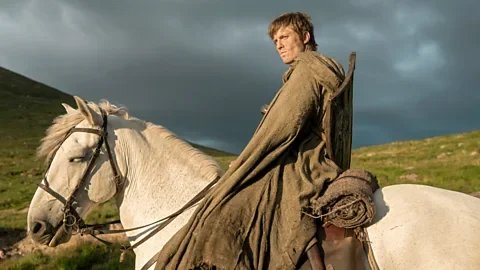
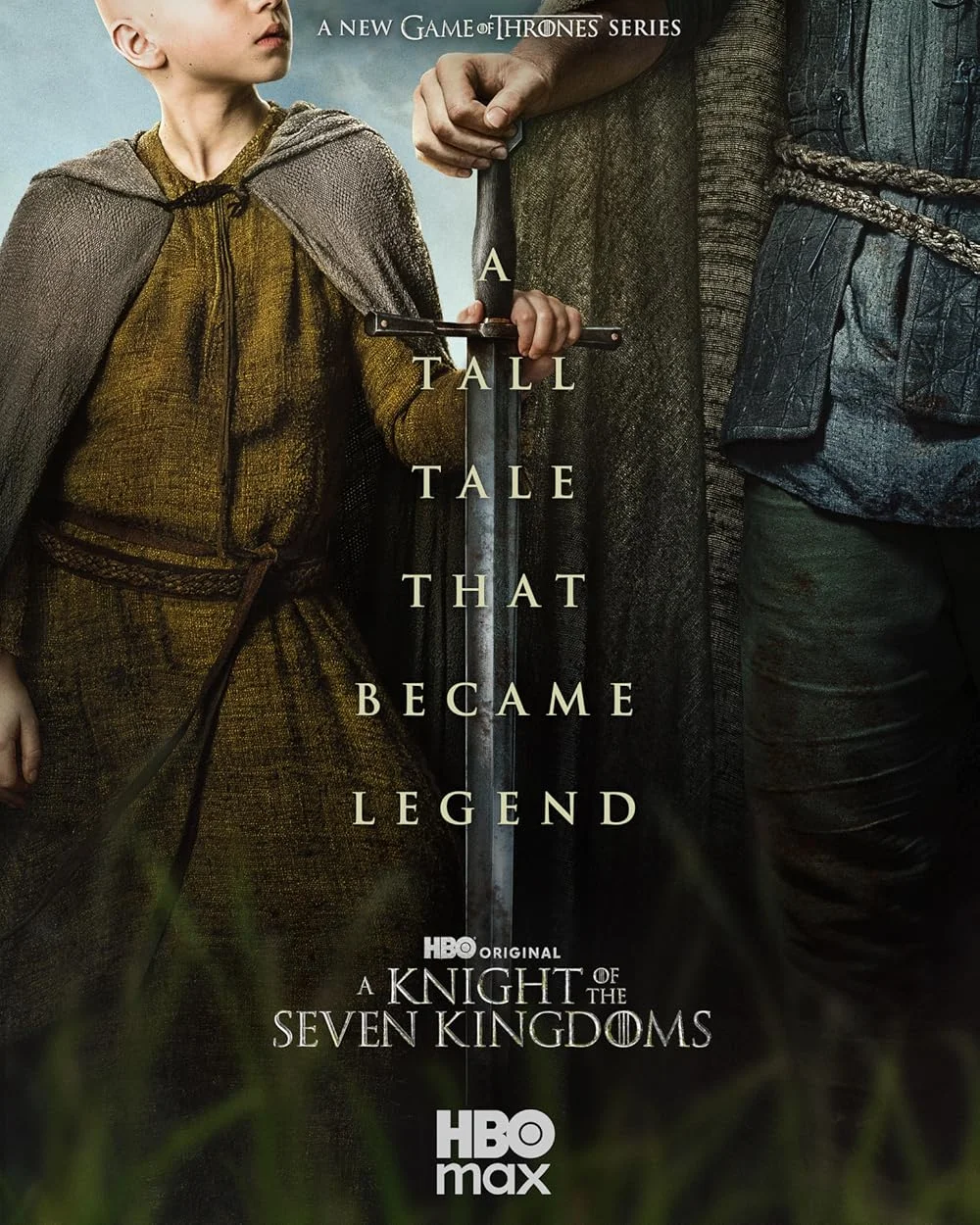
At its core, A Knight of the Seven Kingdoms is about Ser Duncan the Tall (played by Peter Claffey), a man of imposing height who becomes a hedge knight after his mentor, Ser Arlan, dies. He soon takes on a young, unassuming boy named Egg (played by Dexter Sol Ansell) as his squire, a decision that sets them on a path of adventure. The series is set in a time when dragons were still a recent memory and the Targaryen dynasty sat upon the Iron Throne.
Read More: George R.R. Martin Likes New Show More Than Old One
"The Hedge Knight takes place about a century before Game of Thrones, and follows a former squire, Dunk (Peter Claffey), as he attempts to enter a jousting tournament shortly after the death of the aging, mildly disreputable knight who trained him." – Polygon
This setup is a far cry from the sprawling epic of GoT or the intense political drama of HotD. It's a more intimate, personal journey.
Focus on Individuality: The story centers on Dunk's efforts to make a name for himself, his moral compass, and his burgeoning relationship with Egg.
A Gentler Era? While set in the same world, this era is described as one where the memory of dragons is still potent, suggesting a different political and social landscape than the later periods.
The Novella Connection: The series draws directly from George R.R. Martin's The Tales of Dunk and Egg, which are known for their more character-focused narratives.
Read More: High on Life 2 Game Is Out, People Talk About Its Funny Jokes and New Skateboard Moves
But is this focus enough to sustain a show for an entire season, especially for audiences accustomed to the high-stakes drama of its predecessors?
The Spectacle vs. The Substance Debate
One of the most prominent points of contention is the perceived lack of "epic" elements. Game of Thrones was defined by its dragons, its armies clashing, and its kingdom-spanning conflicts. House of the Dragon continued this tradition. A Knight of the Seven Kingdoms, however, is inherently more grounded.
"Game of Thrones fans who keep up with the series specifically for the epic elements — dragons, dark magic, kingdom-spanning conflicts, and army-on-army clashes — may not find enough in A Knight of the Seven Kingdoms to hook them in." – Polygon
This raises a crucial question about audience expectation:
Is the franchise defined by its spectacle, or by its world-building and character depth?
Can a show succeed in this universe by de-emphasizing dragons and battles in favor of personal journeys?
Read More: New TV Show 'Heated Rivalry' Becomes Popular Hit
Some critics seem to believe the answer is a resounding "no." The USA Today review points to a reliance on "disgust and shock over… storytelling or interesting characters," citing specific examples of gratuitous content. This suggests a narrative that, in their view, fails to earn its moments of darkness or levity.
Conversely, the positive reviews highlight Dunk as a "major win" and the series as a "total delight." This implies that the character work and narrative, even without dragons, are compelling enough. It's a critical dichotomy that leaves viewers wondering what they will truly experience.
The Production Puzzle: HBO's Track Record
HBO has a reputation for delivering high-quality, prestige television. With the Game of Thrones universe, they've invested heavily in maintaining that standard. A Knight of the Seven Kingdoms is no exception in terms of production values, with a reported six-episode run.
Read More: Elizabeth Hurley and Billy Ray Cyrus Share Their Story
"HBO is expanding the saga once again with a brand-new chapter: A Knight of the Seven Kingdoms." – Rotten Tomatoes
But the question remains: can a franchise built on massive success stumble with its follow-ups? The varying critical takes suggest that perhaps the formula itself is under scrutiny.
Episode Count: The limited six-episode run might indicate a more focused story, but also raises concerns about pacing – can it deliver a satisfying arc in such a short time?
Creative Vision: Is the show leaning too heavily on the Game of Thrones brand name, or is it charting its own course? The differing opinions suggest there's ambiguity here.
Audience Fragmentation: As more spin-offs are produced, do they risk diluting the original magic or catering to increasingly niche fan desires?
"With each subsequent spinoff, reboot and revival Hollywood churns out, that becomes more and more clear." – USA Today, referring to the importance of a good story over a familiar label.
Read More: Star Trek's Captain Kirk's Phaser Use Discussed
This statement is a powerful indictment, implying that some recent franchise entries are coasting on name recognition alone. A Knight of the Seven Kingdoms must therefore prove it has substance beyond its parentage.
Conclusion: A Knight's True Worth is Yet to Be Fully Tested
The jury, it seems, is still out on A Knight of the Seven Kingdoms. While some critics have been won over by its charm and character-driven narrative, others have found it lacking in substance and originality. The starkly contrasting reviews highlight a fundamental question: what do audiences truly want from the Game of Thrones universe now? Is it the epic scale and fantastical elements that made GoT a global phenomenon, or is there an appetite for smaller, more personal stories within this rich world?
Potential for Franchise Renewal: If the positive reviews hold true and audiences embrace it, A Knight of the Seven Kingdoms could signal a new, more character-focused direction for HBO's Westeros endeavors.
Risk of Brand Dilution: Conversely, if the negative sentiment proves widespread, it could suggest that audiences are growing tired of franchise extensions that don't capture the lightning-in-a-bottle magic of the original.
The Importance of Story: The recurring theme is that a strong narrative and well-developed characters are paramount. A familiar name and genre are not enough.
Read More: Richard Osman Shares How Health Issues Shape His Work
Only time, and viewer engagement, will tell if Ser Duncan the Tall and Egg are indeed destined for greatness, or if this latest foray into Westeros will be remembered as a noble attempt that ultimately fell short. The hope for HBO is that this new knight proves to be more than just a title, but a genuine triumph that rekindles the fire of the original.
Sources:
USAToday - A Knight of the Seven Kingdoms Is HBO's Best 'Game of Thrones' in Years. It's Only Six Episodes. (Published Jan 13, 2026)
Polygon - Knight of the Seven Kingdoms is Game of Thrones' best path forward (Published Jan 13, 2026)
HowToGeek - A Knight of the Seven Kingdoms: Everything You Need to Know (Published Oct 19, 2025)
BBC - A Knight of the Seven Kingdoms review: The new Game of Thrones prequel is 'very funny' and a 'total delight' (Published Jan 13, 2026)
Rotten Tomatoes - A Knight of the Seven Kingdoms: Premiere Date, Cast, Trailers & More (Published Oct 17, 2025)
TheWrap - ‘A Knight of the Seven Kingdoms’ Release Guide: When Do New Episodes Come Out? (Published Jan 18, 2026)
IMDb - A Knight of the Seven Kingdoms (TV Series 2026– ) (Seen on AOL)
Wikipedia - A Knight of the Seven Kingdoms (TV series)) (Seen on AOL)