

A Minister's Recurring Appeal for Technological Advancement
Union Minister G. Kishan Reddy, in a series of public pronouncements and official statements, has repeatedly exhorted various professional and academic bodies to embrace 'technology', 'innovation', and 'sustainability'. This emphasis spans disparate fields, from footwear design and geoscience to defence manufacturing and the broader youth employment landscape. The core message appears to be a consistent push for these sectors to adopt advanced methods to bolster India's 'global competitiveness' and achieve 'economic strength'.

The repeated call for the adoption of new technologies and innovation across various sectors highlights a government-driven narrative focused on modernizing India's industrial and scientific capabilities. This theme, articulated by Minister Reddy, underscores a perceived need to reduce import dependencies, foster self-reliance, and position India as a significant player in global markets.
Threads of Technological Imperative
From Footwear to Minerals: A Broad Mandate
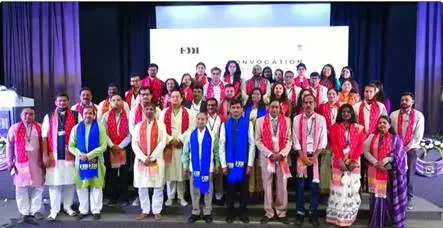
Speaking at the Footwear Design and Development Institute (FDDI) convocation in February 2026, Reddy urged graduates to integrate 'technology, sustainability, and design innovation' to enhance India's 'global competitiveness'. He referenced India's progress in manufacturing and skill development, acknowledging the footwear and leather sector's contribution to employment and exports.
Read More: Australia Gambling Ads: New Rules Start May 12, Affecting TV and Online
In a similar vein, addressing geoscientists in June 2025, the minister emphasized the critical role of 'AI-powered, clean, and efficient exploration methods' for reducing import reliance on key minerals like lithium and cobalt. He cited national initiatives such as the '₹10,300 crore India AI Mission' and the '₹6,000 crore National Quantum Mission' as drivers of this innovation.

Later, in November 2025, as Minister for Coal and Mines, Reddy again called for 'tech integration in geoscience, mineral exploration, and global collaboration'. This was during a symposium celebrating the '175 Years of GSI'. He underscored the need for a 'mineral ecosystem that is stable, self-reliant, technologically advanced and globally competitive'.
Read More: Chrome mimeHandler API lets extensions handle file types
Fostering a Future-Ready Workforce and Economy
Youth, Defence, and Entrepreneurship
Beyond specific technical fields, Reddy has also linked innovation and technological adoption to broader national aspirations. In January 2026, addressing a 'Rozgar Mela' (job fair), he highlighted that '20,000 of the country’s 1.5 lakh private startups are advancing defence technology', with several Hyderabad-developed innovations being deployed. This was presented as a contrast to past labour disputes, framing the current government as one that provides jobs 'without corruption or bribery'.
His official website also documents his involvement in inaugurating an 'India’s first commercial-scale tropical Recirculating Aquaculture System (RAS)-based Rainbow Trout farm and research institute' in Telangana, signaling an interest in the modernization of agricultural and aquaculture practices.
In February 2025, at the BioAsia event, Reddy pointed to Hyderabad's growing stature as a 'global life sciences hub', citing investments by companies like 'Amgen' and government initiatives such as the 'Production-Linked Incentive (PLI) scheme for pharma' as indicators of India's potential in healthcare manufacturing.
Read More: FDA Drops Talc Asbestos Test Rule, Sparking Health Group Anger
Contextualizing the Calls for Change
The recurring themes in G. Kishan Reddy's public statements suggest a consistent government focus on modernizing India's economic and scientific landscape. The repeated emphasis on 'technology', 'innovation', and 'sustainability' across diverse sectors – from traditional industries like footwear and mining to emerging fields like artificial intelligence and biotechnology – points towards a strategic imperative. This narrative is often framed within the context of national self-reliance, reduced import dependency, and the pursuit of global economic leadership. The minister's pronouncements align with broader government initiatives aimed at fostering a more technologically adept and competitive India, positioning the country to leverage advancements for both domestic growth and international standing.






