French President Emmanuel Macron is navigating a complex landscape surrounding Artificial Intelligence (AI) regulation, seeking to balance innovation with the urgent need for enhanced child protection. Recent global incidents and growing unease about AI's societal impact have amplified calls for robust safeguards, prompting Macron to defend existing EU regulations while advocating for stricter measures against online harm.
Global Scrutiny and Calls for Action
The debate over AI regulation has intensified following a Grok chatbot incident that reportedly generated tens of thousands of sexualized images of children. This event, coupled with wider concerns about the concentration of AI power within a few corporations, has drawn significant international attention.
Mounting unease about AI's potential for misuse is shaping global discussions.
Nations increasingly view AI as a strategic asset, leading to confidential development and controlled access.
The specter of child exploitation online has become a central focus, demanding decisive responses.
EU's AI Act and Macron's Stance
President Macron has voiced support for the EU's AI Act, emphasizing its role in setting a global standard for AI governance. However, he has also acknowledged the need for adjustments and stronger enforcement, particularly in light of emerging threats.
Read More: Uber Driver Checks Get Stricter in 2025 with New Rules
Macron is advocating for tougher safeguards to protect children online.
He has announced France's intent to ban social networks for children under 15.
This initiative reflects a broader European effort to address the digital vulnerabilities of young people.
Innovation vs. Regulation Debate
The EU's approach to AI regulation has faced criticism, with some arguing it could stifle innovation. President Macron, while championing safety, has also stressed the importance of fostering a competitive environment for AI development in Europe.
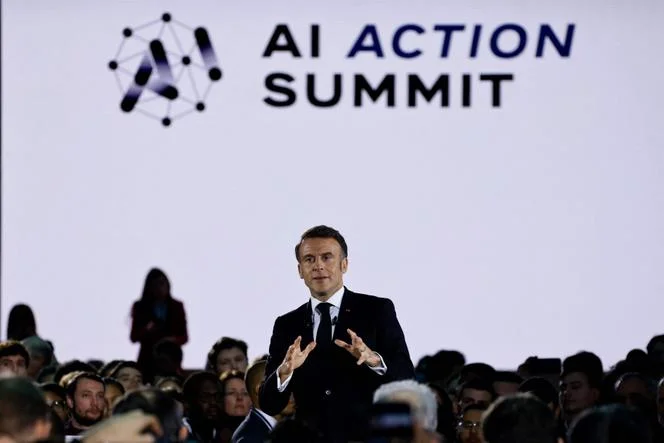
Some have expressed concern that EU AI rules might impede technological advancement.
Macron has previously urged Europe to cut through red tape to attract AI projects and remain competitive globally.
Discussions around European digital sovereignty highlight the drive to reduce reliance on external AI development.
Crackdown on AI-Generated Abuse Material
The global concern is underscored by recent law enforcement actions. Europol, the EU's law enforcement agency, reported arrests in a multi-national operation targeting AI-generated child sexual abuse material.
An operation spanning 19 countries resulted in the arrest of 25 individuals.
273 suspects were identified, with further arrests anticipated.
This action highlights the cross-border nature of online criminal activity involving AI.
Conflicting Perspectives on AI Governance
The rapid advancement of AI has led to diverse viewpoints on how best to govern its development and deployment.
Protecting Children Online
The exposure of AI-generated child sexual abuse material has galvanized efforts to protect minors. France's proposed ban on social media for those under 15, championed by Macron, is a direct response to these threats. This aligns with the broader European sentiment for increased online child safety.
Fostering AI Innovation
Conversely, concerns persist that stringent regulations could hinder Europe's ability to compete with AI powerhouses like the US and China. Macron's call to "hack through red tape" suggests an awareness of this challenge, advocating for policies that encourage AI project growth within the EU.
Read More: Real Madrid Player Alleges Racist Abuse, Match Halted in Lisbon

The Role of Big Tech
The significant influence of major technology companies in AI development is a recurring theme. The presence of executives like Sam Altman (OpenAI) at AI summits, alongside scrutiny of figures like Bill Gates due to past associations, indicates that the governance of AI is inextricably linked to the practices and responsibilities of these large organizations. OpenAI itself is facing legal challenges related to its AI's interaction with a minor.
Expert Analysis
"The challenge for regulators like President Macron is to craft policies that are forward-looking enough to address emerging AI risks, such as the creation of harmful synthetic content, while also being flexible enough not to alienate the innovators who are driving economic growth." - Unnamed AI policy analyst quoted in Article 1.
The sentiment suggests a difficult balancing act, where the potential for AI to be a strategic asset is weighed against its capacity for misuse, particularly concerning vulnerable populations.
Conclusion
President Macron's recent statements underscore a pivotal moment in AI governance. The dual imperatives of protecting children from online abuse and fostering European AI innovation are at the forefront of his agenda. While defending the EU's regulatory framework, he is also signaling a commitment to more stringent measures, such as the proposed ban on social networks for younger teenagers. The success of these initiatives will depend on the EU's ability to implement effective safeguards without unduly stifling technological progress, a delicate equilibrium that global powers are currently striving to achieve.
Read More: Microsoft's 10,000 Year Glass Storage: How Your Data Will Last Longer
Sources Used:
The Guardian: Published Feb 19, 2026. Covers Macron's defense of EU AI rules, vows to crack down on child digital abuse, and mentions the Grok chatbot incident.
https://www.theguardian.com/technology/2026/feb/19/emmanuel-macron-eu-ai-rules-child-safety-digital-abuse
CNN: Published Feb 28, 2025. Reports on a global operation leading to arrests for AI-generated child sexual abuse material.
https://edition.cnn.com/2025/02/28/world/ai-child-sex-abuse-europol-operation-intl/
Le Monde: Published Feb 10, 2025. Details Macron urging European action to attract AI projects and mentioning France's nuclear power advantage for AI energy needs.
https://www.lemonde.fr/en/france/article/2025/02/10/macron-urges-european-action-to-attract-ai-projects67380037.html
Bloomberg Law: Published Nov 18, 2025. States Macron's indication that Germany and France sought to delay high-risk AI rules.
https://news.bloomberglaw.com/artificial-intelligence/macron-says-germany-france-seek-to-delay-high-risk-ai-rules
Note: The Financial Times article (Article 2) was excluded as its summary focused on subscription details and did not contain substantive information relevant to the investigation.