Flathead County is pushing for new rules to curb the amount of water in biosolids accepted at its landfill. This move has raised concerns among the nearby cities of Kalispell and Columbia Falls, which rely on the landfill for disposal and state the proposed regulations could present significant logistical and financial hurdles.
Columbia Falls, in particular, deposits roughly 950 tons of biosolids annually at the county facility. Officials there noted that the current acceptance is contingent on these biosolids passing a paint filter test, a measure of their water content. The core of the county's concern appears to be the volume of water associated with these biosolids reaching the landfill.
Municipalities face potential cost increases
The proposed restrictions by Flathead County could necessitate costly upgrades for surrounding communities. Columbia Falls City Manager Eric Hanks indicated that the city currently lacks the necessary budget to acquire a new system for dewatering biosolids. This suggests that meeting the county's new water content standards may require substantial investment from municipalities, potentially impacting local budgets and service fees.
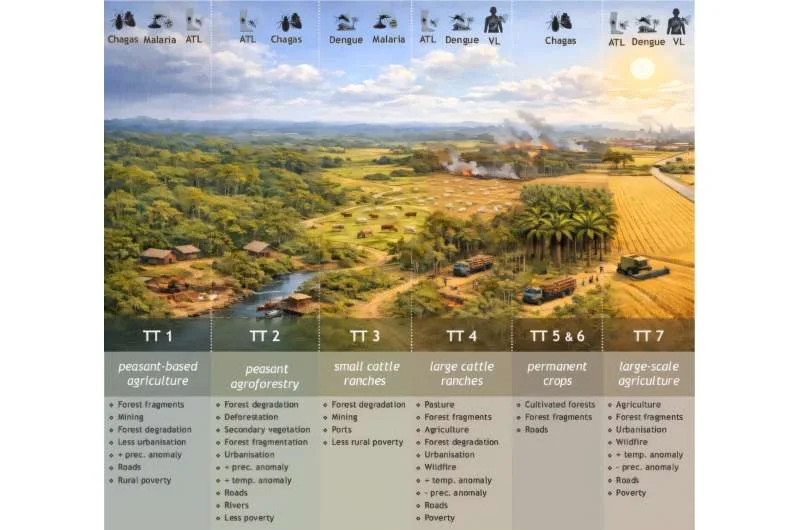
Read More: Amazon Land Use Changes Cause Disease Clusters in Brazil
Landfill expansion signals long-term capacity focus
Meanwhile, Flathead County's Solid Waste District is also pursuing a substantial 121-acre expansion of its Kalispell landfill. This proposal, currently under review by Montana’s Department of Environmental Quality (DEQ), aims to secure the region's waste management capabilities for the foreseeable future, particularly in light of rapid growth in northwest Montana. The expansion is intended to accommodate various waste streams, including municipal solid waste, construction debris, and certain mining byproducts, while also continuing recycling operations. Officials anticipate this will reduce reliance on exporting waste and extend the life of existing landfill cells.
Background
The Flathead County Solid Waste District outlines a mission to provide "environmentally sound and cost-effective refuse collection, disposal and recycling opportunities." Their operations are framed as integral to the county's economic and environmental infrastructure, with an emphasis on long-term planning and fiscal integrity to ensure decades of capacity. The district also offers services like 'Household Hazardous Waste Collection Day' and a 'Junk Vehicle Recycling Program'.