


A rapid electrical zap, called Fluorine-Assisted Flash (FAF) Joule heating, appears capable of turning discarded glass and coal bits, laden with silicon, into silicon carbide (SiC) nanowires. This happens within moments, according to new studies. The process, described as ‘flash heating,’ has shown promise for creating these nanowires, which are stronger and more resilient than silicon carbide powders when used in composite materials, potentially impacting electronics and structural reinforcement.
A SWIFT TRANSFORMATION
The FAF method uses a quick surge of electricity to superheat a mix of waste materials. Key to this process are fluorine additives. These trigger catalysts, like iron oxides already present in the waste glass, to act as growth points for the nanowires. This leads to the selective formation of one-dimensional nanowires. The described yields have reached an impressive 96%.
This method has also been extended to create other kinds of nanowires used in high-temperature ceramics, such as boron carbide, titanium carbide, and niobium carbide.
Read More: Antibiotics Change Gut Bacteria Long After Use Ends
THE MECHANICS AND POTENTIAL
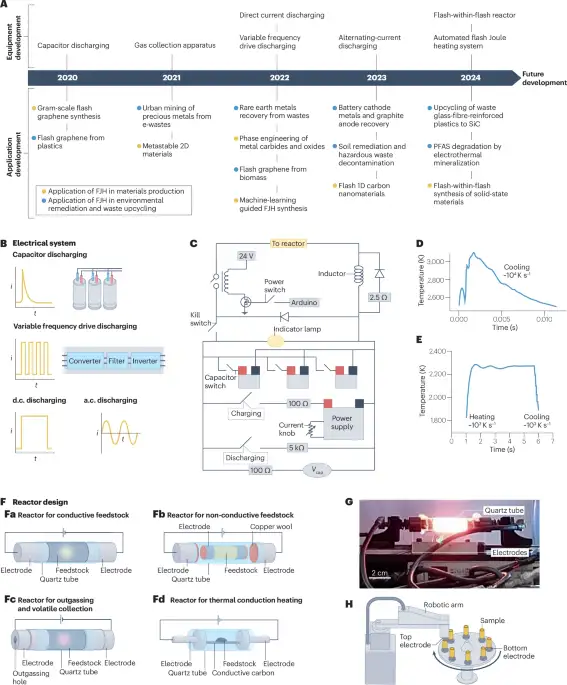
The FAF Joule heating strategy is presented as versatile. It hinges on the rapid flash Joule heating technique. The approach detailed converts silica-rich waste materials, like old glass, into SiC nanowires. This transformation occurs in a matter of seconds.
The research, published in 'Matter', suggests a way to engineer SiC with specific shapes for use in electronics and as strengthening agents in other materials. Previously, achieving this level of control and scale for SiC nanomaterials was both expensive and time-consuming.
CONTEXT AND RELATED WORK
Flash Joule heating, as a broader technique, has been explored for various applications. This includes synthesizing other carbon-based materials, like graphene, and even for environmental cleanup. Earlier reports, dating back to early 2025, have touched upon the broader applications of flash Joule heating for synthesis, upcycling, and remediation. The ability to perform gram-scale synthesis of graphene through this method has also been noted.
Read More: Ex-NFL Player Darron Lee Used AI Chatbot for Murder Investigation Help in Tennessee