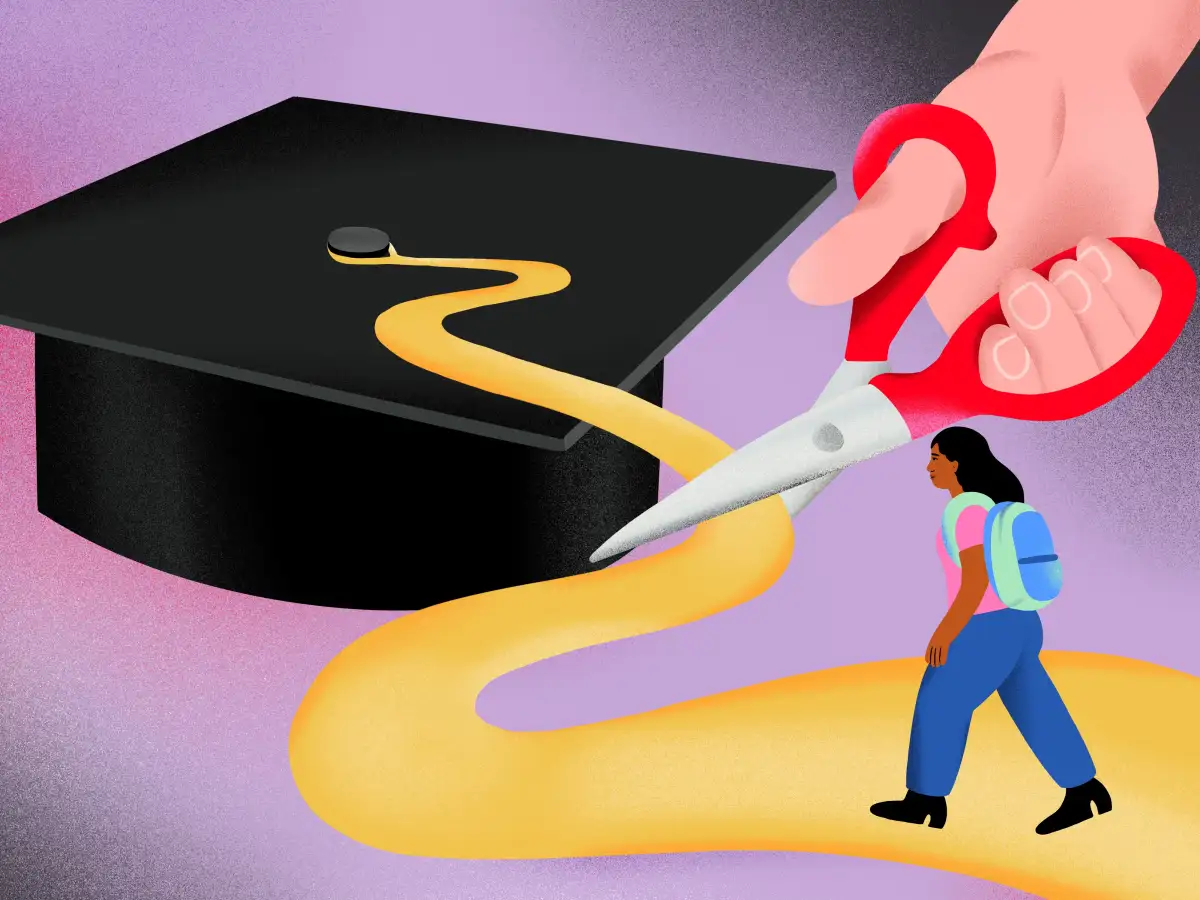
Washington D.C. – A significant proposal within the current administration’s fiscal year 2026 budget outline seeks to redefine federal student aid, tying access to funding for certain college programs to their graduates' earning potential. This initiative, championed by the Trump team, signals a move away from traditional program offerings towards a model emphasizing a tangible return on investment in higher education. The core of the proposed change involves potentially cutting federal loans from college programs that do not consistently lead to high-paying employment outcomes for their alumni. This includes a wide range of disciplines, from vocational certifications like cosmetology to broader fields such as agricultural studies, telecommunications, and even some teaching programs.
Targeted Programs and Rationale
The Department of Education has put forth a new rule that would allow for the cessation of federal student loan access to college programs where graduates’ post-graduation earnings fall below a certain threshold. This is framed as a mechanism to ensure federal dollars are directed toward educational pathways that demonstrably contribute to the workforce and individual financial stability.
Read More: Google Learn About AI Tool Released April 2026 For Simple Learning

Specific programs mentioned as potentially at risk include cosmetology, fine arts, music, agricultural studies, and certain telecommunications and teaching programs.
The administration has cited 'woke ideology' and 'radical gender and climate ideologies' as reasons for targeting specific programs, suggesting a desire to redirect funding away from what they perceive as non-essential or politically charged academic pursuits.
There is an assertion that some institutions have used federal funding to support 'radical leftist ideology' or 'ideologies instead of students and their success.'
Potential Impacts and Criticisms
This proposed overhaul has raised considerable concern among education advocates and financial aid administrators.

Disproportionate impact on vulnerable students: Critics argue that these cuts could disproportionately affect low-income students and those pursuing fields crucial for public service, such as teaching and social work. Programs like TRIO and Upward Bound, which support disadvantaged students in accessing and succeeding in higher education, are explicitly targeted for elimination in budget proposals.
Broader economic implications: Concerns have been voiced that devaluing certain fields of study could lead to a shortage of skilled workers in essential sectors, ultimately hindering national economic competitiveness. The Institute for College Access & Success has stated that such cuts deny opportunities to prospective students and impact the need for educated individuals in fields ranging from teaching to nursing and engineering.
Uncertainty for institutions: Financial aid administrators are anticipating widespread uncertainty regarding next year's financial aid offers, with some stating that more than half of anticipated offers are now in question due to federal policy shifts and funding cuts. The National Association of Student Financial Aid Administrators (NASFAA) has noted a pervasive sense of "uncertainty reigns" among institutions.
Context and Previous Actions
This proposed shift in federal aid policy is not entirely without precedent. In previous budget proposals, the Trump administration has sought to reduce or eliminate funding for various higher education programs.
Past targets have included programs like the Fund for the Improvement of Postsecondary Education (FIPSE), the Graduate Assistance in Areas of National Need, Supplemental Educational Opportunity Grants (SEOG), and the Child Care Access Means Parents in School (CCAMPIS) program.
There have also been instances of grants being canceled or rejected, affecting numerous students, and reports of disruptions in financial aid processing due to staffing issues within the Department of Education’s Office of Federal Student Aid.
The administration's rationale for these proposed cuts often centers on fiscal responsibility and a redirection of resources toward areas perceived as more directly beneficial to the economy and individual career prospects. However, these actions are met with significant pushback from those who argue for the intrinsic value of a diverse range of academic disciplines and the importance of equitable access to education for all students, regardless of their chosen field of study.