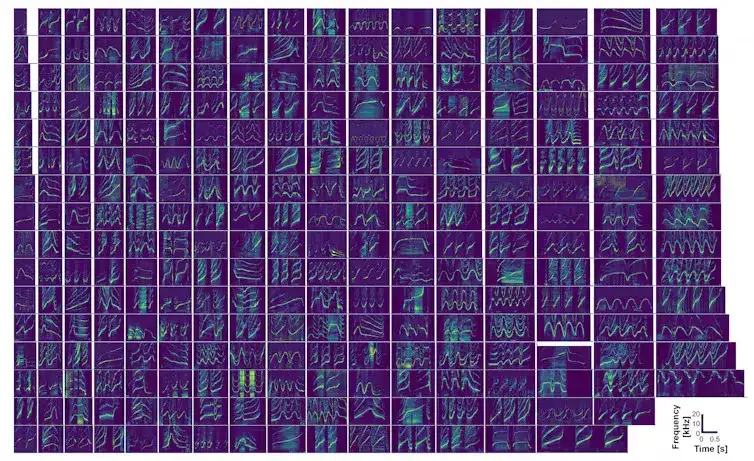
SARASOTA, FL – For decades, the distinctive clicks and whistles of dolphins have been assumed to be akin to personal names. Now, a protracted investigation into a local pod has thrown that notion into question, revealing a more complex vocal repertoire. Researchers, drawing from a vast dataset of dolphin sounds collected over many years in the waters off Sarasota, Florida, have identified shared, non-signature whistle types that deviate from the simple ‘name-calling’ hypothesis. These discoveries, documented through extensive field observations and playback experiments utilizing drone footage, suggest a richer, more nuanced system of communication than previously understood.
Shifting Understandings of Dolphin Talk
The Sarasota Dolphin Research Program, a long-running endeavor building on earlier work from the 1960s, has provided the bedrock for this re-evaluation. Studies, including those by senior research specialist Laela Sayigh of the Woods Hole Oceanographic Institution, have focused on a resident community of bottlenose dolphins. The findings challenge the idea that each dolphin whistle is an isolated identifier.
Read More: Animal Grief Research Lacking, Science Focuses Elsewhere
"Although we found that dolphins did not use voice cues, our discovery of shared non-signature whistle types has led to an entirely new research direction."
The research indicates that while dolphins do produce individually distinctive 'signature whistles,' particularly when briefly separated from their group—a behavior observed in both wild and captive animals—this is not the entirety of their communicative toolkit. The identification of shared whistle types points to functions beyond mere identification.
Methods and Databases
Playback experiments form a crucial part of the ongoing inquiry. By replaying specific whistle types and meticulously filming dolphin responses with drones, researchers aim to decode the purpose and context of these sounds. The 'Sarasota Dolphin Whistle Database' has been instrumental, serving as a comprehensive resource for analyzing communication patterns.
The origins of dolphin communication study in the area trace back to scientists like John Lilly, who conducted initial investigations in the 1960s. The current phase of research, which began for some researchers like Sayigh in the mid-1980s alongside her mentor Peter Tyack, has now expanded the scope beyond signature calls.
Read More: Mice Mothers' Learned Snake Fear Passed to Babies in Study
The fascination with bottlenose dolphins is not new, with human interest stretching back to antiquity, evidenced in ancient Greek mythology. This historical backdrop underscores the enduring curiosity surrounding these marine mammals and their intricate social lives.