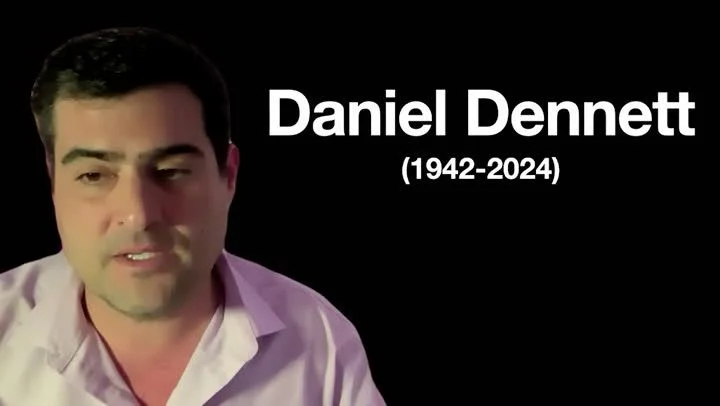
Daniel Dennett, a prominent and often contentious philosopher whose work grappled with the nature of consciousness, free will, and the implications of evolutionary theory, has died at the age of 82. His passing has initiated a flurry of retrospectives, examining his considerable influence and the debates his ideas frequently ignited. Dennett, a longtime professor at Tufts University, was a vocal proponent of atheism and Darwinism, often articulating his views in best-selling books and public discourse. His research also extended into the origins of intelligence, proposing broader definitions that encompassed systems beyond biological ones.
Dennett's intellectual legacy is marked by his distinctive approach to complex philosophical problems, particularly consciousness, which he famously sought to explain through naturalistic and materialist frameworks. He argued that morality itself was a natural outcome of evolutionary processes, a viewpoint that underscored his commitment to a scientific understanding of human behavior and values.
Read More: Why philosophers say suffering proves God does not exist in 2026
Dennett, who also managed a farm in Maine with his wife Susan, was known for his energetic engagement with new ideas and his dedication to empirically testing philosophical theories. This hands-on approach, combined with his clear, if sometimes uncompromising, prose, made his work accessible and widely debated. He directed the Center for Cognitive Studies at Tufts for a significant portion of his career.
His prolific output included significant contributions to the understanding of consciousness, often challenging traditional dualistic notions. Dennett's explorations into the "continuity" of self and the immaterial aspects of existence drew both admiration and sharp critique from peers and the broader academic community. He was a figure who sported a reputation for being tough on some of his peers, a testament to his rigorous intellectual standards.
In his later years, Dennett continued to engage with pressing questions concerning intelligence, particularly as artificial intelligence became a more prominent field. His work explored the fundamental nature of intelligent systems, suggesting a framework that could apply to both natural and artificial forms. This forward-looking perspective is now being revisited as the philosophical landscape adjusts to his absence.
Read More: New RNA Tool Shows Life's Shared Structures