POWER FOUR LANDSCAPE SHIFTS AMID TRANSFER FRENZY AND STAFF MOVES
The college football offseason, a period marked by speculative roster building and strategic staff reconfigurations, has seen several 'Power Four' programs engage in significant maneuvering. While some celebrated the retention of key personnel and the acquisition of touted recruits, others grappled with notable departures and the persistent churn of the transfer portal. The discourse surrounding these moves often leans towards declaring 'winners' and 'losers,' a binary that perhaps oversimplifies the intricate and often unpredictable nature of team development.
PLAYER MOVEMENT AND STAFF RECALIBRATIONS DEFINE THE RIVALRY'S OFF-SEASON NARRATIVE
Ohio State found itself in a familiar position, navigating player departures across its defense, offensive line, and quarterback ranks. The team also made a notable adjustment to its defensive staff, bringing in Tom Allen as coordinator. This reflects a common trend where programs leverage the offseason to shore up perceived weaknesses, often through personnel changes rather than wholesale philosophical shifts.
Read More: FIFA World Cup 2026 Revenue Reaches $15 Billion With New Ticket Prices
Meanwhile, Baylor focused on retaining its signal-caller and coordinators. Key additions like wide receiver Kobe Prentice and linebacker Travion Barnes signal an intent to bolster specific units. However, the loss of linebackers Matt Jones and Garmon Randolph, alongside wide receiver Hal Presley, suggests a recalibration is underway. The team's coaching staff, under Dave Aranda, made significant defensive staff additions, with Aranda himself taking on playcalling duties, a move that accompanied a "rebound season" in 2024. Yet, critical evaluations point to a reliance on a quarterback who was benched and an FCS-level receiver among the more prominent offensive acquisitions.
The University of Tennessee faces a significant overhaul, anticipating not only a new quarterback but a largely rebuilt offensive line. This comes after losing players who garnered third-team All-SEC honors, indicating a substantial shift in experienced personnel. Similarly, Maryland, following a challenging 4-8 season, has acknowledged the need to improve its offensive line. The departure of tackle Andre Roye Jr. to the portal underscores the depth of this challenge.
Read More: Aggies Get Top Offensive Lineman Mark Matthews for 2027 Class
Purdue, under new head coach Barry Odom, has installed Kevin Kane as its defensive coordinator. Odom, previously of UNLV, aims to invigorate the defensive unit. At UCLA, former five-star quarterback Nico Iamaleava is set to return, a significant piece of stability for the program. The coaching carousel also saw Chesney achieving a commendable record with the Dukes, succeeding Curt Cignetti, who has since moved to Indiana. Fitzgerald's early recruiting efforts at his new program have yielded five blue-chip prospects, signaling a long-term strategy rooted in high school talent acquisition.
North Carolina's defensive line is slated to rely heavily on transfers for the upcoming season, a common approach to addressing immediate needs. The offensive line, however, retains significant experience and depth, despite losing first-team All-Big 12 center Leif Fautanu.
Read More: England World Cup Match: Pubs Open Until 5 AM Monday
THE 'POWER FOUR' CONSTRUCT AND ITS IMPLICATIONS
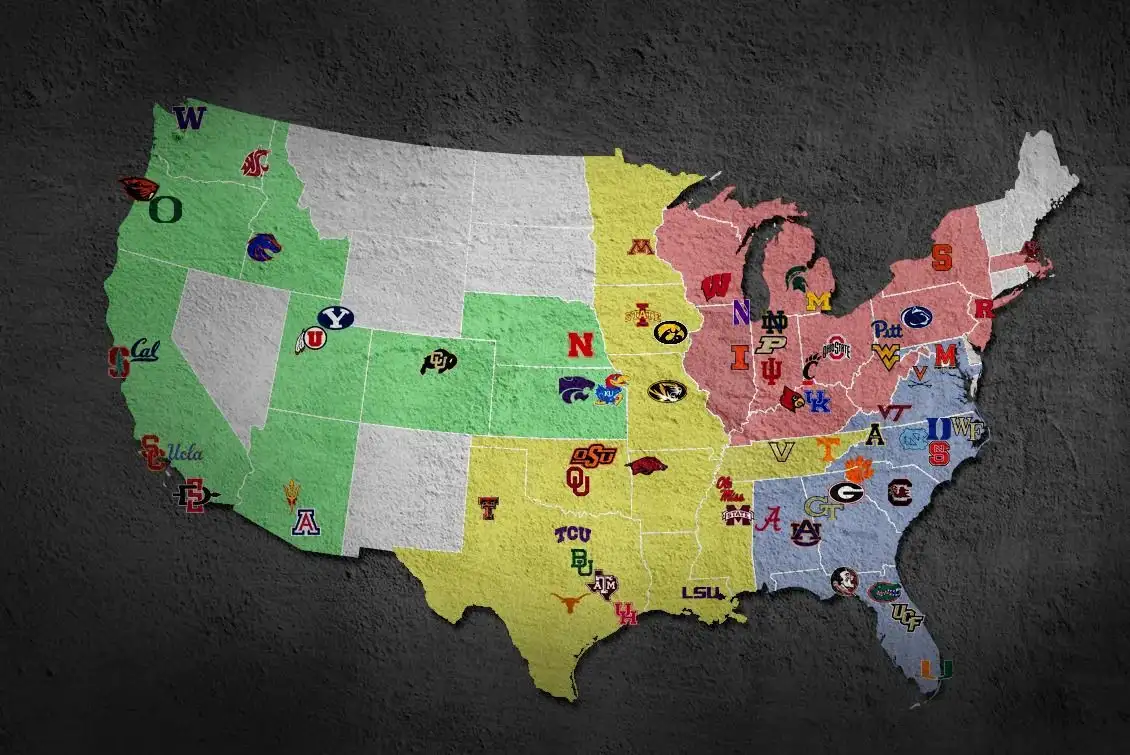
The designation of 'Power Four' schools, often characterized by substantial resources and heightened national visibility, creates an environment where success is frequently correlated with these attributes. While many programs within this tier focus on accumulating talent through the transfer portal and recruiting cycles, the articles hint at the persistent narrative of "taking a leap" or "poising for a rise" in specific seasons, such as Michigan and USC being highlighted for 2026.
The definition of what constitutes a 'Power Four' program, as noted by 'Streamline Athletes', is intrinsically linked to institutional resources and broad university budgets. Yet, the landscape is not monolithic; 'Power Four' programs are not the sole arbiters of collegiate athletic success, with non-affiliated schools demonstrating the capacity to produce national champions and All-Americans. This implies that while the 'Power Four' offers a concentrated locus of attention and funding, the fundamental drivers of athletic achievement remain rooted in program execution and development, irrespective of conference affiliation.
Read More: Michigan Football Adds 4-Star Recruit Blake Jenkins for 2025
The notion of 'offseason wins' appears to be a journalistic construct used to frame team progress. However, the persistence of such rankings and predictions year after year, as seen with NC State, suggests a recurring cycle of preseason optimism that doesn't always translate to tangible, ultimate success. The focus on "defining games" for each 'Power Four' team in 2026 further emphasizes the narrative-driven nature of college football, where specific matchups are imbued with a significance that can shape perceptions of an entire season's worth of effort.