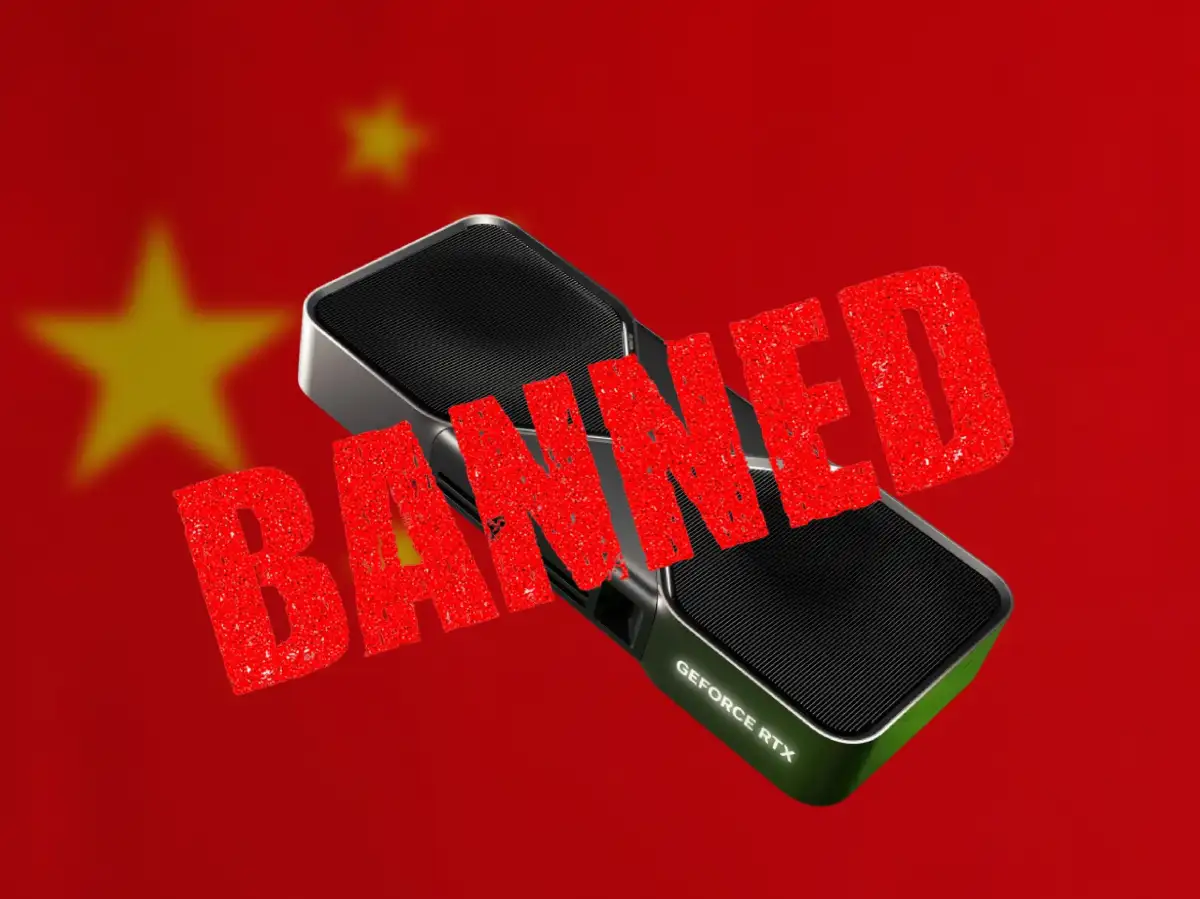
The Chinese market has effectively closed its borders to the latest iteration of NVIDIA’s specialized hardware, the RTX 5090 D v2. As of May 20, 2026, reports from supply-chain channels indicate that regulators have denied import permits for the GPU, which was engineered specifically to circumvent export restrictions by lowering AI compute capabilities and memory bandwidth.

| Component Status | Market Impact |
|---|---|
| Import Permits | Denied/Blocked |
| Sales Availability | Halted for Q2 2026 |
| Local Response | Shift to domestic silicon |
The decision represents a strategic rejection of western-engineered 'compliant' hardware in favor of accelerating internal self-reliance. While the RTX 5090 D v2 was intentionally stripped of performance metrics—featuring reduced VRAM and a narrower memory bus—to meet global export compliance, Beijing has signaled that even these moderated versions are no longer welcome.

Diplomatic Friction and Domestic Pivot
The refusal to grant import permits arrives amid a fragile geopolitical climate. Despite recent high-level US-China talks, which included meetings between US officials and NVIDIA CEO Jensen Huang, the move suggests a hardening stance against reliance on foreign semiconductor supply chains.
Read More: Chrome mimeHandler API lets extensions handle file types
Domestic GPU developers within China are currently receiving pressure to expedite their own alternatives.
The blocking of the 5090 D v2 follows earlier restrictions placed on the H20 AI GPU, indicating a pattern of excluding high-performance chips that risk being repurposed for advanced computation.
Supply-chain partners report that shipments of the card have ceased, and pending orders have been canceled for the duration of the current quarter.
Context of Restrictions
The conflict traces back to US-imposed limits on memory bandwidth and AI throughput. Because the original, high-powered RTX 5090 exceeded these legal thresholds, NVIDIA attempted to bridge the gap with the "D" (Designed for China) variants. By neutering the card's Tensor Cores and power draw, the company sought to maintain a foothold in a massive consumer and enterprise market.

This latest regulatory blockage leaves Chinese consumers and companies in a position of forced technological autarky. The intent, according to analysts observing the local ecosystem, is to devalue the necessity of western architectures by rendering them functionally inaccessible or legally non-compliant, forcing the local industry to iterate on homegrown designs rather than importing sanitized western hardware.
Read More: China Ethnic Unity Law starts July 1 2026 for all citizens