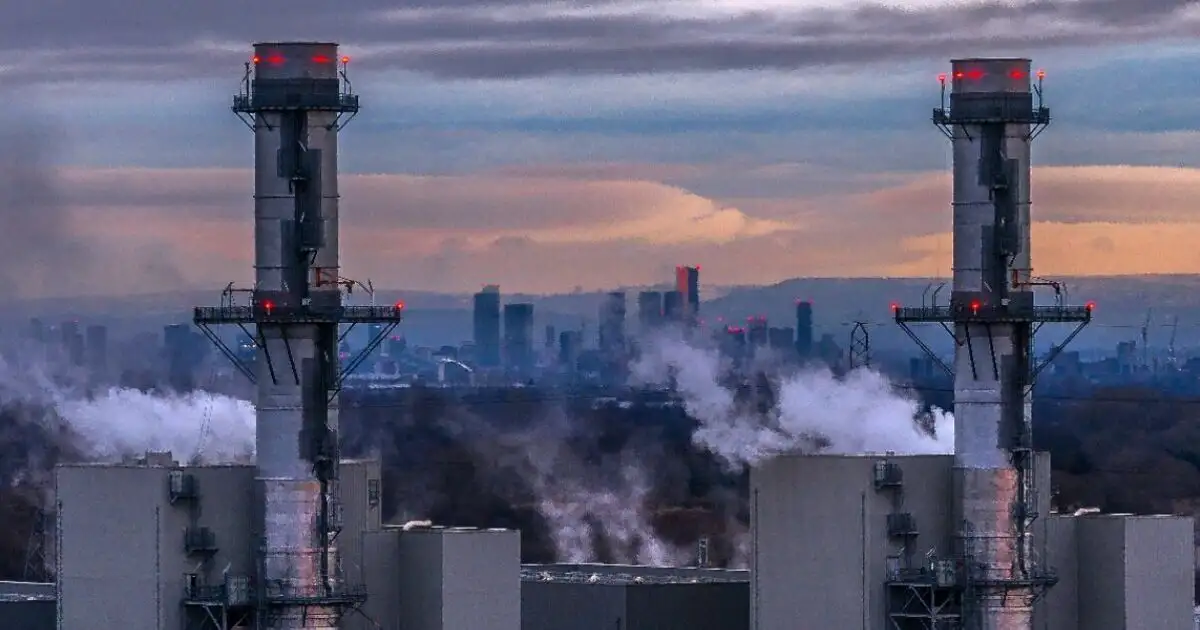
Great Britain holds barely two days' worth of fossil gas in reserve, a stark depletion that coincides with a escalating conflict in Iran and subsequent disruptions to global energy flows. National Gas, the custodian of the nation's transmission network, reported a stockpile of 6,999 gigawatt hours (GWh) on a recent Saturday. This figure, while representing a significant reduction, is met with official assurances that the island nation typically receives substantial gas volumes from alternative channels.
The precarious storage levels emerge as liquefied natural gas (LNG) tankers, once destined for Europe, are reportedly rerouted towards Asia. This diversion is attributed to the repercussions of the conflict involving Iran, a geopolitical tremor that has sent LNG prices soaring in Asian markets. Reports indicate that Qatar, a major gas exporter, has suspended production at its massive Ras Laffan facility due to Iranian bombardment.
Read More: Solaris Energy SEI Stock Price Forecast Reaches $91.98 by July 2027
Diversions and Depletions
"The UK benefits from a wide range of gas supply sources."
– National Gas spokesperson
While National Gas has downplayed immediate concerns regarding the current storage figures, emphasizing the UK's diversified supply strategy—primarily from Norway and the North Sea—the situation has nonetheless prompted policy proposals aimed at bolstering future energy security. This is against a backdrop where Europe, in contrast, appears better positioned with several weeks of gas reserves.
Price Peaks and Market Jitters
The squeeze on supply has translated into elevated wholesale gas prices for the UK, positioning it as the most expensive market in Europe. Traders are reportedly leveraging the situation, commanding a premium for gas as the UK scrambles to secure imports amidst stiff international competition. Financial analysts have drawn parallels to past energy shocks, with one note likening the potential impact of the Middle East oil supply disruption to events in 2022, warning of possible price surges exceeding previous peaks if key shipping routes remain compromised.
Read More: More People in Britain Share Homes Because Housing is Expensive

Underlying Vulnerabilities
Concerns over storage capacity have been a persistent undercurrent in discussions about Britain's energy strategy, with some experts characterizing it as a long-standing weakness. The current geopolitical climate, marked by heightened tensions in the Middle East, has amplified these anxieties, driving up energy costs.
Supply Channels and Scenarios
Primary Sources: The UK traditionally draws a significant portion of its gas from the North Sea and imports from Norway.
LNG Impact: Disruptions to global LNG flows, particularly those involving Qatar, are directly impacting availability and price.
Geopolitical Drivers: The conflict in Iran and associated actions, such as the closure of the Strait of Hormuz and bombardments on energy infrastructure, are central to the unfolding crisis.
European Comparison: Other European nations are perceived to have more robust storage buffers, affording them a greater degree of resilience against supply fluctuations.
Official Stance: National Gas maintains that storage is only one component of a multifaceted supply system and that the UK's energy mix remains diverse.
Market Reaction: Wholesale gas prices have seen a sharp increase, with the UK paying the highest rates in Europe.
Historical Context
The current predicament is viewed against a broader narrative of energy transition and policy decisions. Some critical commentary points to the decommissioning of power stations and the cancellation of exploration licenses as contributing factors to an underlying vulnerability in the nation's energy infrastructure, even as efforts are made to transition towards cleaner, domestic energy sources.