


The Boston Red Sox secured a 3-2 victory against the Atlanta Braves on May 16, 2026, at Truist Field, anchored by an eighth-inning, two-run home run from Willson Contreras. The result broke a period of stagnation for the Boston offense, which had managed only 10 runs across its previous six outings.

Willson Contreras delivered a two-strike, two-out home run in the eighth inning to overturn a one-run deficit, marking a decisive shift in a contest otherwise defined by pitching performance.

| Player | Key Contribution | Outcome |
|---|---|---|
| Payton Tolle | 8 innings pitched, 2 runs allowed | Winning Pitcher (2-2) |
| Willson Contreras | 2-run home run (8th inning) | Deciding runs |
| Drake Baldwin | 1 home run, 2 RBIs | Atlanta's sole offense |
Pitching Dominance and Late-Inning Relief
The victory was facilitated by the durability of rookie left-hander Payton Tolle. Tolle pitched a season-high eight innings, allowing four hits and striking out three. His performance provided the necessary stability to keep the game within reach until the late offensive breakthrough.

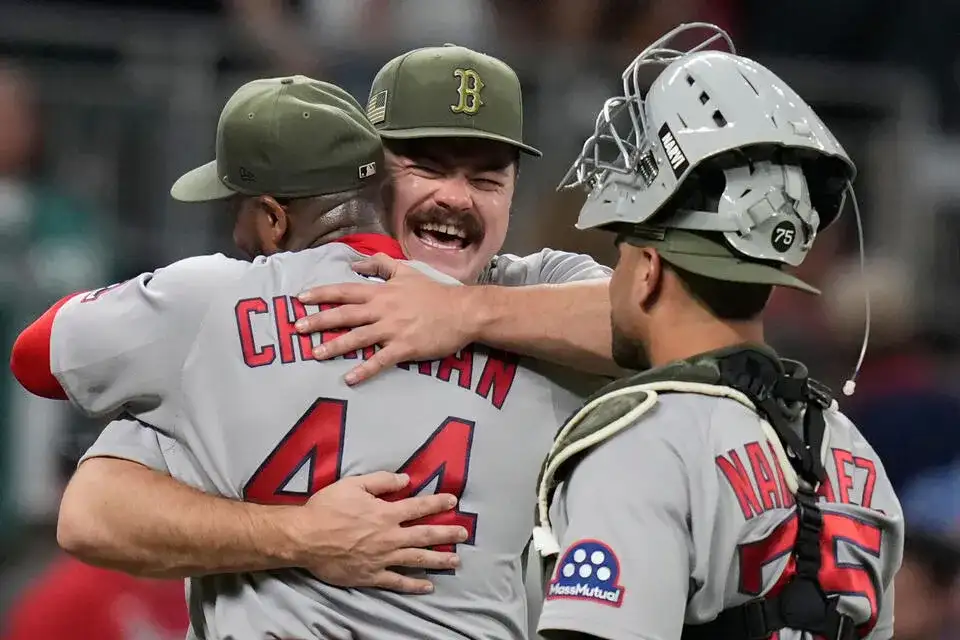
Following the home run, Boston manager Tracy deployed closer Aroldis Chapman for the ninth inning. Despite a shaky appearance involving two walks, Chapman successfully navigated the frame, securing the final out with a defensive play involving Contreras at first base.
Read More: Sydney FC beats Newcastle Jets 4-2 in A-League semi-final penalties
Context of the Result
The Red Sox maintain a record of 15-1 when their starting pitchers complete at least six innings of work.
Prior to this match, the Red Sox had lost four of their last six games, struggling to find consistent production.
Atlanta’s offense was primarily generated by Drake Baldwin, who contributed two RBIs, including a home run.
Analytical Reflection: The Fragility of Momentum
The reliance on specific high-leverage events—such as Contreras's home run or Tolle's efficiency—highlights a broader trend in current baseball play: the Scarcity of Offense. When starting pitching is effectively neutralized, teams are increasingly dependent on individual High-Leverage moments to resolve close scorelines. The Red Sox win serves as an illustration of how a team's statistical output often masks broader inconsistencies, where long-term viability is tethered to the health and stamina of the starting rotation. The game confirms the volatility of current league play, where a single sequence in the eighth inning dictates the outcome of the entire event.


