


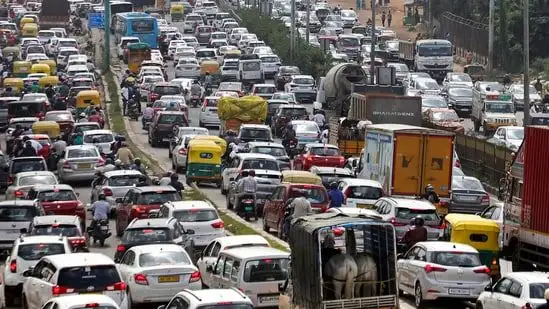
Bengaluru's new double-decker flyover at Silk Board junction, a much-touted solution to traffic woes, is now directing congestion towards Aurobindo Marg. Reports from Thursday, April 23, 2026, detail scenes of "persistent honking, pedestrians struggling to cross the road, and traffic police relentlessly blowing whistles" at Aurobindo Junction in South Bengaluru. This bottleneck emerges as the Silk Board flyover fully opened, significantly slashing commute times for Outer Ring Road (ORR) users – from over 40 minutes to under 10. However, this shift in traffic flow has inadvertently created a new choke point.
The Bengaluru Traffic Police (BTP) are already mapping out interventions for the Aurobindo Marg area. These plans include adjusting signal timings to allow more vehicles through and closing certain left turns near the junction during peak hours. This reactive approach highlights a recurring pattern: infrastructure projects aimed at alleviating congestion in one area often displace it elsewhere, creating new friction points in the urban landscape.
Read More: Elizabeth Line Helps Londoners During Tube Strike on July 6
The situation at Silk Board represents a complex urban dilemma. While hailed by many commuters as a breakthrough, with one motorist humorously noting he was the 'first in his bloodline to cross Silk Board without stopping at a signal', the flyover's success in diverting traffic has evidently created a ripple effect.
Infrastructure's Shifting Sands
Bengaluru's ORR corridor has a history of traffic distress. Massive jams have frequently plagued this stretch, prompting advisories for IT companies to stagger work timings, as seen in September 2023. Persistent infrastructure development, including ongoing metro construction, has been a recurring contributor to these snarls. Commuters have experienced journeys where covering just 3 kilometers took upwards of two hours, as reported in March 2025. The recurrence of traffic issues on this crucial tech corridor underscores the persistent challenge of matching infrastructure upgrades with the ever-increasing vehicle volume.
Read More: New Bengaluru Green Line Metro Trains Arriving by August 2026
Aurobindo Marg: A History of Congestion
Aurobindo Marg, identified in a February 2026 report, is no stranger to traffic pressure, handling over two lakh vehicles daily. Authorities have been contemplating a parallel road near the Mehrauli end to divert traffic. This corridor is envisioned with flyovers, underpasses, and signal-free U-turns. However, factors like roadside encroachments, on-street parking, and busy commercial zones are cited as exacerbating the congestion, particularly near the INA junction where traffic from the Ring Road merges.
The Double-Decker Debate
The efficacy of large-scale infrastructure projects like double-decker roads has been a subject of debate. Some experts have voiced concerns that such structures, while offering travel time reductions, might inadvertently encourage private vehicle use and discourage public transport ridership. Reports from September 2025 suggested that while the Karnataka government approved a significant double-decker viaduct project, some analysts argue that such initiatives, alongside proposed tunnel roads, may not offer a sustainable long-term solution to Bengaluru's traffic woes. Studies have indicated that congestion lengths on the ORR can vary dramatically, from 1.6 kms on a Tuesday morning to over 2.6 kms on a Saturday evening, suggesting the ebb and flow of traffic are influenced by more than just road capacity.
Read More: London Underground Strike Causes Delays for Commuters
/newsfirstprime/media/media_files/2026/02/18/green-line-metro-2026-02-18-14-46-47.jpg)


