RSP Claims Significant Lead as Vote Counting Continues
The Rastriya Swatantra Party (RSP), led by rapper-turned-politician Balen Shah, is reportedly on course for a substantial victory in Nepal's parliamentary elections. Initial counts indicate the party leading in over 100 constituencies, with some reports placing the figure as high as 110 seats. This performance, if sustained, signifies a dramatic shift away from the traditional political establishment, which has dominated Nepal for decades. The RSP's surge is particularly notable in the Kathmandu Valley, where it appears to have swept polls.
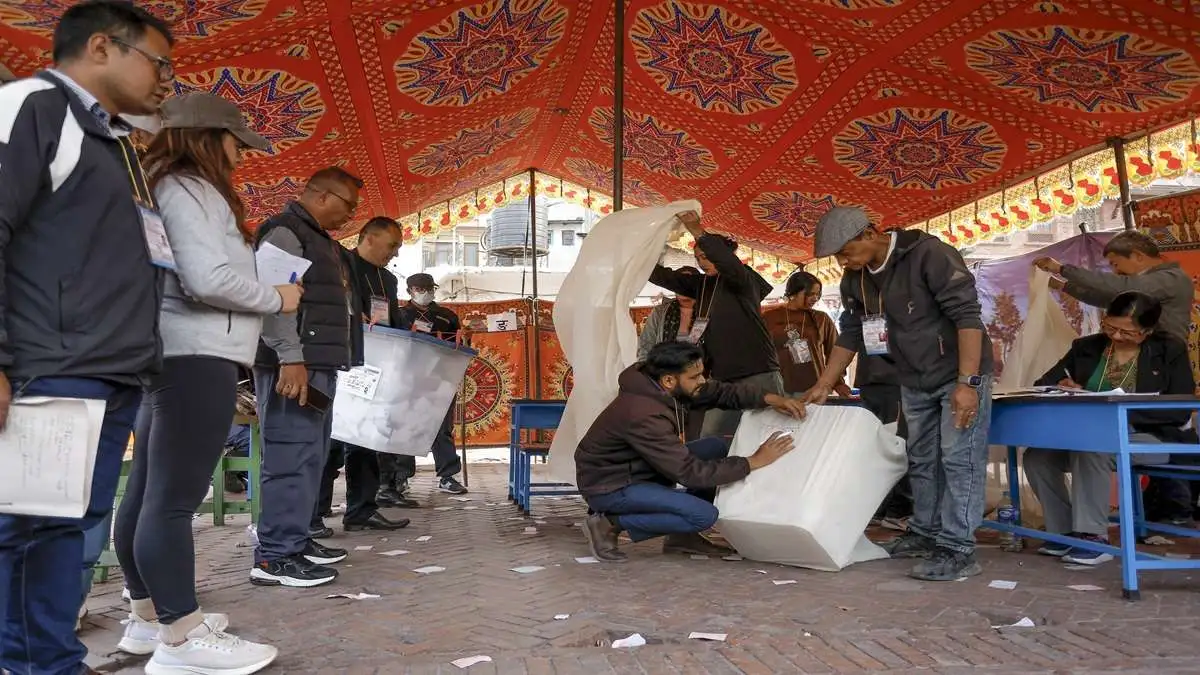
The RSP's strong showing, especially its dominance in Kathmandu Valley and its commanding lead in numerous constituencies, signals a potential rejection of established parties by voters, particularly the younger demographic.

Balen Shah Defeats Former Prime Minister KP Sharma Oli
A key development highlighted across reports is Balen Shah's personal victory over former four-time Prime Minister KP Sharma Oli in the Jhapa-5 constituency. Shah, who resigned as Kathmandu mayor to contest this high-stakes race, secured a decisive lead, with vote tallies showing him receiving 54,096 votes compared to Oli's 14,031 in one reported count, and 68,348 versus Oli's 18,734 in another. This personal triumph against a veteran politician underscores Shah's growing influence and the traction his party's platform has gained.
Read More: Taiwan Holds Nantou County Drills to Prepare for State Collapse

RSP's electoral performance:
Leading in over 100 constituencies, with figures ranging from 101 to 110.
Secured outright 53 seats in some reports.
A dominant sweep in the Kathmandu Valley.
Key contests:
Balen Shah defeated KP Sharma Oli in Jhapa-5.
A Youth-Driven Mandate?
The narrative surrounding the RSP's ascent is intrinsically linked to Nepal's Gen Z population and broader public frustration with established political parties. Reports suggest that Shah's campaign, leveraging strong social media presence and anti-establishment messaging, has resonated deeply with young, urban voters disillusioned with the status quo. This election is the first since the violent Gen Z-led protests that previously ousted an Oli-led government, lending further weight to the interpretation of this vote as a demand for reform and accountability.
Read More: Elephants in the Fog wins Cannes 2026 Jury Prize for Nepal cinema

RSP's Platform and Potential Impact
The Rastriya Swatantra Party, a relatively new entity formed just four years ago, campaigns on a platform prioritizing zero-tolerance corruption, good governance, and development delivery. Should the RSP indeed secure a majority, Balen Shah, a 35-year-old former rapper, could be on track to become Nepal's next prime minister, fundamentally altering the country's political landscape. This potential outcome could usher in a new era, moving Nepal from what has been described as "protest-fueled instability toward democratic renewal."
Logistical and External Observations
While vote counting has largely progressed, delays in transporting ballot boxes from remote areas in constituencies like Sankhuwasabha, Mugu, and Gorkha-1 were noted. The Election Commission of Nepal has been working to expedite the process, with centralized stations handling high-volume urban ballots. Externally, India has been closely monitoring the results, with Prime Minister Narendra Modi congratulating Nepal on its elections and reaffirming support. China has also extended congratulations, noting Beijing's value for its ties with Nepal.
Read More: FBI Analysts Review Georgia 2020 Election Data in Fulton County
Background: The Shifting Political Terrain
Nepal's political system, characterized by a mixed electoral system for its 275-member House of Representatives, has long been dominated by parties like the Nepali Congress, the Communist Party of Nepal (Unified Marxist–Leninist) (CPN-UML), and various communist factions. The emergence of the RSP challenges this entrenched order. The results of this election are viewed as pivotal, with potential implications for governmental stability and bilateral relations, particularly with neighboring India. Observers suggest that even without an outright majority, the RSP's performance will likely force established parties into complex coalition negotiations.