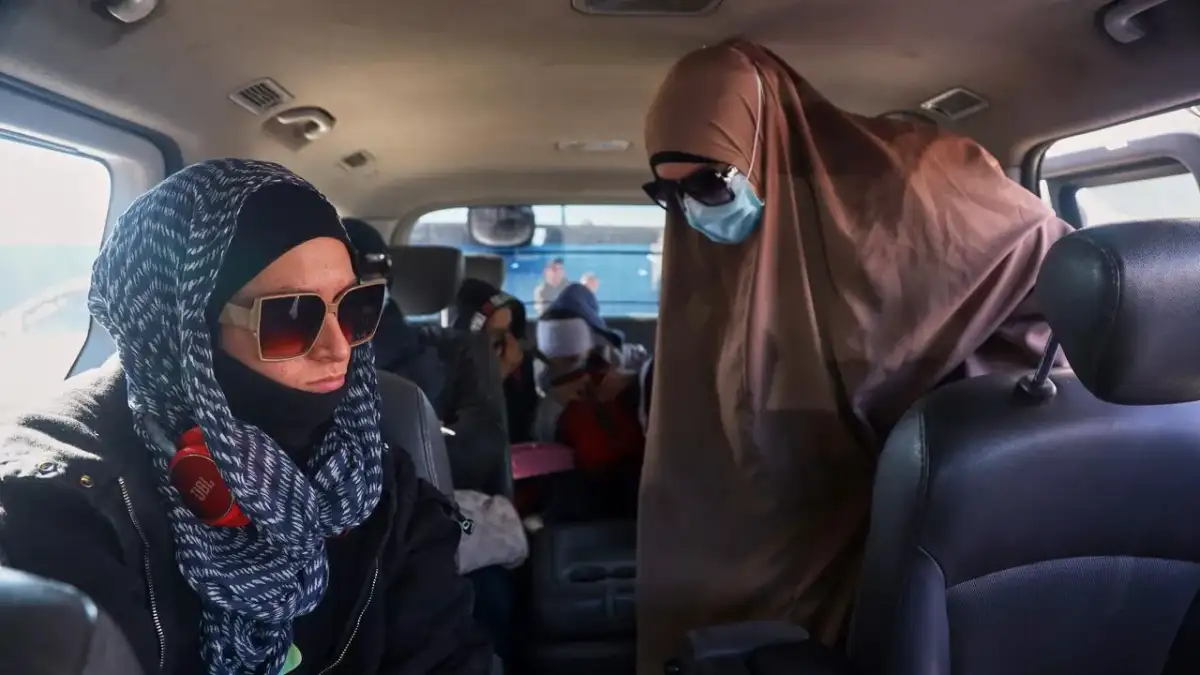
Canberra is refusing to acknowledge involvement in the recent movement of thirteen women and children, affiliated with families linked to the Islamic State group, from Syria. Syrian authorities assert these individuals have left the Roj camp and are awaiting a resolution, but Australian officials, including Prime Minister Anthony Albanese and Foreign Minister Penny Wong, have repeatedly stated they are "providing no support for repatriation and no assistance for these people." The Australian government's official stance is that it is "not and will not repatriate" these individuals, suggesting any return is not facilitated by state mechanisms.
Reports indicate that the group, comprising women and children from four families, departed Roj camp last week, a facility housing relatives of suspected militants. Their stated intention was to travel to Syria's capital and subsequently to Australia, a plan seemingly stalled by Australian governmental non-cooperation. Some of the children were born in the camp.
Read More: Syrian stranded Australians: 13 people can't return home
Stated Positions and Conflicting Narratives
Prime Minister Albanese has characterized the situation with the blunt assertion that the individuals "made their bed, they lie in it," implying a lack of governmental responsibility for their current predicament. This contrasts with statements from Syrian officials who claim these families are "still awaiting a solution, which can only be achieved through coordination with the relevant international parties."
The Australian government has previously facilitated the return of Australian women and children from Syrian detention camps on two occasions. However, current reports suggest these thirteen individuals acquired passports and plane tickets independently, a detail the government uses to distance itself from any facilitated repatriation. A federal government spokesperson stated that if they were to return to Australia, they would "face the full strength of the law."
Background on Self-Repatriation Efforts
This situation echoes earlier instances where Australian women and children associated with IS have managed to return to the country without explicit government repatriation plans. These "self-repatriations," as some reports have termed them, have invariably led to security and identity checks upon arrival. The government's consistent messaging has been one of non-involvement in organized returns for this final cohort, despite previous repatriation efforts. The circumstances surrounding the departure from Roj camp and the subsequent logistical hurdles remain a point of contention between Syrian officials and the Australian government.
Read More: Hunter Region Gets $12 Billion Train Factory