The exclusion and judgment faced by atheists from their religious communities and families forms a persistent undercurrent in their lived experiences. This judgment often manifests as dismissal of their intellect, blame for personal misfortunes, and outright exclusion from shared cultural touchstones. The very act of questioning religious tenets can be met with stonewalling, leaving atheists feeling unheard and invalidated.
Undercurrents of Disbelief: The Lived Experience
Many atheists report being treated as if they are fundamentally lacking understanding, particularly when they attempt to engage in dialogue. This is not a new phenomenon. Reports detail instances where atheists are told they simply "don't understand" when asking questions, a retort that shuts down inquiry rather than fostering it. The implication is that their non-belief stems from an inherent deficiency, rather than a reasoned position.
Beyond mere misunderstanding, some atheists face more direct accusations. In certain contexts, a decline in mental well-being has been directly attributed to a "lack of faith" or even linked to "Satan." This framing casts atheism not as a neutral stance, but as a detrimental force impacting individuals' lives.
Read More: New Atheism movement splits on April 7 2026 over political views

This can extend to more mundane aspects of life. Examples include being told they cannot participate in or enjoy certain cultural events, like holiday movies, due to their lack of religious belief. Threats related to an afterlife hold no sway for those who do not subscribe to such concepts, yet the pressure to conform to religious expectations persists.

Navigating the Social Landscape
The decision to disclose one's atheism is often fraught with apprehension. Many atheists consciously choose not to broadcast their non-belief, especially if they anticipate negative repercussions or social friction. This selective disclosure allows them to manage potentially difficult interactions and preserve relationships. The burden of explaining or defending one's position can be exhausting, leading some to adopt a strategy of pacing their engagement and avoiding "circular debates" that are unlikely to yield resolution.
Read More: Atheists Can Believe in 'God' by Redefining the Word
In some instances, religious institutions serve as a primary source of community for believers. For atheists, this communal aspect is often absent from religious settings, creating a different kind of social isolation.
Echoes of a Movement: Advocacy and Identity
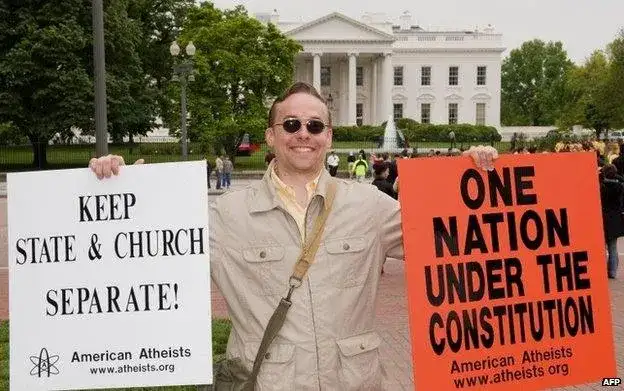
There are indications of a nascent civil rights movement among atheist groups. These organizations are working to shift public perception and challenge the stigma associated with non-belief. The establishment of atheist student groups on university campuses, for example, provides spaces for individuals to connect and find solidarity.
The Roots of Non-belief
The origins of atheism are varied. While some individuals adopt atheism later in life, a significant portion of atheists report being raised without religious belief. Theories suggest that strong analytical thinking skills may contribute to some individuals critically evaluating and ultimately rejecting religious doctrines. The psychology of belief itself is a complex field, with non-belief representing a deviation from what is often perceived as near-universal religious adherence in human societies.
Read More: ‘Mogging’ term spreads: Is it a joke or a sign of competition?
The notion of the "lonely atheist," as explored in some commentary, highlights the potential for isolation when one's worldview diverges significantly from the prevailing societal norms. The decision of when and how to engage with these societal expectations is a personal calculus, balancing the desire for authenticity with the need for social harmony.