


Aristotle, the ancient Greek thinker whose pronouncements echo across millennia, is recently highlighted for his stark observations on human nature and the pursuit of a life less burdened by sorrow. His core ideas, often presented as stark pronouncements, center on virtue as the bedrock of fulfillment and the inherent social fabric of human existence.
His philosophies, revisited across numerous platforms, emphasize that human beings, when stripped of civic order and ethical grounding, devolve into beings driven by base appetites, a stark contrast to their potential for elevated conduct. This perspective positions 'virtue' not as a passive ideal, but as an active engagement with life, essential for a well-lived existence. For Aristotle, true flourishing, or eudaimonia, is achieved through the realization of one's highest capacities, a process intrinsically linked to moral excellence and participation within a community.
Read More: Why the New Atheism movement lost public influence by April 2026
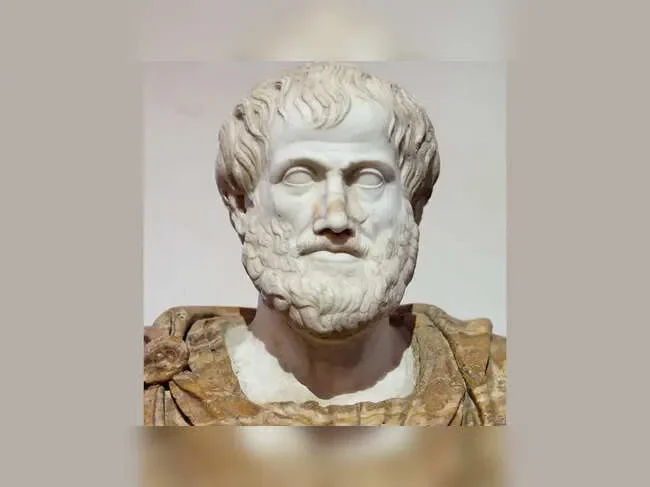
The philosopher's insights underscore the idea that ambition and the relentless desire for wealth are frequently the progenitors of unjust actions. He posited that the community, or 'polis', is the natural arena for human development, and justice serves as its fundamental binding agent. When this order dissolves, the individual, capable of great good when guided by reason and law, becomes exceptionally dangerous, prone to the most savage and self-serving behaviors.
Recent disseminations of his quotes delve into themes of excellence, effort, and what might be termed destiny. One frequently cited sentiment suggests that a primary strategy for avoiding profound unhappiness involves cultivating a life of purpose and deliberate action. This contrasts with mere passive contentment, framing happiness as a more active state, possibly rooted in self-understanding and alignment with one's capabilities.
Read More: Google Learn About AI Tool Released April 2026 For Simple Learning

Echoes of Influence
Aristotle's intellectual legacy, stretching back to his birth in 384 BCE, continues to shape discourse in fields as diverse as logic, ethics, and political theory. His teachings are presented as practical guides for navigating everyday life, distinct from the more abstract ideals of his predecessor, Plato. The philosopher's emphasis on experiential learning suggests that competence is forged through direct engagement with the world, a notion that underpins much of his ethical and political thought. His observations on friendship, for instance, offer a profound perspective on connection, describing it as "a single soul dwelling in two bodies."
The philosopher’s dissection of economics, particularly his critique of money breeding money, as the "most unnatural" mode of wealth generation, resonates in contemporary discussions about economic systems and their alignment with human well-being. This ancient critique highlights a persistent tension between material accumulation and the cultivation of a just and flourishing society.
Read More: Matt Dillahunty discusses Christian morality with caller on April 2026


