GOVERNORS AND PRIME MINISTER UNVEIL SUBSTANTIAL DEVELOPMENT PROJECTS, STOKING DISCOURSE ON NATIONAL PROGRESS.
States are increasingly framing their development narratives around the establishment of "world-class transport infrastructure." This assertion comes amidst significant project inaugurations and foundation stone layings by both Chief Ministers and the Prime Minister. While one state’s Chief Minister has declared its transport system to be of global standard, the Prime Minister himself has dedicated projects worth over Rs 58,000 crore to Andhra Pradesh, underscoring a national push for infrastructural advancement.
These pronouncements highlight a heightened emphasis on tangible development metrics, with public officials leveraging infrastructure as a key indicator of state and national achievement. The discourse appears centered on connectivity, efficiency, and the ambition to position regions as growth engines within a modernizing India. The sheer scale of investment, exemplified by the Andhra Pradesh projects encompassing national highway development and defense infrastructure, suggests a concerted effort to upgrade the nation's physical backbone.
Read More: Two building collapses in India kill 6 people
STATE-LEVEL CLAIMS MEET NATIONAL AMBITIONS
In one instance, Chief Minister Pinarayi Vijayan of Kerala announced that his state has successfully built a "world-class transport infrastructure," signaling a significant step in its developmental trajectory. This declaration, made recently, places Kerala within the discourse of states prioritizing and achieving high-level transport capabilities.
Simultaneously, Prime Minister Narendra Modi participated in a major inauguration and foundation stone laying ceremony in Amaravati, Andhra Pradesh. The event saw the dedication of multiple development projects valued at over Rs 58,000 crore. These include the inauguration of seven National Highway projects and the foundation stone laying for a Missile Test Range at Nagayalanka, costing approximately Rs 1,460 crore. The Prime Minister articulated a vision of Amaravati becoming a "growth engine of developed India," emphasizing that such developments "strengthen infrastructure and accelerate the growth of Andhra Pradesh." He further posited that India is rapidly modernizing its infrastructure, aligning with a broader national goal of a 'Viksit Bharat'.
Read More: India IVF Costs And Social Barriers Limit Access In April 2026
LOGISTICS AND INTEGRATED DEVELOPMENT ON THE AGENDA
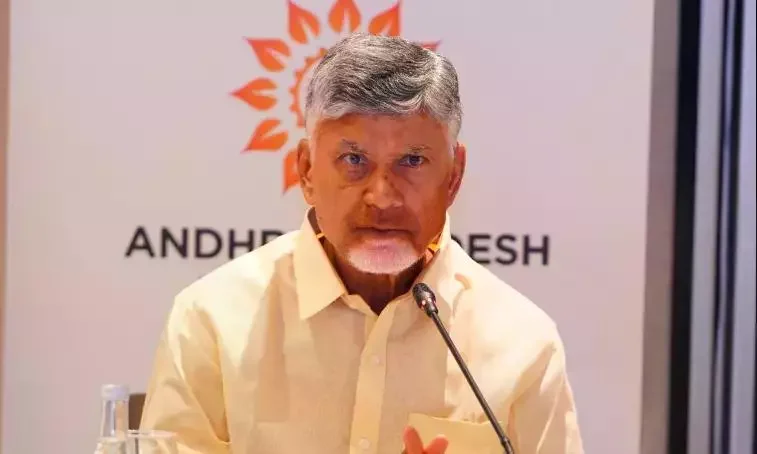
Beyond highway and defense projects, the concept of integrated logistics and connectivity is gaining traction. Chief Minister Chandrababu Naidu of Andhra Pradesh has reportedly planned for the establishment of a Logistics Corporation aimed at facilitating large-scale cargo transport. His administration is reportedly looking into policy changes for maritime and aviation infrastructure, intending to develop airports and ports, and ensuring a seamless link between seaports, airports, national highways, and rail lines. This approach signals a strategic focus on creating a cohesive network that supports economic activity.
THE BROADER ECONOMIC CONTEXT
The push for infrastructure development is intrinsically linked to economic growth. Reports suggest that improved infrastructure boosts transport efficiency, demand, and commercial opportunities. Initiatives like the Pradhan Mantri Kisan SAMPADA Yojana (PMKSY) also point towards modernization efforts across various sectors, including food processing, by enhancing infrastructure and supply chains. This indicates a multi-pronged approach to national development, where transport and logistics are seen as fundamental enablers.
Read More: Bihar gets $10.5 Billion from HUDCO for New Cities
HISTORICAL FOOTPRINTS AND EVOLVING NARRATIVES
The focus on infrastructure is not new. The very idea of Amaravati as a modern city was a vision of former Chief Minister NTR Garu. The current efforts are framed as the realization of that vision, blending tradition with progress. The ongoing investment and the language used by leaders—terms like "world-class," "growth engine," and "rapidly modernizing"—suggest a deliberate effort to shape public perception around India's developmental achievements, positioning the nation as a key player in global infrastructure trends.