

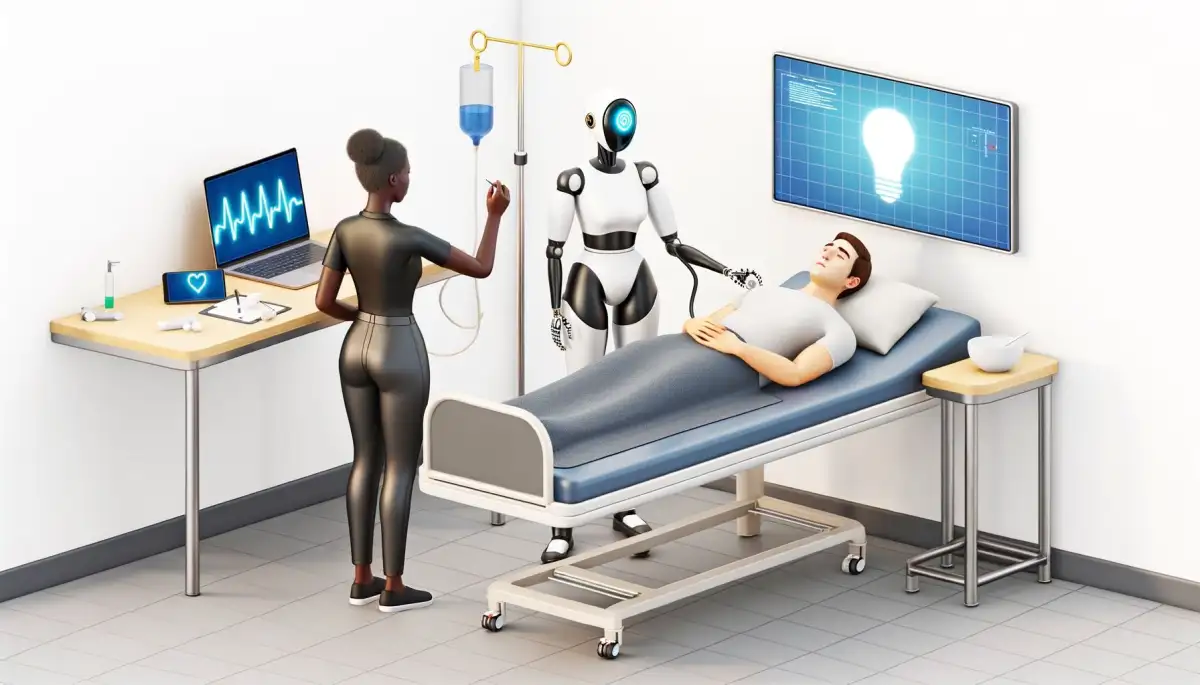
Recent studies present a fractured picture of artificial intelligence's role in emergency department triage. While some research points to AI systems matching or even surpassing human clinicians in specific diagnostic accuracy, others highlight significant shortcomings, with experienced doctors and nurses still proving more reliable overall. This evolving landscape suggests AI may function as a tool to support, rather than supplant, human judgment in critical care settings.
AI demonstrated superior accuracy and specificity in identifying the most acutely critical cases, outperforming nurses in these high-urgency categories. However, overall AI systems tended towards over-triage and exhibited lower accuracy when compared to human professionals.
The findings emerge from a series of investigations published across multiple journals, some dating back to late 2020 and others appearing as recently as early 2026. These studies probe the effectiveness of AI in symptom checkers and diagnostic systems against established human triage methods.
Read More: NHS official Ms. Jones steps back from Palantir contract on 7 April 2026
Divergent Results in AI Performance
A comparative study published in 'Frontiers in AI' in November 2020 initially suggested AI systems could match human doctors in triage and diagnosis accuracy. This early work, evaluating a system called the Babylon Triage and Diagnostic System, laid some groundwork for further exploration.
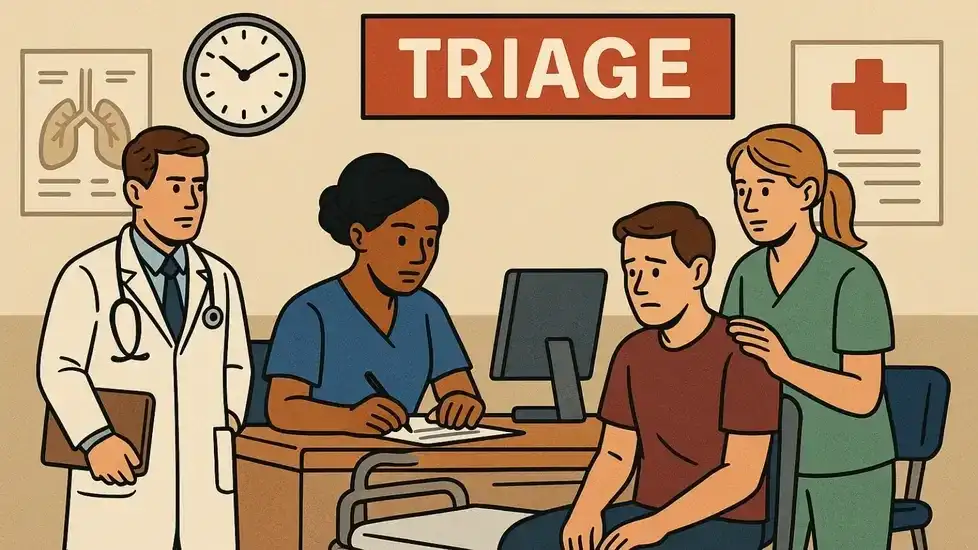
More recent analyses, however, introduce a note of caution. A systematic review in 'Elsevier Inc.' from November 2025 indicated that while AI-based systems offer potential gains in accuracy and efficiency, their successful implementation is still contingent on various factors. The review also noted that conventionally, AI-based triage systems tend to outperform traditional techniques in improving clinical care's diagnostic precision and time efficiency.
This contrast is further emphasized by research presented in Barcelona in October 2025. According to reports from 'Digital Watch Observatory' and 'nurse.org', doctors and nurses were found to be more accurate and reliable in triaging emergency patients across most urgency categories. These human professionals reportedly outperformed AI in surgical and therapeutic cases, with nurses demonstrating superior overall reliability.
Read More: Chrome mimeHandler API lets extensions handle file types
Despite these reservations, AI has shown distinct strengths. AI systems outperformed nurses in identifying the most critical cases, demonstrating higher accuracy and specificity in these urgent scenarios. This nuanced performance suggests AI's utility might lie in specific, high-acuity situations rather than a general replacement for human assessment. Another study from May 2025 noted an AI-powered triage system outperformed junior clinicians in identifying patients needing emergency care, showing improved sensitivity and shorter assessment times.
The AI Triage Landscape
The discourse around AI in emergency triage involves multiple facets:
Predictive Models: Research published in 'Scientific Reports' in August 2025 focused on developing AI models to predict critical outcomes and hospital admissions using machine learning. This includes examining racial disparities and the impact of emergency department crowding on triage decisions.
Systematic Reviews: Integrative reviews, such as one in 'ScienceDirect' in April 2025, aimed to compare the accuracy and discrimination of AI/ML-based triage models against conventional methods like the Emergency Severity Index (ESI) and the Manchester Triage System (MTS). These reviews also seek to identify the most influential data predictors used in AI/ML triage models.
Professional Perspectives: Studies like one from 'Frontiers in Digital Health' in December 2025 explored the attitudes of medical professionals towards AI in emergency triage. These investigations often highlight a spectrum of opinions, from enthusiastic adoption to skepticism regarding AI's readiness for direct patient care.
Transformative Potential: Publications from 'International Journal of Emergency Medicine' (November 2025) and 'Appinventiv' (February 2026) discuss the broader transformative role of AI in diagnosis, triage, and patient management, framing AI triage systems as a reality rather than a mere theoretical concept.
Background and Context
Triage, a fundamental process in healthcare, involves rapidly categorizing patients based on their condition's urgency to ensure appropriate and timely care. Established systems like the U.S. Emergency Severity Index (ESI), Europe's Manchester Triage System (MTS), and others are globally utilized for this purpose. The integration of AI into this critical function aims to enhance accuracy, efficiency, and decision support. However, ethical considerations, data privacy, and the need for robust validation remain central to the ongoing discussion and development of these technologies.
Read More: Scotland Kidney Policy Changes Cause Patient Worry






