New frameworks are emerging that seek to establish a "token-metered" approach to deploying Artificial Intelligence services. This development signals a move towards more granular control and potentially cost-effective management of computationally intensive AI operations. The concept appears to be gaining traction within the realm of large-scale technological infrastructure, particularly concerning the integration of AI capabilities within existing telecommunications networks.
The technical underpinnings of this approach seem to revolve around the idea of "AI Factories", suggesting a structured, industrial-scale environment designed for the production and delivery of AI-driven functionalities. Companies like NVIDIA are reportedly at the forefront of exploring these models, indicating a strategic push towards standardizing and commercializing AI as a service. This involves not just the raw processing power but also the management and distribution of AI outputs through a system that quantizes usage.
Read More: AI Tool D-ID Replaces Human Voice, Causes Confusion
The implication is a departure from monolithic AI deployments towards a more modular and precisely accounted for consumption of AI resources.
Further details suggest that this initiative aims to integrate AI services directly into the operational fabric of telecommunications companies. This would allow for the direct metering and billing of AI services based on a token system, analogous to how data or voice minutes are currently accounted for. Such a model could offer greater flexibility for businesses looking to leverage AI without the substantial upfront investment in dedicated hardware and expertise.
The terminology itself, "token-metered," implies a system where access to or the use of AI functionalities is governed by the acquisition and expenditure of digital tokens. This abstract form of value exchange could allow for dynamic pricing and resource allocation, adapting to real-time demand and computational load. The "AI Factories" concept reinforces the idea of a controlled and efficient production line for AI, where each stage, from training to inference, is optimized and accounted for.
Read More: Sony Pictures Chiefs: AI Won't Replace Human Stories
While the specific technical specifications and implementation details remain under scrutiny, the overarching trend points towards a maturation of the AI service landscape. This move from bespoke, often opaque, AI solutions to a more standardized, metered service model could democratize access to advanced AI capabilities, provided the token economy proves accessible and equitable. The exact mechanisms for token generation, distribution, and the valuation of AI services within this framework are critical elements that will define the success and broader adoption of such systems.
Background:
The exploration of "token-metered" AI services arises within a broader context of evolving digital infrastructure and the increasing demand for sophisticated computational resources. The term "building" itself, in its anglicized form, commonly refers to large, multi-story structures, often associated with corporate headquarters or significant commercial enterprises. This echoes the scale and ambition of deploying advanced AI infrastructure. The concept of "building" also extends to the construction and development of complex systems, mirroring the intricate engineering required for AI factories.
Read More: OpenAI legal dispute with Elon Musk on 22 May 2026 delays IPO plans
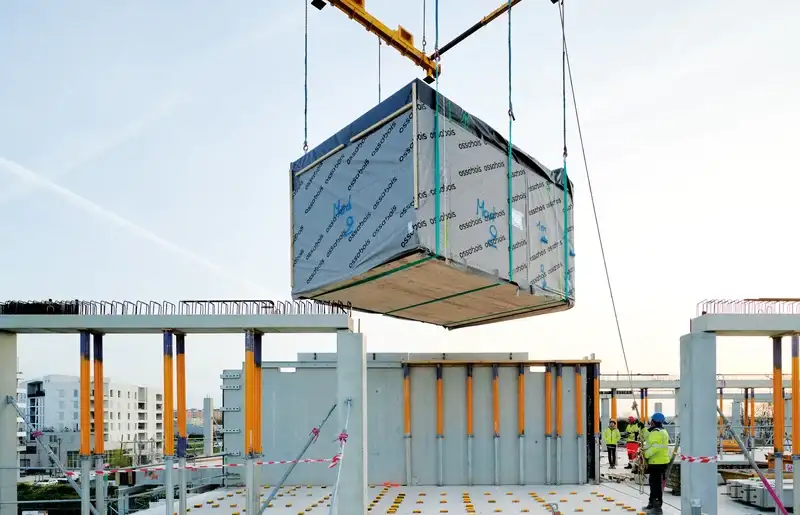
The French term "bâtiment" (from "bâtir," to build) denotes a structure or edifice. While distinct from the anglicized "building," it shares the fundamental idea of creation and construction. Companies like GA Smart Building, which focus on modular and "off-site" construction methods, offer a parallel to the structured, industrialized approach envisioned for AI deployment. Their emphasis on creating adaptable and efficient spaces can be seen as a metaphor for building flexible and scalable AI services.
Furthermore, the notion of "team building," while seemingly unrelated, highlights the concept of collaborative effort and structured activity towards a common goal. In the context of AI, "AI Factories" represent a highly collaborative and specialized environment where different components and processes are brought together to "build" and deliver AI solutions effectively. The underlying principle is one of organized production and operational efficiency, applied to the digital realm of artificial intelligence.
Read More: What is entrepreneurship and why is its definition unclear?