A critical security flaw in the Marimo Python notebook, previously identified as a pre-authentication Remote Code Execution (RCE) vulnerability, has reportedly been weaponized and amplified by AI-driven post-exploitation techniques. This development elevates the risk associated with the flaw, moving it from a theoretical breach to an actively menacing threat.
The vulnerability, found in the popular data science and app development tool, allows unauthorized actors to execute arbitrary code on a system without needing prior authentication. Recent reports suggest that attackers are now employing Large Language Models (LLMs) to automate and refine their subsequent actions after gaining initial access. This AI integration allows for more sophisticated and adaptable post-exploitation activities, such as data exfiltration, lateral movement within networks, or further system compromise.

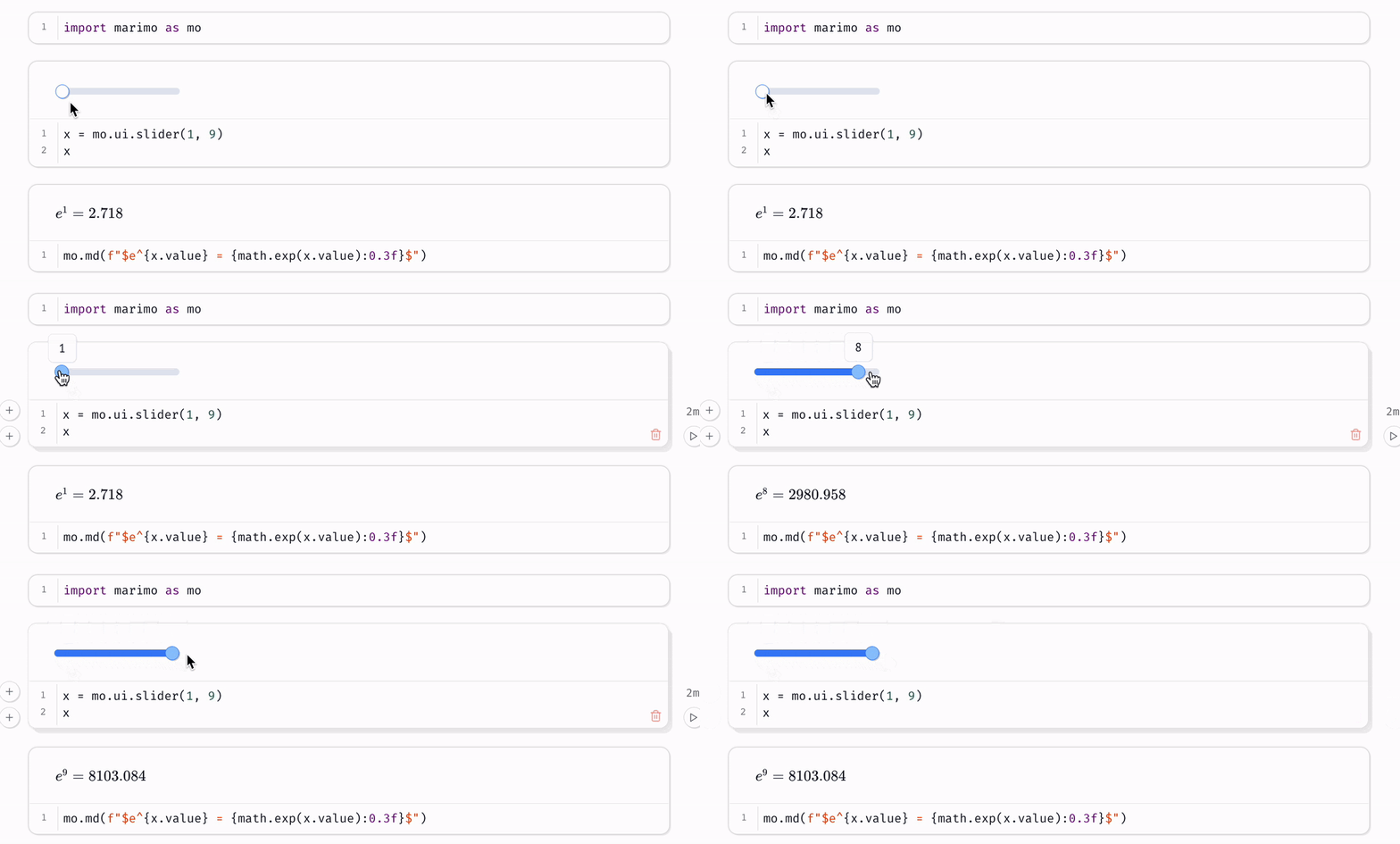
Marimo, billed as a "next-generation Python notebook," aims to transform data work, model training, and SQL querying with an AI-native, reactive experience. It stores code as Git-friendly, reproducible Python and offers features like a CLI, a VS Code extension, and optional serialization of package requirements. The platform also boasts first-class SQL support and the ability to run code as both scripts and apps. The inherent nature of such a tool, designed for seamless execution and integration, unfortunately, can also become an avenue for malicious activity when vulnerabilities are exploited.
Read More: Chrome mimeHandler API lets extensions handle file types

The specifics of how LLMs are being integrated into the post-exploitation phase remain under investigation, but the implications are clear: attacks are becoming more automated, potentially more difficult to detect, and more damaging. Security professionals are urged to remain vigilant and ensure their Marimo instances are patched against the known RCE vulnerability.