The 2026 Winter Olympics Opening Ceremony is poised to be a spectacle of unprecedented scale, promising a unified message across two distinct Italian locations. Yet, as the world gears up to watch, a barrage of questions linger about access, corporate influence, and the true meaning of "unity" in the face of global realities.
This year, the XXV Winter Games, set to ignite on February 6th, will unfurl with an Opening Ceremony that boldly splits its centerpiece – the Olympic cauldron – between Milan and Cortina d’Ampezzo. While the International Olympic Committee (IOC) touts this as a groundbreaking symbol of unity, it raises a critical inquiry: can a divided ceremony truly represent a unified world, especially when access to watching it remains fractured and dominated by a select few media giants? We've seen Olympic ceremonies before, each with its own flair, from the grandiose displays of national pride to the more intimate reflections on culture and history. However, the logistical and symbolic implications of splitting the very heart of the ceremony across two cities demand a closer look. Are we witnessing innovation, or a dilution of tradition? And more importantly, who truly benefits from this elaborate, multi-city kickoff?
Read More: 2026 March Madness Round 2: Where to Watch Games on CBS, TBS, truTV, and Streaming

A Tale of Two Cities, A Symphony of Streams: Who Controls the Narrative?
The logistical blueprint for watching the 2026 Winter Olympics Opening Ceremony reveals a landscape dominated by a single broadcasting powerhouse: NBCUniversal. For audiences in the United States, the ceremony will be aired live on NBC and streamed across its digital platforms, including Peacock, NBCOlympics.com, the NBC app, and the NBC Sports app. This near-monopoly over U.S. viewership is not new. NBC has been the primary U.S. broadcaster for the Olympics for decades, a lucrative, long-standing partnership that ensures significant revenue for both the IOC and the network.
Live Broadcast (U.S.): NBC (2 p.m. ET on Friday, Feb. 6)
Primetime Encore (U.S.): NBC (8 p.m. ET/PT on Friday, Feb. 6)
Live Streaming (U.S.): Peacock, NBCOlympics.com, NBC.com, NBC app, NBC Sports app
Beyond the U.S., the broadcasting rights fragment, creating a complex, and often costly, patchwork for global viewers. In the United Kingdom, for instance, Discovery+ and TNT Sports will carry the event, alongside the BBC. Meanwhile, across Europe, Warner Bros. Discovery platforms like HBO Max and Eurosport will be key players, alongside various national broadcasters such as Germany's ARD and ZDF, and France's France TV. This multi-layered distribution strategy, while seemingly designed to reach wider audiences, often leaves consumers navigating subscription services, geographical restrictions, and varying levels of coverage.
Read More: NBCUniversal Stops Making New Shows for TV Stations, Access Hollywood Cancelled

United Kingdom: Discovery+, TNT Sports, BBC Sport
Europe: Warner Bros. Discovery (HBO Max, Eurosport), national broadcasters (ARD, ZDF, France TV, RAI etc.)
Global Reach: A network of "Official Media Rights Holders" are listed on the olympics.com website, indicating a complex web of international broadcast partners.
Past Incidents: This concentrated control isn't without precedent. The 2020 Tokyo Olympics, for example, saw similar debates about access and the dominance of official broadcasters. Reports from previous Games have often highlighted the challenges faced by viewers in regions with less robust broadcasting infrastructure or those attempting to access content outside their designated territories. The IOC's reliance on these high-value broadcast deals is a cornerstone of its financial model, but does this model inadvertently create barriers to entry for a truly global audience?
Read More: Beninese striker Adnan Aziz nears Argentina club contract after successful trial
The "Two Cauldron" Conundrum: Symbolism vs. Practicality
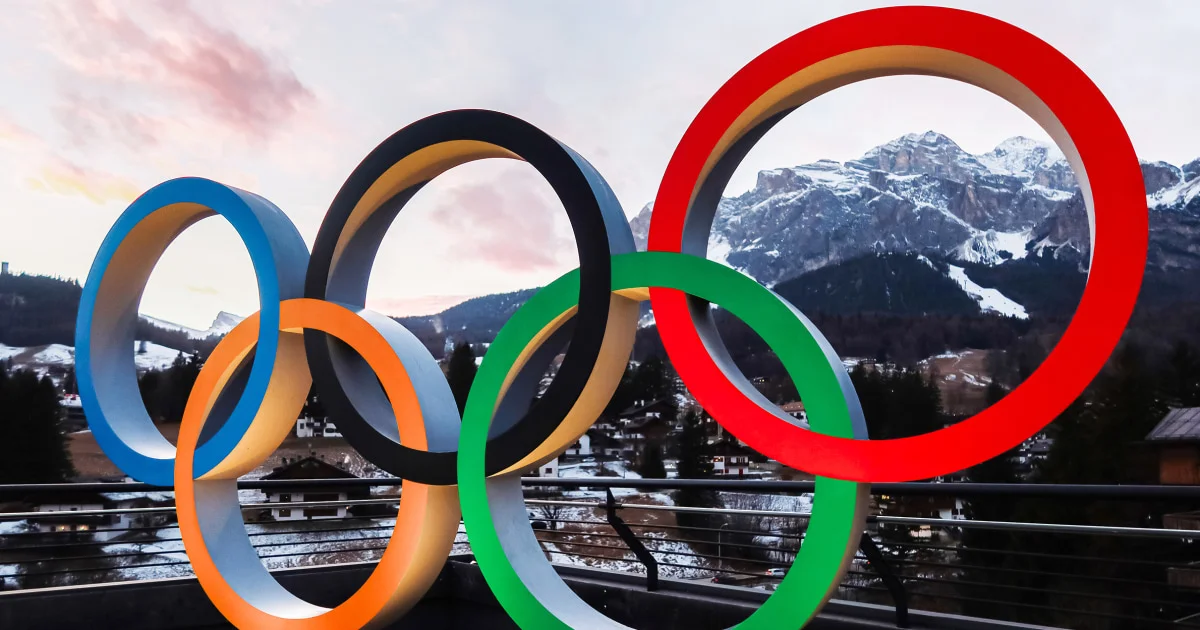
The decision to light two Olympic cauldrons – one in Milan's Arco della Pace and another in Cortina d’Ampezzo at Piazza Dibona – is a deliberate choice, intended to signify unity and a shared experience across the two host locations. Marco Balich, the creative lead for the Opening Ceremony, has emphasized this dual-city approach as a departure from tradition, aiming for a "unified, widespread event." This is indeed a first in Olympic history.

"This is the first time in Olympic history that the ceremony will include two cauldrons." - NBC Insider
However, this unprecedented move invites critical scrutiny. What does this dual cauldron truly symbolize in an era where nations often face division and conflict? Is it a genuine reflection of interconnectedness, or a carefully curated marketing ploy to highlight Italy's geographical diversity? Furthermore, the practicalities of this dual ceremony are intriguing. How will the artistic programs and symbolic gestures be synchronized across two separate locations? Will the focus be diluted, or will it create a richer, more multifaceted opening to the Games?
Read More: Pentagon Chief Wants David Ellison to Buy CNN Soon
Milan Cauldron: Located at Arco della Pace
Cortina Cauldron: Located at Piazza Dibona
Historical Context: Italy has hosted the Olympics before: Winter Games in Cortina (1956) and Turin (2006), and Summer Games in Rome (1960). This marks the fourth time Italy has played host.
The presence of notable performers like Mariah Carey, Andrea Bocelli, and Laura Pausini adds to the spectacle, but will the visual and emotional impact of two distinct cauldron lightings resonate as powerfully as a single, centralized event? The IOC often emphasizes the unifying power of the Olympics; however, by dividing the very symbol of the Games' commencement, they are treading a delicate line between innovation and a potential dilution of that very message.

The Price of Access: Who's Paying for the Olympic Dream?
Beyond the glitz and performances, the most pressing question for many potential viewers is the cost and ease of access. While NBC's coverage in the U.S. is available through traditional cable and its streaming services, the global landscape paints a different picture. Many regions rely on specific media rights holders, often requiring subscriptions to specialized sports channels or streaming platforms.
Read More: Washington Softball Beats Michigan 7-4 After Falling Behind
| Region/Platform | Broadcast/Streaming Provider(s) | Notes |
|---|---|---|
| United States | NBC, Peacock, NBCOlympics.com, NBC app, NBC Sports app | Live and primetime broadcasts, extensive digital access |
| United Kingdom | BBC Two, Discovery+, TNT Sports | Multiple options for live and delayed coverage |
| Europe (General) | Warner Bros. Discovery (HBO Max, Eurosport), National Broadcasters | Varies by country; subscription services common |
| Canada | CBC, Bell Media, Rogers Media | Specific providers vary |
| China | China Media Group (CCTV, Yangshipin) | Official broadcaster |
| Japan | Japan Consortium (NHK, JBA, Fuji TV, etc.) | Extensive coverage from multiple networks |
| Other Regions | Various Official Olympic Media Rights Holders | Complex distribution; specific access varies widely |
The promise of "free" viewing, as hinted at by some articles, often comes with caveats. "Free" streaming might require a VPN to bypass geo-restrictions, which itself can be a hurdle. For instance, TechRadar mentions using Norton VPN for potential free access, but this introduces an added layer of complexity and potential security concerns. The IOC’s strategy appears to be maximizing revenue through a tiered access system, which, while financially sound for the organization, can be frustrating for the average viewer eager to simply watch the Games.
The IOC's financial model relies heavily on broadcast rights, creating a global access structure that often prioritizes paid subscriptions and exclusive deals over universal free access.
Has the IOC considered alternative distribution models that could democratize access while still ensuring financial sustainability? Could a global, unified streaming platform, perhaps a partnership with a major tech company, offer a more equitable solution, or would that simply shift the monopoly?
Read More: Judge Questions Pentagon Policy Blocking Reporters Covering Iran War
Looking Beyond the Ceremony: The Business of the Games
The Opening Ceremony is merely the prelude to two weeks of intense athletic competition. However, the decisions made regarding its broadcast and symbolism set the tone for the entire event. The dominance of NBCUniversal in the U.S. market, coupled with the intricate global network of media rights holders, underscores the immense commercial enterprise that the Olympic Games have become. While entertainment value is undeniable, it's crucial to question whether the core values of the Olympics – unity, peace, and athletic excellence – are being amplified or overshadowed by the business of broadcasting.
As the dual cauldrons are lit, we should be asking not just how to watch, but what narrative is being broadcast, who is controlling that narrative, and whether the spectacle truly reflects the global community it purports to celebrate. The "unity" projected by the two-city ceremony must be interrogated against the backdrop of global inequalities and the very real barriers many face in accessing the Games themselves.
Read More: Michigan Women's Basketball Reaches Third Sweet Sixteen After Beating NC State
Sources:
NBC Insider: How to Watch the 2026 Winter Olympics Opening Ceremony Live Online
Olympics.com: Where to Watch Winter Olympics 2026 Live? | Milano Cortina 2026
Radio Times: How to watch the Winter Olympics 2026 opening ceremony on TV and live stream
Olympics.com: Winter Olympics 2026 Opening Ceremony: Everything you need to know
Engadget: How to watch the Opening Ceremony at the 2026 Milan Cortina Winter Olympics
NBC Insider: The 2026 Winter Olympics Milan Complete Schedule: Where to Watch Every Event
NPR: The Winter Olympics are upon us. Here's how to follow along
NBC Insider: Here’s What Time the 2026 Winter Olympics Opening Ceremony Begins
NBC Insider: The 2026 Winter Olympics Opening Ceremony: Where, When, and What to Expect
Good Housekeeping: Everything You Need to Know About the 2026 Olympics Opening Ceremony
NBC Chicago: How to watch the 2026 Olympics Opening Ceremony on TV, streaming and primetime
TechRadar: Winter Olympics 2026 Live Streams: Free Channels, Schedule & Preview for Milano Cortina