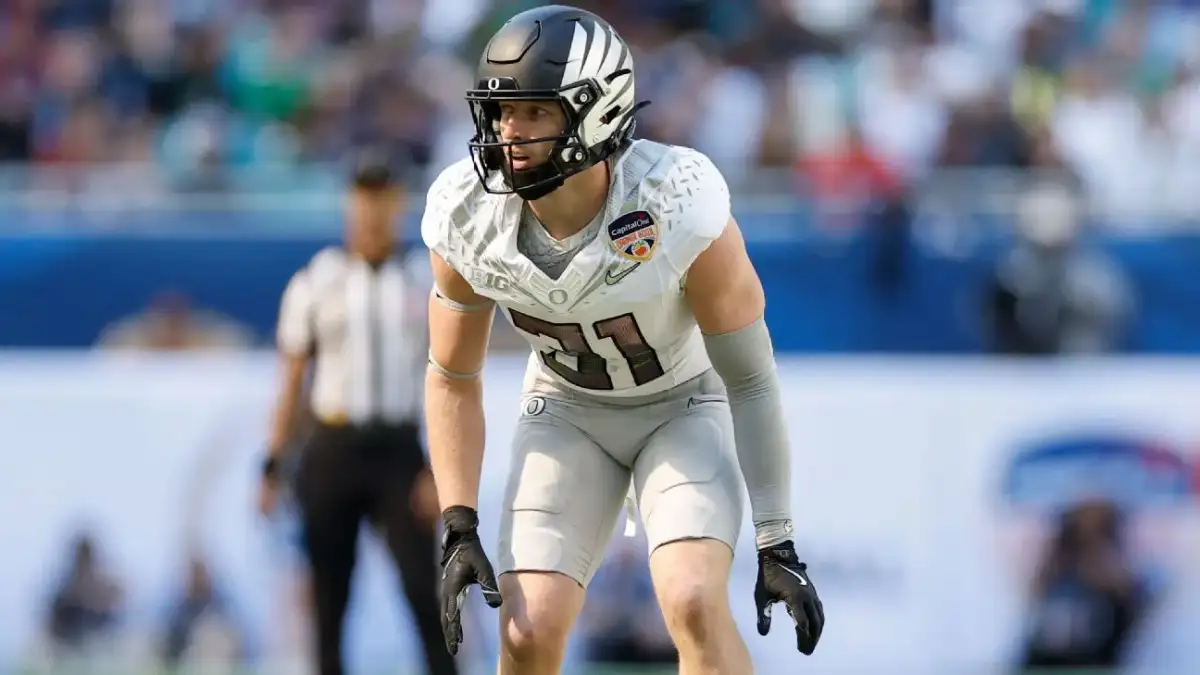
Several college football players are experiencing significant upward movement in projections for the 2026 NFL Draft, indicating a dynamic evaluation process as teams and analysts refine their assessments of emerging talent. The exact reasons for this ascension are varied, touching on a blend of physical attributes, on-field performance, and combine metrics, though the subjective nature of these rankings remains a constant.
Notable Climbers and Their Reported Attributes
Players like Dillon Thieneman, a safety from Oregon, and Jacob Rodriguez, a linebacker from Texas Tech, have seen notable jumps. Thieneman, initially outside top 50 rankings, is now frequently positioned as a top-20 prospect, with some projections even placing him in the first round. Rodriguez, while perhaps less likely for a first-round selection due to his position and age (turning 24 before his rookie season), is consistently viewed as a strong "Day 2" lock, having climbed into the top 40 in some evaluations.
Read More: Rory McIlroy Wins Second Masters Green Jacket After Tough Final Round
Other individuals noted for their rising stock include:
Monroe Freeling, an offensive tackle from Georgia, whose physical dimensions and combine performance are drawing attention. He's been cited as a prospect who could hear his name called on "Day 2" of the draft.
Emmanuel McNeil-Warren, a safety from Toledo, whose draft stock has apparently increased.
Fernando Mendoza, a quarterback from Indiana, who has been identified by some analysts as a top prospect.
Arvell Reese, a linebacker from Ohio State, who has seen a "meteoric rise."
Rueben Bain Jr., an edge rusher from Miami, whose measurements have generated discussion.
Factors Influencing Draft Projections
The shifts in prospect rankings are influenced by a confluence of factors. Physics, or inherent physical capabilities, is one cited reason, alongside on-field production such as multiple rushing touchdowns in a season. Combine performances, like vertical jumps (a 45.5-inch vertical was mentioned for an unnamed prospect), are also critical. For some players, like Freeling, their size combined with athletic testing (not turning 22 until July) suggests potential for further physical development.
Context of the 2026 NFL Draft Cycle
These evaluations occur within the broader context of the 2026 NFL Draft cycle, where various outlets and analysts are publishing preliminary rankings, mock drafts, and prospect profiles. Platforms like PFF and ESPN offer simulated draft experiences and "big boards," while specialized content focuses on positional rankings and "sleepers" who might exceed initial expectations. The ongoing nature of this information flow means that these projections are fluid and subject to change as more game film and combine data become available. News surrounding the draft often includes buzz about team needs, potential draft targets, and discussions about which positions might be stronger in upcoming classes.
Read More: Aaron Rodgers' Decision Delays Steelers Draft Plans for April 2026