


The Hype vs. The Reality: Are Wi-Fi 7 Mesh Systems Worth Your Money?
We're told, year after year, that the newest technology is essential. In the world of home internet, the siren song of "faster, better, stronger" is amplified by the promise of mesh Wi-Fi systems. These networks, designed to blanket our homes in seamless internet, are now touting the latest standard: Wi-Fi 7. But as consumers, we're left asking: is this cutting-edge technology truly delivering on its promises, or are we simply paying a premium for marginal gains, if any? This investigation digs into the claims, the costs, and the actual performance of these Wi-Fi 7 mesh systems, asking the critical questions the marketing departments hope you won't.
The Evolving Landscape of Home Wi-Fi
The quest for a perfect, dead-zone-free home internet connection has been a long one. For years, the solution was often a single, powerful router struggling to reach every corner of larger homes. Then came the concept of mesh Wi-Fi.
Read More: Chrome mimeHandler API lets extensions handle file types
The Problem: Traditional routers have a limited range. As homes got larger and more devices demanded connectivity, "Wi-Fi dead zones" became a common frustration.
The Solution: Mesh Wi-Fi systems utilize multiple units (nodes) that work together to create a single, unified network. This was pitched as a way to extend Wi-Fi coverage more effectively and reliably than older extenders.
The Standards Game: Like all technology, Wi-Fi has evolved through various standards (Wi-Fi 4, 5, 6, 6E, and now 7). Each new standard promises increased speeds, better efficiency, and improved capacity.
The latest iteration, Wi-Fi 7 (also known as 802.11be), is being heavily promoted for mesh systems. The allure is undeniable: higher potential speeds and lower latency. However, as we'll see, the real-world benefits for the average user, and the significant cost increase, warrant a deep, critical look.

What the Experts Are Saying (And What They're Not)
While numerous tech reviews are popping up for "the best mesh Wi-Fi systems of 2026," a closer examination reveals a complex picture, often clouded by marketing buzz. The consensus is that mesh systems are beneficial for larger homes, but the jump to Wi-Fi 7 isn't as clear-cut as the sales pitches suggest.
"Many devices support Wi-Fi 7 now. Are Mesh Systems Better Than Wi-Fi Extenders? But is a dual-band Wi-Fi 7 mesh a good idea? Most Wi-Fi 7 mesh systems are still relatively expensive." (Wired, Jan 17, 2026)
This statement from Wired immediately raises a red flag. While Wi-Fi 7 devices are becoming more common, are the mesh systems themselves truly optimized to leverage this standard, or are they simply featuring the latest chipsets to justify higher prices? The question of whether a "dual-band Wi-Fi 7 mesh" is even a sensible configuration is also pertinent – why introduce the latest standard on a less robust setup?
Read More: Home Internet Slow? Why Your Connection Isn't Getting Faster
CNET's review from October 2025 echoes this sentiment, pointing out a peculiar performance anomaly:
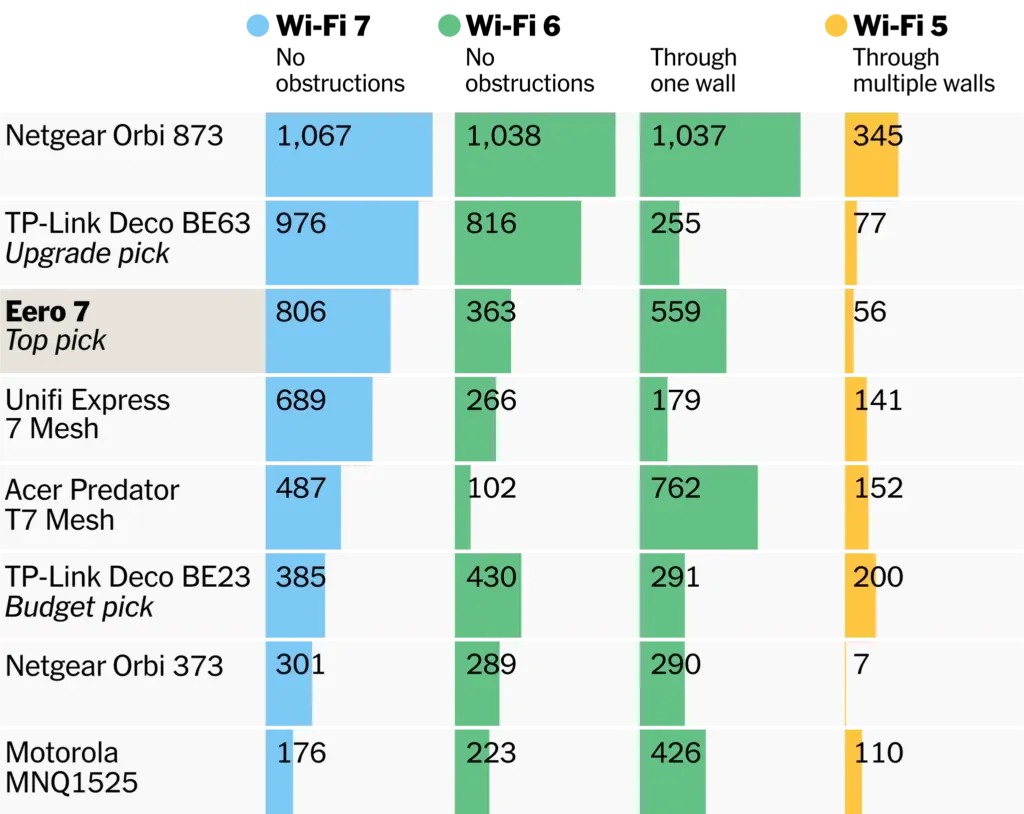
"when we reran our tests with a fancy Wi-Fi 7 test device, speeds were actually slower than what we saw on a Wi-Fi 6 or Wi-Fi 6E device." (CNET, Oct 9, 2025)
This is a critical finding. If a new, supposedly superior standard is slower in real-world testing than its predecessors, what does that say about the implementation or the genuine benefits being offered? Are we chasing theoretical maximums that are never realized in typical home environments?
The Price of Progress: Cost vs. Benefit
The adoption of new technology often comes with a significant price tag. Wi-Fi 7 mesh systems are no exception, often commanding a premium over their Wi-Fi 6E or even Wi-Fi 6 counterparts. The question then becomes: is the increased cost justified by tangible improvements in performance and reliability?
| System Type | Typical Price Range (2026) | Key Features | Notes |
|---|---|---|---|
| Wi-Fi 6 Mesh | $200 - $500 | Good coverage, solid speeds, widely compatible. | Proven technology, affordable, sufficient for most households. |
| Wi-Fi 6E Mesh | $300 - $700 | Adds the 6 GHz band for less interference, potentially faster. | Benefits often limited by client device support and network congestion. |
| Wi-Fi 7 Mesh | $500 - $1000+ | Highest theoretical speeds, lower latency, advanced features (e.g., MLO). | Often expensive, real-world gains may be minimal, requires Wi-Fi 7 devices. |
Tecnoyfoto.com's January 2026 guide highlights this price disparity:

A "monstrous Quad-Band WiFi 7 performance" system is noted as "Still pricey for a non-WiFi 7 system." (This appears to be a contradiction in terms, possibly referring to a system capable of Wi-Fi 7 but not fully embodying it, or a very high-end Wi-Fi 6E system being compared.)
Another system offers "Excellent WiFi 7 performance at a competitive price point," suggesting that while Wi-Fi 7 is available, "competitive" is relative to other high-end Wi-Fi 7 offerings, not necessarily to older, more affordable standards.
They also highlight "The most affordable WiFi 6E system from a trusted brand," indicating that sticking with Wi-Fi 6E might still be the more budget-friendly and practical choice.
If a Wi-Fi 6E system is considered "affordable," while Wi-Fi 7 is positioned as "competitive" only against other Wi-Fi 7 systems, it implies a substantial price jump. Are consumers truly getting a tenfold increase in value for this jump?
Read More: BEREC Asks for Mobile Network API Ideas from Developers
Unpacking the "Wi-Fi 7" Advantage: Is it Real?
Wi-Fi 7 promises significant advancements, including:
Higher Throughput: Theoretically much faster speeds.
Lower Latency: Reduced delay in data transmission, crucial for gaming and real-time applications.
Multi-Link Operation (MLO): The ability to connect to a network on multiple frequency bands simultaneously, theoretically improving stability and speed.
However, the critical question remains: do these theoretical benefits translate into practical, noticeable improvements for the average home user?
Device Compatibility: Do you actually have enough Wi-Fi 7-compatible devices (laptops, phones, smart TVs) to take advantage of these speeds? If not, the network will be bottlenecked by your older devices.
Internet Speed: Is your home internet service fast enough to even saturate a Wi-Fi 6 connection, let alone Wi-Fi 7? Many broadband plans, even in 2026, do not offer speeds that would make Wi-Fi 7 a practical necessity.
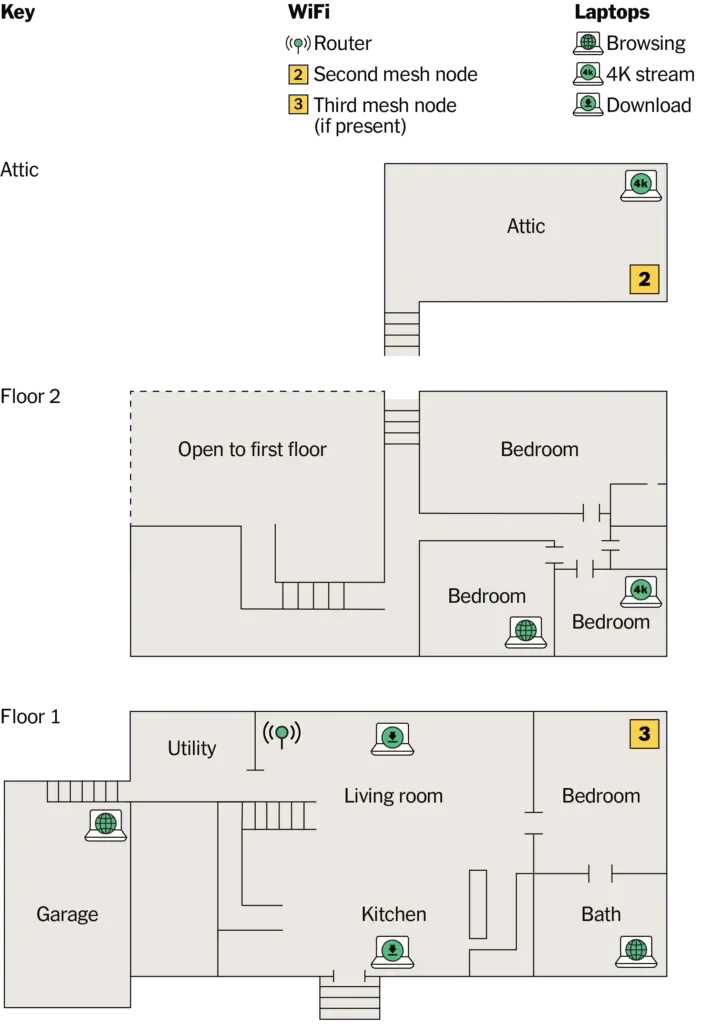
Environmental Factors: Real-world Wi-Fi performance is affected by building materials, interference from neighbors' networks, and the number of devices on your own network. The theoretical maximums of Wi-Fi 7 are rarely achieved in practice.
Implementation Quirks: As CNET noted, poor implementation or early-stage technology can sometimes lead to worse performance than established standards.
Why would a Wi-Fi 7 mesh system be more expensive if it doesn't offer a significant, consistent upgrade? Is it simply the inclusion of newer, more expensive chipsets that aren't yet fully utilized or beneficial in typical home settings?
The Future is Now… Or is it Just More Expensive?
The drive towards the latest standards is relentless. Mesh Wi-Fi systems, designed to solve the problem of home coverage, are now at the forefront of the Wi-Fi 7 push. Yet, critical observations from tech reviewers suggest a gap between the marketing hype and the user experience.
"Mesh Wi-Fi systems are ideal for larger homes with multiple stories." (CNET, Oct 9, 2025)
This fundamental benefit of mesh systems remains true regardless of the Wi-Fi standard. For many, the mesh capability is the primary reason for purchase, not necessarily the bleeding edge of Wi-Fi speed.
Read More: Confidential Computing Security Flaw Found on 4 April 2026
As we look at the landscape, several probing questions emerge:
Are manufacturers prioritizing the integration of Wi-Fi 7 chipsets over robust, user-friendly mesh networking features?
What are the actual, measurable speed differences between high-end Wi-Fi 6E and Wi-Fi 7 mesh systems in typical home environments?
How many users are realistically upgrading their entire ecosystem of devices to Wi-Fi 7 to fully benefit from these new mesh systems?
Is the "expensive" nature of Wi-Fi 7 mesh systems a barrier to adoption for the very people who would most benefit from improved home coverage (i.e., those in larger homes who might not have large budgets for bleeding-edge tech)?
When will independent, unbiased testing demonstrate a clear, consistent, and substantial real-world performance advantage for Wi-Fi 7 mesh over its predecessors that justifies the significant cost increase?
Conclusion: A Cautious Approach is Warranted
The promise of lightning-fast, ubiquitous Wi-Fi through mesh systems is compelling. However, the arrival of Wi-Fi 7 in these systems appears to be a case of technology outpacing practical user needs and budget realities. While the underlying mesh technology remains valuable for improving home coverage, the immediate jump to Wi-Fi 7 might be premature for many.
The findings from early 2026 reviews suggest that:
Mesh systems are still a good solution for large homes.
Wi-Fi 7 is becoming available in mesh systems.
These Wi-Fi 7 systems are generally more expensive.
Crucially, real-world performance gains over Wi-Fi 6/6E are not guaranteed and can even be worse in some implementations.
Until independent, long-term testing provides undeniable proof of significant, consistent benefits that justify the premium price, consumers would be wise to exercise caution. Investing in a well-reviewed Wi-Fi 6E or even a robust Wi-Fi 6 mesh system might offer a more practical and cost-effective solution for achieving excellent home Wi-Fi coverage without falling victim to the latest tech trend. The "best" system for your home might not be the one with the newest standard, but the one that offers reliable performance and value for your specific needs.
Read More: Street Fighter 6 Year 4 Pass adds Tifa and 3 new fighters in 2026
Sources
Wired: The best mesh Wi-Fi systems of 2026 - I’ve Tested Countless Mesh Systems. Here Are the Routers I Recommend (Published: Jan 17, 2026)
CNET: Best Mesh Wi-Fi Routers for 2026 (Published: Oct 9, 2025)
Tecnoyfoto: Best Mesh WiFi System 2026: Ultimate Guide to Kill Dead Zones (Published: Jan 20, 2026)
RTINGS.com: The 4 Best Mesh Wi-Fi Systems of 2026 (Published: ~Jan 17, 2026, based on "3 days ago")
The New York Times Wirecutter: The Best Wi-Fi Mesh-Networking Systems (Published: Jan 9, 2026)




