Recent developments indicate a significant stride in hard disk drive (HDD) technology, with Western Digital's advancements in their WD Red Plus line pushing HDD speeds closer to those of traditional SATA Solid State Drives (SSDs). This technological evolution coincides with shifts in Western Digital's product strategy, including a closer alignment with SanDisk for SSD offerings and the separation of support for HDD and flash products. These changes prompt an examination of the evolving landscape of storage solutions.

HDD Speed Leap and Future Potential
Western Digital is integrating new technologies into its HDD development. The High Bandwidth Drive technology features multiple heads that can read or write data on separate tracks concurrently. This allows one head to write while another reads from a different track simultaneously, or both can perform read or write operations at the same time. Coupled with Dual Pivot technology, which aims to maintain storage capacity without sacrifice, Western Digital's ambition is to achieve up to four times the bandwidth of current HDDs.
Read More: Chrome mimeHandler API lets extensions handle file types

Targeted Bandwidth: The goal is approximately 1.2 GB/s, a significant increase over current HDD performance.
Power Efficiency: This enhanced performance is targeted without an increase in power consumption compared to standard HDDs.
SATA SSD Parity: This projected speed directly challenges the performance benchmarks previously held by SATA SSDs.
Western Digital and SanDisk Integration
The relationship between Western Digital and SanDisk has seen strategic adjustments. While Western Digital continues to offer its WD_Black line of SSDs, particularly noted for gaming, there is an observable trend towards greater reliance on SanDisk for SSD technology and support.

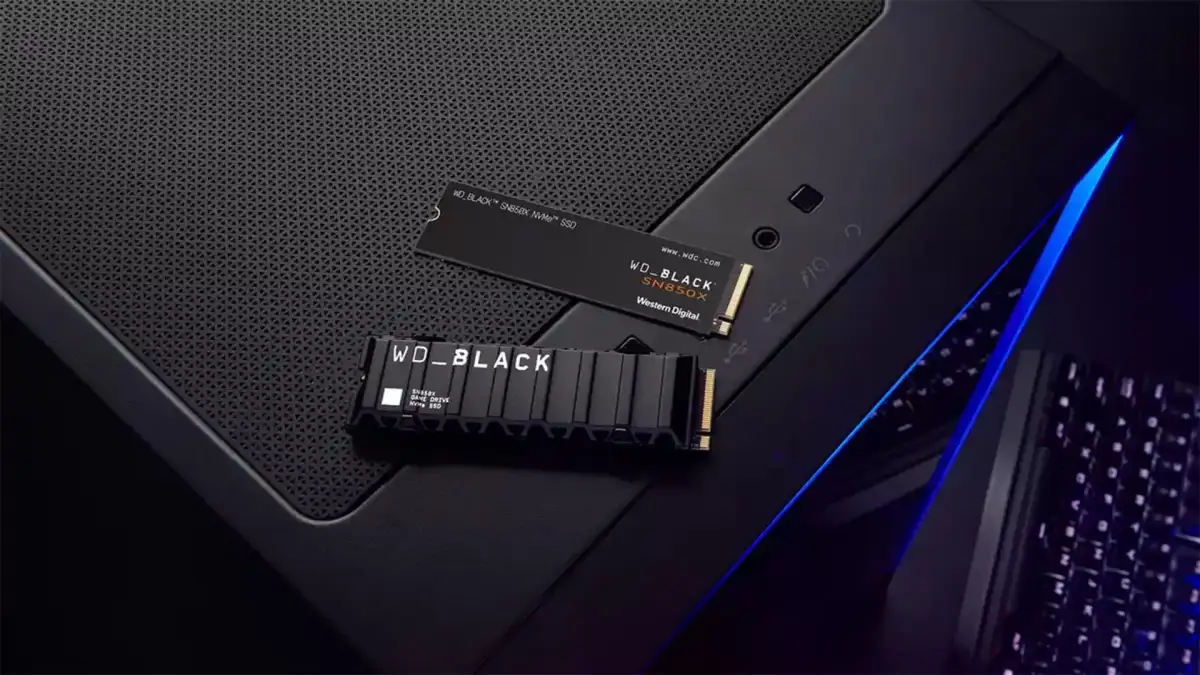
Brand Association: The WD_Black SN850X is cited as a top-tier gaming SSD, indicating continued product availability.
Support Separation: Western Digital's support infrastructure now directs users seeking assistance with flash products, including SSDs and memory cards, to SanDisk Support. This separation follows Western Digital's division into two independent companies.
Compatibility Issues: Certain WD and SanDisk NVMe SSDs, such as the WD_BLACK SN770, have experienced compatibility blocks with Windows 11 version 24H2, necessitating firmware updates via the SanDisk Dashboard software.
Challenges and User Experiences with SSDs
Despite the advancements in HDD technology, users have reported issues with both Western Digital and SanDisk SSDs. These problems range from compatibility blocks to devices failing to be recognized or function correctly.

Windows 11 24H2 Block: Users have encountered difficulties upgrading to Windows 11 version 24H2 due to compatibility issues with specific WD and SanDisk NVMe SSD models. Firmware updates through the SanDisk Dashboard appear to be the identified workaround.
Intermittent Recognition: Some WD Blue SA510 SATA SSDs have been reported to stop working intermittently, requiring laptop restarts to become visible again, suggesting potential firmware or hardware stability concerns.
Historical Issues: There are records of past concerns regarding failing portable SSDs associated with Western Digital.
HDD Reliability and Error Management
Western Digital HDDs are generally known for their durability, but like all storage devices, they can encounter errors.
Common Errors: Disk Read Errors are noted as a common issue, which can be critical for device functionality.
Troubleshooting: The company provides support for HDD errors, often directing users to check drive health via software or to consult specific troubleshooting guides for issues like drives not being detected.
Overclocking Impact: It has been noted that overclocking system components like the PCI, AGP, or FSB bus can cause SATA controllers, and by extension WD drives, to malfunction or become unstable due to the interconnectedness of these buses.
Expert Analysis
The ongoing development of HDD technology to rival SATA SSD speeds signifies a dynamic storage market.
Read More: New GNStor System Uses GPUs for Faster Storage
"The technological push by HDD manufacturers like Western Digital to increase data transfer rates is a direct response to the growing demands of data-intensive applications. The ability to achieve speeds previously exclusive to SSDs, while retaining the cost-effectiveness and high capacity of HDDs, could redefine mainstream storage."
"The strategic separation of brands and support infrastructures, particularly between Western Digital and SanDisk, suggests a focused approach to each product category. While this may streamline specific support processes, it also underscores the distinct technical requirements and market positions of HDDs and SSDs."
Conclusion
Western Digital is actively enhancing HDD performance, bringing their speeds into closer competition with SATA SSDs through innovations like High Bandwidth Drive and Dual Pivot technologies. Simultaneously, the company is navigating a period of structural adjustment, with a closer strategic alignment with SanDisk for SSD products and a defined separation of support services for HDD and flash-based storage. While these advancements promise more capable HDDs, user experiences with SSDs have highlighted ongoing challenges, including compatibility issues and intermittent device recognition. The firm’s efforts to improve HDD speed, coupled with the strategic consolidation of SSD support under the SanDisk umbrella, indicate a deliberate recalibration of its storage product portfolio to meet evolving market demands and address existing technical hurdles.
Sources Used:
Howtogeek.com: Discusses Western Digital's advancements in HDD technology, specifically the WD Red Plus line and its potential to reach speeds comparable to SATA SSDs.
https://www.howtogeek.com/hdds-are-anything-but-dead-they-will-soon-be-faster-than-sata-ssds/
Pcgamer.com: Reports on Western Digital's product strategy concerning SSDs, noting the brand's association with SanDisk and its continued presence in the gaming market with models like the WD_Black SN850X.
https://www.pcgamer.com/hardware/ssds/looks-like-we-wont-be-seeing-western-digital-ssds-in-our-gaming-pcs-as-the-company-hands-the-reins-back-over-to-sandisk/
Windowsforum.com: Addresses compatibility issues between WD and SanDisk NVMe SSDs (specifically mentioning the WD_BLACK SN770) and Windows 11 version 24H2, outlining firmware update procedures via SanDisk Dashboard.
https://windowsforum.com/threads/how-to-fix-wd-sandisk-nvme-ssd-compatibility-block-for-windows-11-24h2-upgrade.370865/
Westerndigital.com/support: Provides information on product support, clarifying that SanDisk Support handles flash products (SSDs, memory cards), while Western Digital focuses on HDD support, following the company's separation.
Techpowerup.com: Features discussions related to past issues concerning failing portable SSDs from Western Digital.
https://www.techpowerup.com/forums/threads/western-digital-in-trouble-over-failing-portable-ssds.312512/
Securedatarecovery.com: Offers insights into common Western Digital hard drive errors, such as Disk Read Errors, and methods for their resolution.
https://www.securedatarecovery.com/blog/western-digital-errors
Dell.com: Contains a user report regarding a WD Blue SA510 SATA SSD that was not consistently recognized by a system, indicating intermittent functionality issues.
https://www.dell.com/community/en/conversations/inspiron/newly-added-wd-blue-sa510-sata-ssd-is-not-working/64a3fb91f4ccf8a8dea0160f
Support-eu.wd.com: Details troubleshooting steps for SATA hard drives not being detected or becoming unstable, particularly mentioning the impact of system overclocking on SATA controller stability.
https://support-eu.wd.com/app/answers/detailweb/aid/2730//fix-sata-hard-drive-not-detected-or-becomes-unstable-when-computer-is