The United States has deployed a third aircraft carrier strike group to the Middle East, significantly expanding its naval presence as regional tensions with Iran intensify. The USS George H.W. Bush (CVN-77) has entered the U.S. Central Command's area of responsibility, joining the USS Abraham Lincoln and the USS Gerald R. Ford. This build-up allows for continuous air and maritime coverage across a wide operational area.
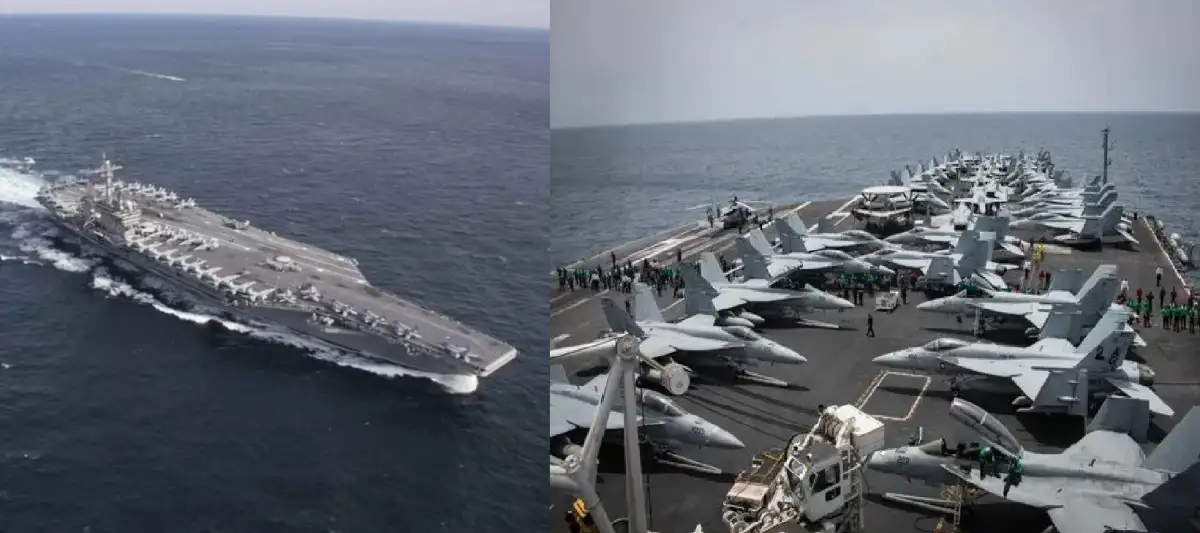
This concentration of naval power suggests preparations for a prolonged military engagement, potentially signaling a demand for Iran's surrender. The deployment places a substantial 'maritime strike capability' within reach, capable of launching hundreds of cruise missiles to degrade Iranian air defenses and command infrastructure before air missions commence.

Carrier Strike Group Capabilities
Each carrier strike group is a formidable force. The USS George H.W. Bush, for instance, is accompanied by Carrier Air Wing Eight, which typically comprises:
Read More: US Halts Iran War for 2 Weeks; Congress May Not Approve

F/A-18E/F Super Hornet strike fighters
EA-18G Growler electronic warfare aircraft
E-2D Hawkeye airborne early-warning aircraft
C-2A Greyhound logistics aircraft
MH-60 Seahawk helicopters
The E-2D Advanced Hawkeye aircraft play a crucial role in airborne command-and-control, providing long-range radar surveillance and threat detection.

Strategic Positioning
The USS Gerald R. Ford is currently positioned in the Red Sea, having crossed the Suez Canal after a stop in Haifa, Israel. It is reportedly prepared to intervene should Houthi forces attempt to join the ongoing conflict. The USS Abraham Lincoln remains active in the Sea of Oman. The addition of the USS George H.W. Bush, which is expected to operate in the eastern Mediterranean, creates a multi-pronged posture around Iran. This strategic positioning allows for sustained operations without overextending forces.
Escalating Tensions
The deployment occurs against a backdrop of escalating conflict between Iran and the United States, with Iran having previously retaliated against US bases, diplomatic facilities, and military personnel across the region with missile and drone attacks. Reports indicate that some US naval assets, including destroyers, have already been engaged in intercepting Iranian threats. The decision to dispatch a third carrier group represents a marked increase in American military pressure on Iran.
Read More: FIFA Congress: Palestinian official refuses handshake with Israeli counterpart