Significant reductions in the United Kingdom's overseas aid budget have drawn strong criticism, with analysts suggesting the scale of these cuts may even surpass those enacted by the United States under the Trump administration. This development has raised concerns among international development organizations and aid workers regarding the global impact on poverty alleviation efforts and the UK's standing on the world stage.
Context
In February 2025, the UK government, led by Prime Minister Keir Starmer, announced a significant reduction in its international development spending. The decision was framed as a necessary measure to increase defense spending, a move spurred by what is described as a growing Russian threat and the "new reality" in Europe. This action contrasts with previous aid policies and follows a trend of decreasing aid budgets, including those under the former Conservative government and the US under Donald Trump.

February 2025: The Labour government officially announced its decision to cut international development spending to 0.3 percent of gross domestic income, down from 0.5 percent.
Motivation: The stated reason for the cuts is to fund a substantial increase in defense spending, aiming to reach 5 percent of GDP, the largest rise since the Cold War.
Prior Cuts: This new reduction builds upon previous cuts made by the Conservative government. For instance, under Prime Minister Boris Johnson, the annual aid budget reportedly shrunk from £20 billion to £15 billion.
Global Context: These UK cuts occur alongside reported reductions in aid budgets by other nations, including Germany and Canada, and follow proposed budget cuts from the Trump administration in the US.
Evidence
Multiple reports and statements from various sources provide evidence of the UK's aid cuts and their implications:

Scale of Cuts: The decision to reduce aid to 0.3 percent of GNI is described as the "single largest cut to the UK aid programme in history" by aid groups. Some analyses suggest these cuts are "on a par with—or even exceeding—those of both the previous center-right Conservative government or the United States under Donald Trump."
Parliamentary Scrutiny: A report by the international development committee stated that the cuts, intended to boost defense, could paradoxically "weaken national security" and have "devastating consequences." Sarah Champion, chairwoman of the committee, suggested the cuts might not improve national security and could "continue to lead to unrest and further crises in the future," while also jeopardizing the UK's "soft power."
Impact on Recipients: Ethiopia is projected to lose the most aid in nominal terms, with Jordan, Afghanistan, and the Democratic Republic of Congo also being "hit particularly hard." Aid groups have warned that "this will cost lives."
Domestic Spending: In the year preceding October 2025, a notable portion of Britain's aid budget – one-fifth – was spent on housing and supporting asylum seekers domestically.
Government Justification: Prime Minister Keir Starmer has stated that "UK national security 'must always come first'," acknowledging the "international context changes."
Criticism from Charities: 138 charities reportedly wrote to Mr. Starmer expressing their dismay. Christian Aid in Wales described the decision as "disappointing news" and an "absolute dereliction of duty."
Domestic Funding of Asylum Seekers
A significant portion of the UK's foreign aid budget has been allocated to domestic spending, particularly on asylum seekers.

Allocation: For the third consecutive year, the largest part of the aid budget was spent on supporting asylum seekers within the UK.
Concerns: This allocation has drawn criticism, with some calling for a cap on Home Office spending on refugees to protect true international aid spending.
Controversy: The policy has "fuelled mass protests," indicating public concern and division over this use of development funds.
Aid vs. Defense Spending Trade-off
The government's decision to prioritize defense spending over international aid has been a central point of discussion and criticism.
Read More: Pressure Washer Mistakes Cost UK Owners More Money
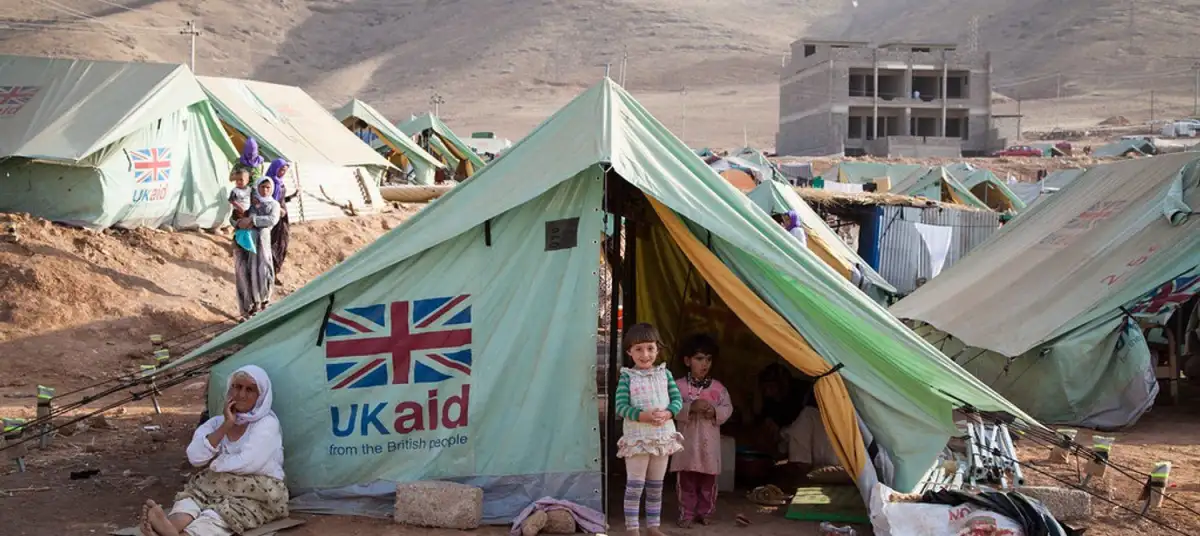
Political Calculation: The decision to cut foreign aid is seen by some as a "politically easy" choice domestically, despite being "globally devastating."
Parliamentary Report Findings: A parliamentary report indicated that the cuts intended to boost defense might be having the opposite effect.
Alternative Views: Some experts argue that defense and aid are not a "one-for-one trade-off," suggesting that foreign aid spending can help prevent future humanitarian and geopolitical crises that defense budgets alone cannot fix.
Starmer's Stance: Prime Minister Starmer's position emphasizes that national security is paramount. However, the decision has led to questions about whether this prioritization will ultimately enhance security.
Impact on Global Cooperation and UK Soft Power
The UK's reduced aid spending has broader implications for its international role and global development efforts.
Soft Power: The cuts are seen as potentially jeopardizing the UK's "ability to wield soft power" on the international stage.
International Relations: The decision to cut aid has also been discussed in the context of international pressure on European nations to increase defense spending, particularly in relation to the US and potentially Russia.
Multilateral Aid: There is a suggestion that giving a larger share of aid to multilateral organizations could improve international cooperation and reduce duplication of efforts. However, the impact of unilateral UK aid projects is seen as particularly vulnerable due to their ease of exit.
US Parallel: The dismantling of the UK's aid agency, DFID, is noted as a parallel to the US cutting its aid program, USAID, with questions remaining about the efficiency and effectiveness of such structural changes.
Expert Analysis
Experts and parliamentary committees have voiced significant concerns regarding the UK's recent overseas aid cuts.
"The scale of the cuts is on a par with—or even exceeding—those of both the previous center-right Conservative government or the United States under Donald Trump."— Politico EU (December 4, 2025)
"Slashing the development budget will 'continue to lead to unrest and further crises in the future' as well as jeopardising the UK’s ability to wield soft power."— International Development Committee report (cited in The National, October 29, 2025)
"The government targeted foreign aid — politically easy at home, but globally devastating."— Global Citizen (April 16, 2025)
"Cutting international aid to boost defence spending is an 'absolute dereliction' of duty."— Charity promoting projects between Wales and Africa (cited in BBC News, February 26, 2025)
Conclusion
The UK government's decision to significantly cut its overseas aid budget in February 2025, primarily to bolster defense spending, has triggered widespread criticism and concern. Evidence suggests that the scale of these reductions may rival or even surpass those implemented by the Trump administration in the United States.
Key findings indicate:
The cuts aim to reduce the aid budget to 0.3 percent of GNI, a move described as historically significant.
The primary driver for these cuts is to fund a substantial increase in defense expenditure.
A significant portion of the aid budget has been diverted to domestic spending on asylum seekers.
Parliamentary bodies and numerous charities have warned of severe consequences, including potential negative impacts on national security, erosion of the UK's soft power, and increased global instability.
The debate highlights a fundamental tension between national security priorities and international development commitments, with implications for the UK's global standing and its contribution to poverty alleviation. The effectiveness of these cuts in achieving their stated goals, particularly concerning national security, remains a subject of ongoing scrutiny and debate.
Read More: New Group Pledges Over $5 Billion to Rebuild Gaza
Sources Used:
Politico EU: https://www.politico.eu/article/labour-overseas-aid-international-development-foreign-policy/
CNN: https://www.cnn.com/2025/06/12/europe/foreign-aid-cuts-uk-germany-canada-intl
The National: https://www.thenationalnews.com/news/uk/2025/10/29/uks-devastating-overseas-aid-cuts-could-weaken-national-security/
Global Citizen: https://www.globalcitizen.org/en/content/the-uk-is-the-latest-country-to-slash-its-foreign/
Context by TRF: https://www.context.news/socioeconomic-inclusion/britains-foreign-aid-where-does-the-money-go
The Guardian (Feb 28, 2025): https://www.theguardian.com/politics/2025/feb/28/keir-starmer-carry-out-largest-cut-uk-overseas-aid-in-history
The Conversation: https://theconversation.com/us-isnt-first-country-to-dismantle-its-foreign-aid-office-heres-what-happened-after-the-uk-killed-its-version-of-usaid-250868
The Guardian (May 07, 2025): https://www.theguardian.com/global-development/2025/may/07/conversation-on-future-of-aid-long-overdue-uk-looks-to-lead-response-to-swingeing-us-cuts
Institute for Government: https://www.instituteforgovernment.org.uk/comment/cutting-aid-defence-starmer
The Guardian (Mar 02, 2025): https://www.theguardian.com/global-development/2025/mar/02/this-will-cost-lives-cuts-to-uk-aid-budget-condemned-as-betrayal-by-international-development-groups