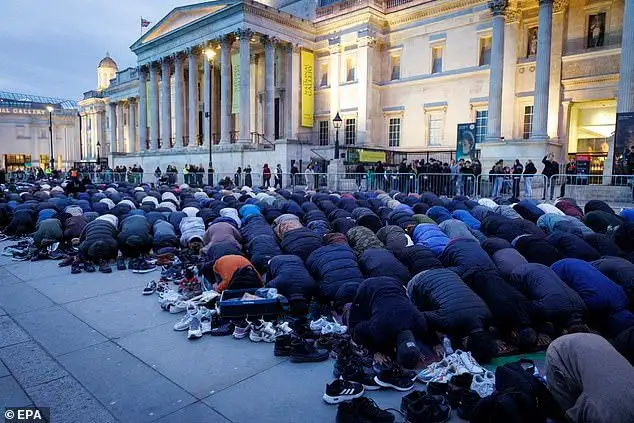
A recent gathering of approximately 3,000 Muslims for a mass prayer event in London's Trafalgar Square, marking the end of Ramadan, has ignited a fierce political debate, exposing deep fissures in public discourse. The event, attended by Mayor of London Sadiq Khan, who participated in the prayers and delivered a speech, has become the focal point of accusations and counter-accusations concerning religious expression, public space, and political opportunism.
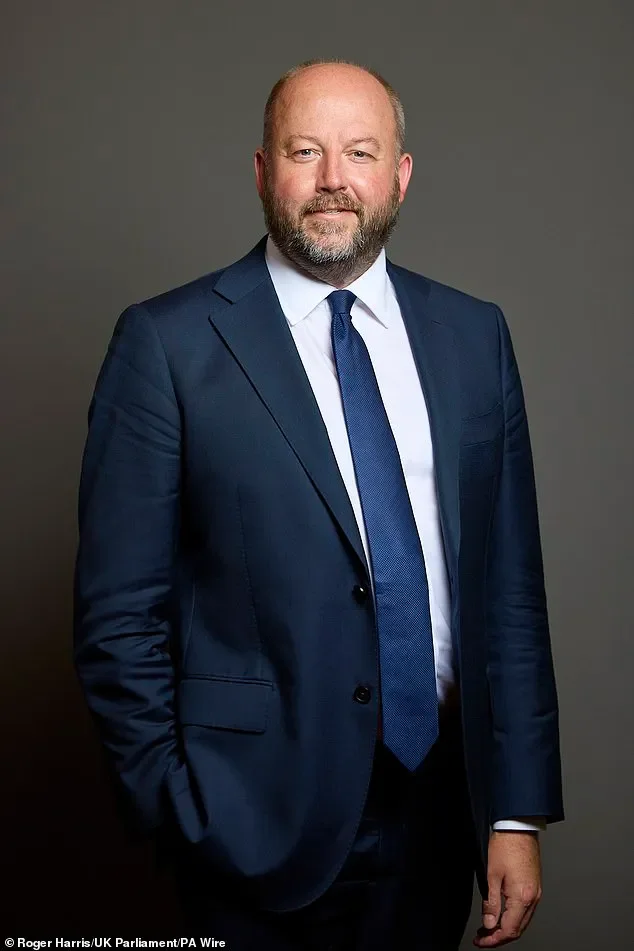
The controversy coalesced around comments made by Tory MP Nick Timothy, who shared footage of the event and described the mass public prayer as "an act of domination" and "not welcome in our public places and shared institutions." This assertion triggered a swift and forceful reaction, with Prime Minister Sir Keir Starmer demanding Timothy's dismissal from his role as Shadow Secretary for Justice. Starmer framed the incident as evidence that the Conservative Party "has got a problem with Muslims," drawing parallels to the rhetoric of figures like Tommy Robinson.
Read More: Mahabharata: Krishna's Strategy and Wisdom Guided Pandavas

Further complicating the narrative, Khadija Khan, writing as a former Muslim, has voiced strong criticism, not of the prayers themselves, but of what she terms "performative outrage." Khan contends that Islam does not mandate mass public prayer in civic squares, suggesting the Trafalgar Square event was a "deliberate public display" rather than a religious necessity. She posits that in contemporary Britain, "there is not a Muslim in Britain today who is prevented from practising their faith," implying that the outcry and political posturing surrounding the event are disingenuous.
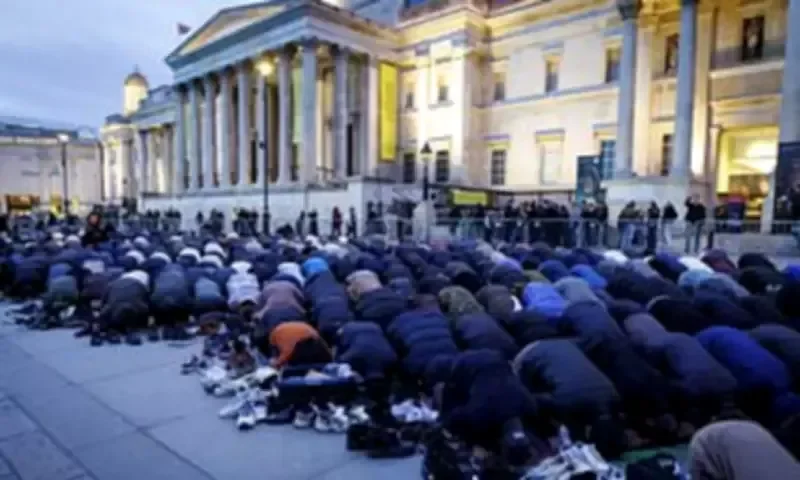
A Square Of Contention
Trafalgar Square, a historically significant public space, has repeatedly served as a venue for various religious and cultural celebrations, including events for Hindus, Jews, and Christians. Khan himself highlighted this, noting that the square has hosted such events over the years. However, the recent Ramadan gathering, specifically the visual of mass prayer, appears to have crossed a threshold for some, prompting questions about the nature and suitability of religious observance in civic spaces.
Read More: Riz Ahmed says UK spies asked him to be informant 3 times

Arguments have emerged suggesting that such organized public prayer in a national square is inherently political, a "statement worthy of public discourse." Some voices posit that public spaces are never truly neutral, and large-scale religious displays, particularly those perceived as segregated, provoke questions about the evolving definition of British values and tolerance.
Free Speech and Political Football
The ensuing political firestorm has also become entangled with debates around free speech. While some, like Lord Walney, Starmer's former extremism adviser, disagree with Timothy's views, they argue that preventing him from expressing them would contravene freedom of speech. This perspective clashes with calls for Timothy's dismissal, with some suggesting his comments could fall under definitions of anti-Muslim hostility, particularly if intent is proven.
Read More: God's Love for People and Hate for Sin Explained
The Labour Party, through figures like Anna Turley, has demanded Kemi Badenoch, the Conservative leader, sack Timothy, framing his comments as aligning the party with far-right sentiment. Meanwhile, the Attorney General, Lord Hermer, who is Jewish, has challenged Badenoch directly, questioning whether similar objections would be raised for Jewish prayer in public and urging clarity on her stance.
Background to the Discourse
The Trafalgar Square prayer event occurred during Ramadan, the Islamic month of fasting. The gathering included an 'Open Iftar,' a meal to break the fast at sunset, and prayers. This context, while central to the event's purpose, has been largely overshadowed by the political recriminations. The underlying debate seems to revolve around the perceived balance between religious freedom, the character of public spaces, and the politicization of these issues, particularly as electoral considerations, such as the "declining Muslim vote," are cited as a potential motive for political posturing.
Read More: Prince Andrew police probe gives hope to Virginia Giuffre's family