


TMK Energy reported a peak daily output exceeding 900 cubic metres (31,800 scfd) at its Gurvantes XXXV coal seam gas project in southern Mongolia this March. This number marks a sharp, albeit narrow, spike compared to previous months. While the company narrative focuses on "records," the mechanical reality is a jagged climb. Average daily production for February actually dropped to 583 cubic metres, down from 593 in January, because the pipes were quiet during pressure tests at wells LF-01 and LF-04.
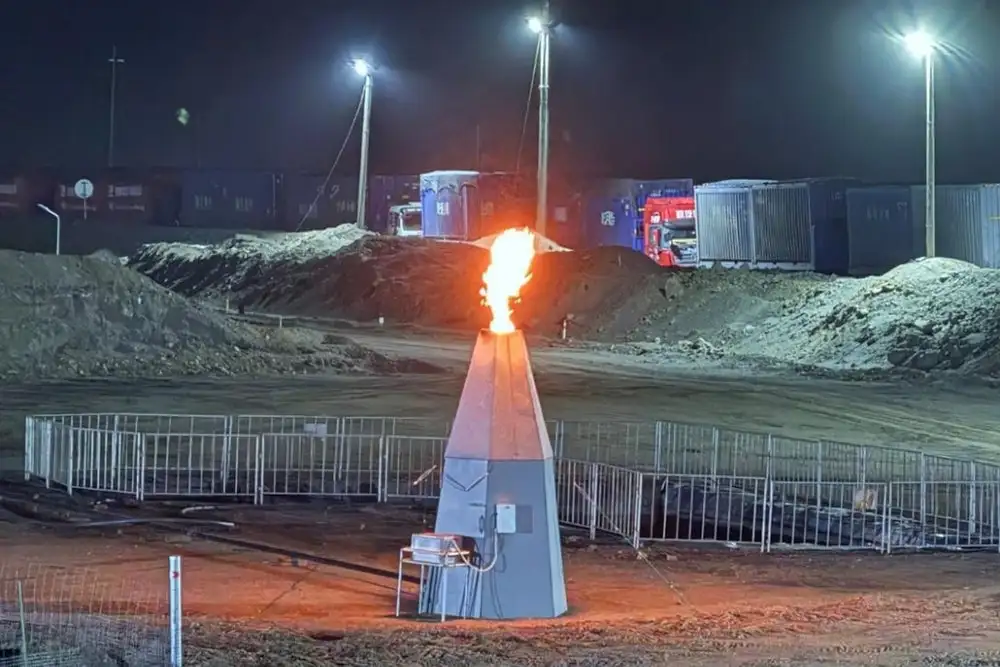
"The desorption pressure is moving closer to the level required to increase gas volumes significantly." — Management observation on the physics of the coal seam.
The flow depends on critical desorption pressure, the specific point where gas stops clinging to the coal and starts moving toward the surface.
Recent surges suggest the reservoir is finally losing enough water and pressure to release the trapped gas more freely.
Technical pauses for maintenance, such as the downtime at LF-05, have historically hampered total monthly volumes even as individual daily peaks rise.
Discussions are now surfacing regarding gas-fired power generation to soak up this pilot-scale output.
The Measured Ascent of Methane
The project has maintained a shaky upward trajectory since late 2025. The data reveals a pattern of testing, pausing, and pushing through the coal's resistance. In early 2026, the LF-07 well became a primary actor, being the first to pass the 10,000 scfd threshold on its own using a heavier TXD200 rig.
| Timeframe | Daily Peak (m³) | Avg Daily Production (m³) | Note |
|---|---|---|---|
| Oct 2025 | - | 395 | Early flow baseline |
| Nov 2025 | 500 | 480 | First major climb |
| Dec 2025 | - | 526 | Steady drainage |
| Jan 2026 | 674 | 593 | LF-07 starts contributing |
| Feb 2026 | 720 | 583 | Dip due to 14-day shut-ins |
| Mar 2026 | 900+ | TBA | Current record spike |
The current off-take framework involves Jens Energie LLC. This agreement serves as the intended destination for the gas once the pilot moves into a commercial phase. Engineers are currently using Distributed Temperature Sensing (DTS) technology in the LF-05 and LF-06 wells to watch the thermal changes in the seam, which signal where the water is leaving and the gas is arriving.
Structural Background
The Gurvantes XXXV project sits in the South Gobi basin, a region traditionally defined by coal exports to China but now being poked for its methane potential. TMK Energy (ASX: TMK) is attempting to prove that the coal seams here can produce enough sustained gas to replace more expensive energy imports.
The process is slow. Coal seam gas requires "dewatering"—pumping out massive amounts of ancient water to lower the pressure so the gas can escape the coal's grip. The records touted in recent months are essentially measurements of the coal finally "breathing" as the water levels drop. Whether this breathing can be turned into a steady, industrial-scale lung remains the unanswered question of the pilot project.