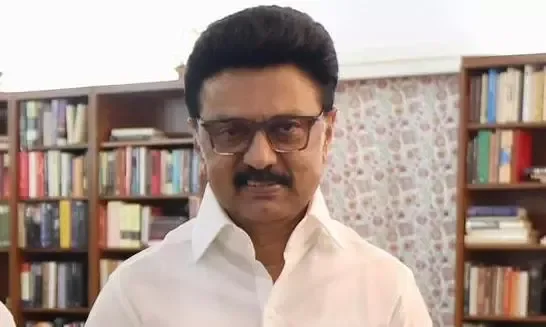
The Tamil Nadu administration has released a wide-reaching roadmap titled Tamil Nadu 2030 - Kanavugal Meipadum, a 14-sector plan aiming to restructure the state’s economy and social fabric by the end of the decade. Chief Minister M.K. Stalin announced the project at the Chennai Trade Centre, framing the agenda as a fulfillment of mass public feedback collected from 1.81 crore households. The state now seeks to hit a $120 billion export target and attract Rs 18 lakh crore in fresh investments, while shifting basic infrastructure toward a tech-heavy surveillance and support model.
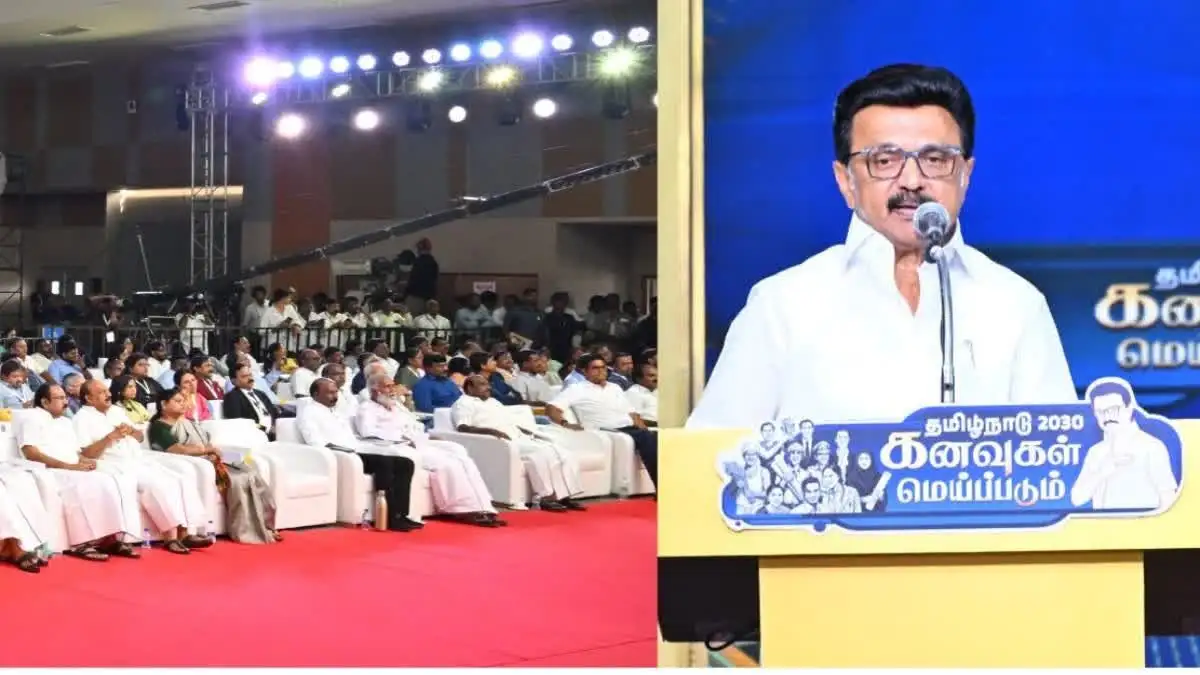
"India should become a 'Samathuvapuram' (place of equality)," Stalin stated, linking the state's internal logistics to a broader ideological friction with the federal government.
The Concrete Targets: Housing, Land, and Machines
The plan moves away from vague promises toward specific, heavy quotas for the next five years. The administration intends to build 7 lakh houses—splitting the effort between 5 lakh rural units and 2 lakh urban dwellings.

Agriculture Expansion: The net cultivated area is slated to hit 50 lakh hectares, supported by the distribution of soil health cards to 43 lakh farmers.
Labor and Export: The government claims it will generate 50 lakh jobs, prioritizing "Make in TN" industrial parks to hit high-value export markers.
Mental and Physical Health: Beyond traditional clinics, the state plans to install mental health counseling centers in every district and expand health insurance coverage to reduce maternal and infant death rates.
| Sector | Primary Goal | Key Mechanism |
|---|---|---|
| Technology | Digital Sovereignty | Creating a Tamil Large Language Model |
| Transport | Fatality Reduction | AI monitoring on highways & bridge sensors |
| Education | AI Literacy | AI laboratories in every educational institution |
| Economy | Global Export | $120 billion target via 'Make in TN' parks |
Digital Enclosures and Language Models
A significant portion of the 2030 plan relies on the integration of Artificial Intelligence into state functions. The government intends to build its own Large Language Model (LLM) for the Tamil language, a move aimed at linguistic preservation in the digital age. This tech-centric shift extends to the Highways department, where "intelligent transport systems" will monitor road conditions and bridge lifespans. Every school and college is expected to house an AI laboratory, ostensibly to prepare the workforce for the proposed 50 lakh new jobs in the industrial and MSME sectors.
Read More: Pakistan Minister Meets US Senator Amid Money Problems

The Political Friction: 2026 Context
This roadmap serves as the functional skeleton for the upcoming 2026 Assembly elections. Stalin has positioned these policy goals as a defense of the "Dravidian Model" against the centralizing forces of the NDA.
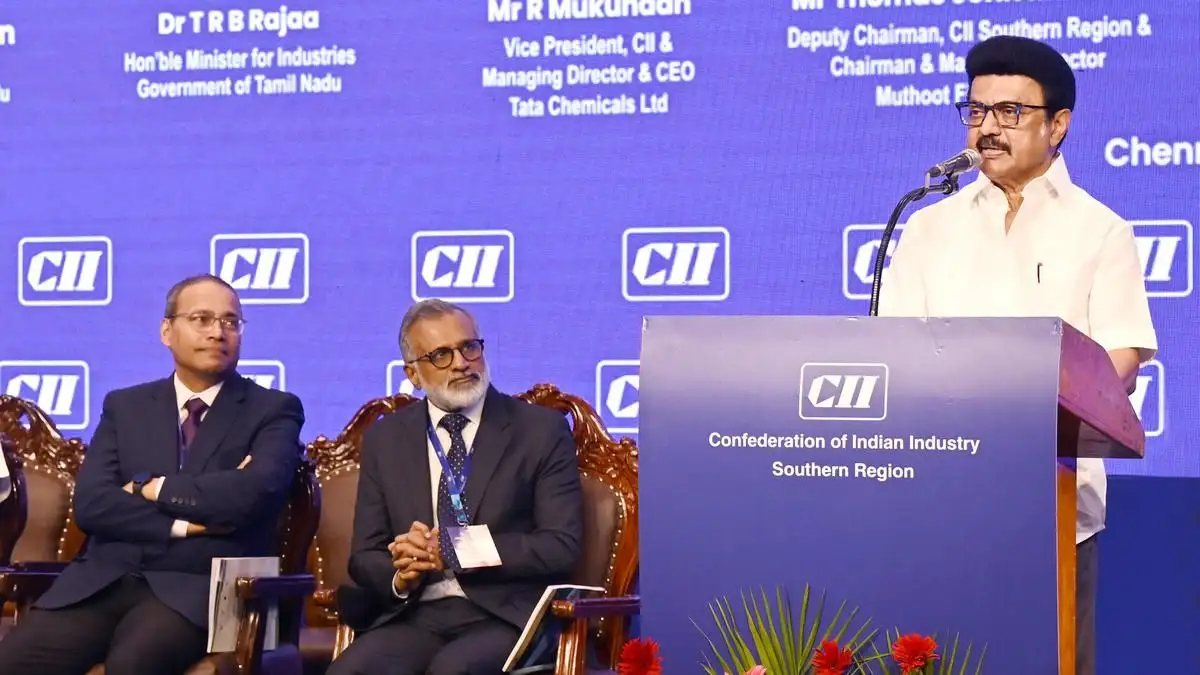
The 2026 contest is framed as an ideological fight for state autonomy.
The state government continues to accuse the federal administration of using institutions to destabilize regional powers.
Focus remains on Social Justice and OBC/Adi Dravidar welfare as the moral weight against federal pressure.
Background: The Survey Origin
The "Tamil Nadu 2030" blueprint is not a top-down bureaucratic whim but the result of the ‘Unga Kanava Sollunga’ (Tell us your dream) program. By surveying 1.81 crore families, the DMK administration has gathered a massive data set on household aspirations. This survey marks the transition from traditional manifesto writing to data-driven governance, though the execution of these 14 sectors—ranging from handlooms to AI—remains tied to the state's ability to secure the 18 lakh crore investment it anticipates. Previous efforts, such as the Third Master Plan for Chennai, are being used as prototypes for 136 other urban areas to standardize "inclusive development."
Read More: Young People Feel Let Down by Economy and Healthcare Costs