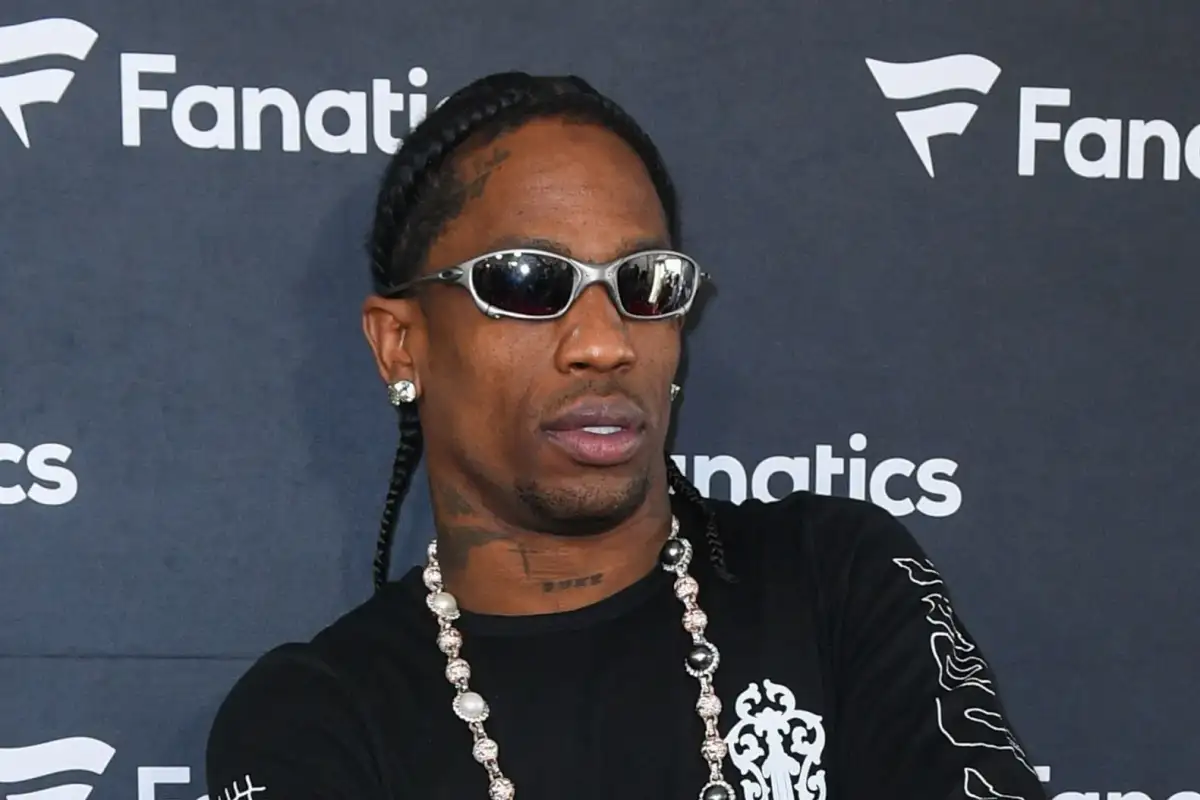
Travis Scott, Killer Mike, and a group of music scholars have filed amicus briefs with the Supreme Court to block the execution of James Garfield Broadnax. The filing challenges the Texas legal machinery for using Broadnax’s handwritten rap lyrics as evidence to secure a death sentence. The musicians argue the state treated rhythmic fiction as a literal roadmap for future violence, a move they claim violates the First and Eighth Amendments.
"The prosecution treated the lyrics not as creative work but as evidence suggesting future violence." — Legal argument from the Scott filing.
Texas prosecutors used 40 pages of Broadnax’s verses during the sentencing phase to convince a jury that the then-19-year-old was a permanent threat to society. The jury reportedly asked to see these handwritten pages twice during their secret talks. Broadnax is scheduled to die next month unless the high court steps in to review how artistic expression is weighed against a person’s life.
Read More: Mark Latham ordered to pay $100,000 for homophobic tweet

The Mechanics of the Conviction
The state of Texas maintains a rigid stance on the clock, arguing that Broadnax’s legal team stumbled by waiting too long to complain about the lyrics. While the crime itself resulted in a conviction, the fight now sits on the sentencing—the moment a person is labeled "beyond repair."
Handwritten evidence: Prosecutors leaned on rap verses to build a profile of a killer, ignoring verses that spoke of regret or redemption.
Jury Dynamics: The jury that decided Broadnax’s fate was nearly all-white; the state used strikes to remove seven Black prospective jurors.
The "Fiction" Gap: Briefs argue that while other genres (like country or rock) are allowed to "play a character," rap is uniquely stripped of its metaphor and used as a confession.
| Argument Side | Core Position | Potential Flaw |
|---|---|---|
| The Rappers | Lyrics are art; using them as evidence is a "black tax" on expression. | The lyrics might overlap with the specific grit of the crime. |
| Texas State | The defense missed their window to object; the lyrics show a pattern of mind. | Ignores the distinction between persona and personhood. |
Background: A Pattern of Song-as-Statement
This isn't the first time the legal system has turned a microphone into a witness. Across various states, prosecutors have increasingly treated "bars" as "facts." In this specific Texas case, Broadnax was 19 when he entered the system—a demographic the amicus briefs suggest is most prone to using rap as a way to process a violent environment.
The use of peremptory strikes to remove Black jurors adds a layer of skin-deep politics to the case. A judge previously noted concern over the removal of all but one Black juror but allowed the trial to proceed, claiming no proof of "intentional" bias existed. Now, the Supreme Court must decide if the mix of rhythmic venting and a lopsided jury constitutes a fair path to an execution.
Read More: Billboard Women Music Awards 2026: Top Artists Honored in LA