


The Supreme Court is pressing for a delicate equilibrium in regulating online content, urging the government to frame guidelines that address objectionable material without unduly infringing upon freedom of expression. Meanwhile, the Centre has asserted that its amended Information Technology (IT) Rules are not intended to suppress satire, humor, or criticism.
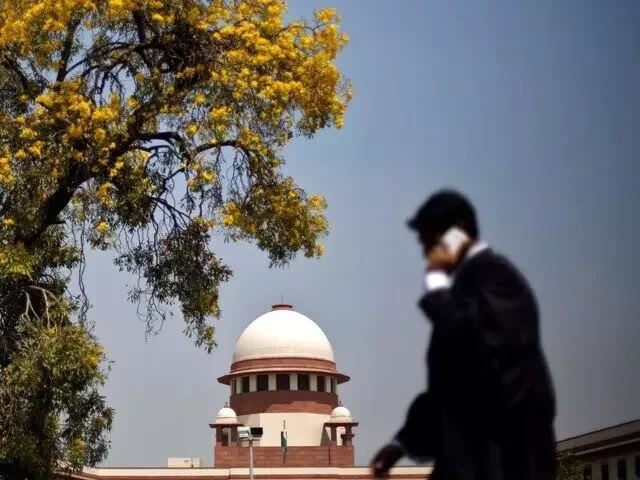
The core of the current judicial focus appears to be the establishment of clear parameters for what constitutes 'objectionable content' and who possesses the authority to make such determinations, particularly in relation to satire and criticism. This judicial push has led to discussions on whether new regulations will bring much-needed clarity or instead stifle creative expression.

IT Rules and the Spectre of Censorship
The government, in its submissions, has maintained that the amended IT Rules are designed to tackle misleading or fake facts, rather than curtailing opinion or critique. Senior advocates, representing various media bodies and individuals, have questioned the locus of power within a 'Fact Check Unit' (FCU) to decide the veracity of online content.
Read More: New Legal Help for Rape Victims and Court Changes in UK from October 2024

The Centre appealed in the Supreme Court against a High Court decision, asserting that it harbored no 'subversive intention to crush free speech.'
Previously, the Bombay High Court had, in an earlier assessment, indicated that the IT Rules amendments prima facie did not seem to offer protection to content like parody and satire, even if it involved fair criticism of the government. Such interpretations fuel concerns among content creators that their work could face arbitrary blocking or account suspensions.

Judicial Directives and Content Creator Accountability
In separate proceedings, the Supreme Court has also addressed specific instances involving content creators. The court has directed social media influencers, including comedian Samay Raina, to issue public apologies for mocking individuals with disabilities. This directive emerged from cases where remarks were made concerning individuals with disabilities and rare genetic disorders, sparking widespread outrage.
Justice Kant noted that penal actions under the rules should be proportionate to the harm caused to dignity, while Justice Singh suggested influencers use their platforms to spread awareness about disabilities.
The Court has also shown a willingness to allow certain online shows to continue, while simultaneously instructing the government to address the issue of 'vulgar content.' This involves recommending that the government consult with stakeholders to formulate guidelines that regulate such content without devolve into outright censorship.
Read More: Lok Sabha Approves Extra ₹2.81 Lakh Crore Spending for Fiscal Year 2026
Background: The Evolving Landscape of Online Speech
The current judicial engagement underscores an ongoing tension in India between the fundamental 'freedom of speech and expression' guaranteed under Article 19(1)(a) of the Constitution and the 'reasonable restrictions' permissible under Article 19(2).
The Supreme Court's involvement in cases concerning comedians and influencers signifies a direct engagement with the challenge of defining boundaries for online free speech.
Previous instances have seen satirical content being taken down through legal processes that were often described as 'unclear'.
The ambiguity surrounding terms like 'government business' has also been a point of contention in legal deliberations.
The judicial push for clarity on online content rules raises pertinent questions about the balance between protecting individual dignity and upholding constitutional rights, a delicate act that legal frameworks are tasked with navigating. The ultimate impact of these deliberations remains to be seen, with predictions ranging from stricter government oversight to a galvanized digital industry defending its space.