

The comforting embrace of a warm soup is a familiar ritual for many, a quick meal often perceived as a healthy choice. Yet, a growing chorus of experts is sounding the alarm: hidden within the seemingly wholesome broth lies a potential health hazard. Recent investigations reveal that a significant portion of supermarket soups are packed with alarming amounts of salt, raising serious questions about transparency, corporate responsibility, and the true cost of convenience. Are we being lulled into a false sense of security, mistaking a salty siren for a healthy haven?
A Salty History: Decades of Warning Signs
The issue of excessive salt in our food, particularly in pre-packaged soups, is not a new revelation. For years, health organisations and researchers have been flagging the dangers. Let's rewind and connect the dots:
The 2007 Warning: As far back as 2007, a Daily Mail report highlighted that "half of supermarket soups contain 'harmful' levels of salt." Brands like Seeds of Change and Ainsley Harriott were named, with some Morrisons own-label soups exceeding 3g of salt per serving. The link between heavy salt consumption and serious health issues like high blood pressure, strokes, and heart attacks was already well-established.
The 2010 Wake-Up Call: In 2010, The Guardian reported on a survey by Consensus Action on Salt and Health (Cash), warning that "many supposedly healthy soup products from high street chains and supermarkets contain high levels of salt." Household names like Batchelors and Heinz were implicated, with some individual products containing close to the entire recommended daily salt intake. High-street cafés, specifically the chain EAT, were identified as major offenders, with multiple products exceeding the 6g daily limit.
The 2018 Reiteration: The Guardian's reporting continued, with a 2018 article reiterating the persistent problem. The focus remained on the link between high salt levels and increased risk of heart disease and stroke.
The 2022 Confrontation: More recently, in 2022, the Daily Mail ran a story revealing that "healthy" supermarket soups could contain "up to SIX times more salt than a portion of McDonald's fries." Experts accused companies of adding salt without sufficient regard for public health, stating that consumers often view soup as a healthy option, unaware of the hidden sodium.
This history paints a picture of a recurring problem, a persistent struggle between public health advocacy and industry practices. The question remains: why, after years of warnings, are we still facing such a widespread issue?
Read More: India IVF Costs And Social Barriers Limit Access In April 2026
The Salt Shockers: Who's on the List?
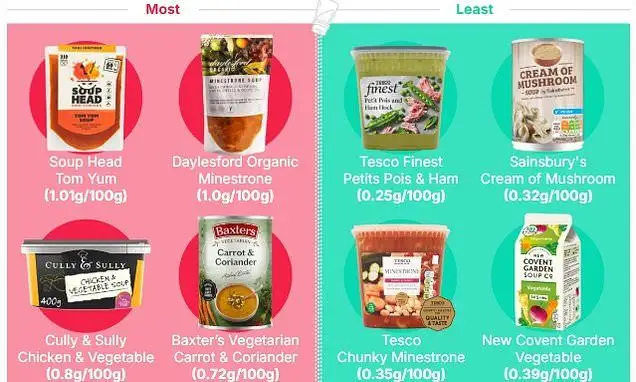
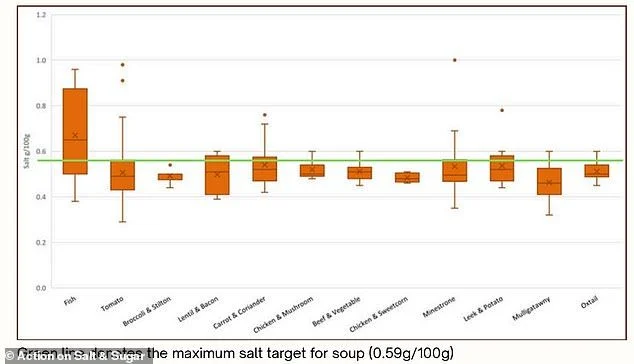
The latest wave of research, primarily spearheaded by Action on Salt & Sugar (part of Queen Mary University of London), has once again identified specific products that are raising serious concerns. The findings are stark, with nearly a quarter of all soups on sale in UK supermarkets failing to meet salt reduction targets.
Here's a look at some of the key culprits identified in recent reports:
| Product Name | Salt Content (per 100g) | Salt Content (per serving/pack) | Notes |
|---|---|---|---|
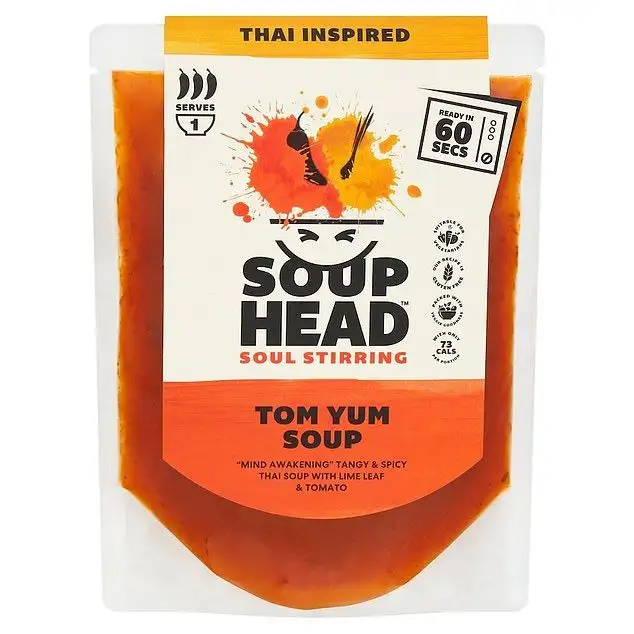
| Soup Head's Tom Yum Soup | 3.03g / 300g pack | 3.03g | Topped the list; more salt than two McDonald's cheeseburgers. |
| Daylesford Organic Minestrone | 1.0g | Varies | Initially cited, though the brand claims a packaging misprint. |
| Baxters Luxury Cullen Skink | 0.95g | Varies | Consistently flagged in multiple reports. |
| Tideford Organics Moroccan Vegetable | 0.4g / 300g portion | 0.4g | Mentioned in comparison to a higher-salt option from EAT. |
| Seeds of Change Creamy Tomato | 1.12g / 350g serving | 3.94g | Highlighted in a 2007 report for high salt levels. |
| Batchelors Soupfulls Classic Beef & Vegetable | - | 3g / 400g portion | Cited in a 2010 report as containing unhealthy amounts of salt. |
| Heinz Taste of Home Lancashire Lamb Hotpot | - | 2.6g / 430g portion | Also cited in a 2010 report for high salt content. |
The most alarming finding is the Soup Head's Tom Yum Soup, which contains a staggering 3.03g of salt in a single 300g pack. This single serving alone nearly meets the NHS recommended daily limit of 6g for adults.
This raises immediate questions:
Why are these specific products allowed to carry such high levels of salt, especially when the health risks are so well-documented?
Is the "luxury" or "organic" label a misleading marketing tactic, masking a high-salt reality?
How can a soup, often perceived as a light meal, contain more salt than two McDonald's cheeseburgers?
The Illusion of Health: What's Really Going On?
One of the most insidious aspects of this issue is the perception that soup is inherently healthy. Many consumers reach for a soup as a quick, nutritious, and comforting meal, especially during colder months or when feeling unwell. However, the data suggests this perception is often a dangerous illusion.
Read More: Carrot Extract Tricks Fake Ghee Tests in New Study
Hidden Sodium: A significant portion of the salt in processed foods is "hidden." Manufacturers add it not only for taste but also as a preservative and to enhance texture. This means even soups that don't taste overtly salty can be packed with sodium.
Misleading Serving Sizes: Action on Salt has pointed out a crucial tactic used by manufacturers: understating actual salt intake through misleading serving sizes.
"Suggested serving sizes on packs could understate the actual salt intake, with many brands listing a serving as 200g (half a tin), even though consumers were likely to eat more in a single meal." (LBC, getsurrey.co.uk)
This practice allows companies to present lower salt figures per serving on the nutritional information, deliberately obscuring the true amount consumed when a typical person eats a full bowl or even the entire pack. How many of us actually measure out a strict 200g portion of soup when enjoying a convenient meal?
The "Red Warning" Red Herring: One report chillingly suggests that "one in six soups requiring a red warning label, the message is clear: trust no one, read the fine print, and perhaps, start making your own soup." This implies that even the warning labels, if they are present and understood, don't fully convey the scale of the problem.
This deliberate obfuscation is a betrayal of consumer trust. It forces individuals to become amateur detectives, scrutinizing labels and performing their own calculations to understand what they are actually consuming.

Industry's Response: Promises vs. Progress
When confronted with these findings, the industry's responses often follow a familiar script: acknowledging the issue, highlighting past efforts, and promising future improvements.
Veetee (Soup Head): A spokesperson for Veetee, the maker of Soup Head's Tom Yum soup, stated:
"We will continue to assess opportunities to reduce salt and improve nutritional profiles across our range as part of our broader, long-term approach to health and wellbeing." (The Guardian)
This is a general commitment, but does it address the immediate concern of a product already containing alarmingly high salt levels?
Heinz: A Heinz spokesperson commented on their ongoing efforts:
"We’ve been reducing the amount of salt in our products since the mid-1980s … Reducing sodium without compromising on taste and quality is a complex process and there’s still work to be done." (The Guardian)
While their long-term commitment is noted, the current study implies that significant work still needs to be done, and perhaps at a faster pace.
Mr Organic: This brand claims to be actively working on solutions:
"Over the past five months, we have already been working behind the scenes on recipe development to reduce salt across our soup range … We know there are still very limited options available that focus on lower salt, and we see this as an important opportunity and responsibility for us as a brand.” (The Guardian)
This proactive stance is encouraging, but it begs the question: why are brands only now beginning to seriously address this issue after years of warnings?
Daylesford Organic: The brand offered a specific defense regarding their Minestrone soup:
"The salt content figure of 1g per 100g for Daylesford minestrone soup cited in this report was based on a packaging misprint that has been independently verified as incorrect." (The Guardian)
This highlights the complexity of accurate reporting but also raises questions about how such misprints occur and whether they are unique to this incident.
The recurring theme from industry is the "complexity" of reducing salt without impacting taste. Yet, the consistent presence of high-salt products year after year, despite years of advocacy and scientific data, suggests a reluctance to prioritize public health over product formulation or profit.
Are these responses genuine commitments to change, or carefully worded public relations efforts to deflect criticism?
The Path Forward: What Needs to Happen Now?
The repeated exposure of high salt content in supermarket soups is more than just a dietary concern; it's a public health crisis unfolding in slow motion. The findings from Action on Salt and Sugar serve as a crucial reminder that vigilance is paramount.
Read More: Georgia Toffolo's Lake Como Trip After Fertility Talks
Increased Transparency and Stricter Regulation: The government and regulatory bodies must move beyond voluntary guidelines and implement stricter regulations on salt content in processed foods. Mandatory clear front-of-pack labelling that accurately reflects salt per serving, rather than per a small, often unrealistic portion, is essential.
"The UK used to be a world leader on salt reduction, but progress has stalled." (getsurrey.co.uk)
This statement from the research is particularly damning. Why has progress stalled? Who is responsible for this stagnation?
Consumer Education and Empowerment: While manufacturers bear responsibility, consumers also need to be empowered with clear, easy-to-understand information. Campaigns highlighting the dangers of hidden salt and encouraging healthier choices, including homemade options, are vital. As one article put it: "trust no one, read the fine print, and perhaps, start making your own soup."
Industry Accountability: Companies need to be held accountable for their product formulations. Rather than making vague promises, they should be pressured to demonstrate concrete reductions in salt content across their entire ranges, with measurable targets and timelines. The ongoing reliance on salt for flavour when viable alternatives exist is a question that needs a direct answer from the industry.
Further Investigative Journalism: This issue is far from settled. Are there other "hidden salt" offenders on the market? What is the specific composition of the stock used in these soups, and how much salt is inherently added at that stage? Continued investigation into the nuances of soup production and the efficacy of current reduction strategies is crucial.
Ultimately, the convenience of a ready-made soup should not come at the expense of our long-term health. The evidence is clear, the warnings have been sounded for years, and the time for excuses is over. It's time for decisive action from regulators, genuine commitment from industry, and informed choices from consumers to ensure that our bowls of comfort don't become ticking time bombs.
Sources:
Daily Mail: Revealed: The popular supermarket SOUPS that contain dangerous amounts of salt - so, is your favourite on the list? (Published: 11 hours ago)
https://www.dailymail.co.uk/sciencetech/article-15531139/popular-supermarket-SOUPS-dangerous-salt.html
The Guardian: Almost a quarter of soup on sale in UK supermarkets has too much salt, study finds (Published: 5 hours ago)
https://www.theguardian.com/business/2026/feb/06/almost-quarter-soup-on-sale-uk-supermarkets-too-much-salt
LBC: Almost one in four shop-bought soups exceed Government salt targets, study | LBC (Published: 10 hours ago)
https://www.lbc.co.uk/article/5e179dbeacb448b3afdf13750b6e2832-5HjdRts2/
Action on Salt: Soup Survey (Seen on: Brave)
Daily Mail: Half of supermarket soups contain 'harmful' levels of salt (Published: May 10, 2007)
https://www.dailymail.co.uk/news/article-453775/Half-supermarket-soups-contain-harmful-levels-salt.html
Streamline Feed: Salt Trap: Quarter of Supermarket Soups Saltier than Fast Food (Published: 3 hours ago)
https://streamlinefeed.co.ke/news/salt-trap-quarter-of-supermarket-soups-saltier-than-fast-food
The Guardian: Many soups have high salt levels, survey warns (Published: August 2, 2018)
https://www.theguardian.com/lifeandstyle/2010/feb/25/soup-high-salt-levels
Daily Mail: Supermarket soup contain up to SIX times more salt than McDonald fries (Published: February 7, 2022)
https://www.dailymail.co.uk/health/article-10460921/Healthy-supermarket-soups-contain-SIX-times-salt-portion-McDonalds-fries.html
NICS Well: Salty soups cause a stir (Seen on: Brave)
https://www.nicswell.co.uk/health-news/salty-soups-cause-a-stir
iNews: The healthiest supermarket soups, and the ones to avoid, according to a dietitian (Published: November 21, 2025)
https://inews.co.uk/inews-lifestyle/healthy-supermarket-soups-dietitian-recommended-4049762
GetSurrey: New health warning over quarter of soup sold in UK shops (Published: 4 hours ago)
https://www.getsurrey.co.uk/news/health/new-health-warning-over-quarter-33373474
The Independent: Alarming levels of ‘hidden salt’ discovered in popular soups (Published: 11 hours ago)
https://www.the-independent.com/life-style/health-and-families/salt-soup-diet-head-tom-yum-b2914770.html






:max_bytes(150000):strip_icc()/ar-ice-cream-recall-revision-ar-adobe-2x1-d0f30fb6a96f4500baf9d27f9d387609.jpg)