


The promise was simple: smoother journeys, less congestion, and a more efficient transport network. Yet, official reports are now casting a harsh spotlight on Britain's "smart motorways," suggesting that for many, they represent a colossal waste of public money and, more alarmingly, a significant downgrade in safety. As drivers grapple with increasing anxieties and data points to a disturbing rise in incidents, critical questions demand answers: Were these ambitious projects flawed from the start, and are we being told the whole truth about the risks lurking on our high-speed roads?
A Decade of Doubt: The Rise and Reign of Smart Motorways
The concept of "smart motorways" in Britain began to gain traction in the early 2000s, born out of a pressing need to alleviate growing traffic congestion on the country's busiest arterial routes. The core idea was to repurpose the hard shoulder – that narrow strip of road typically reserved for emergencies – into a live running lane during peak hours. This "dynamic hard shoulder" approach, and later the more radical "all-lane running" (ALR) where the hard shoulder is permanently converted into a traffic lane, was hailed as an innovative solution.
Read More: Soham Killer Ian Huntley Dies After Prison Assault in HMP Frankland
Early Ambitions: The initial aim was clear: to boost capacity, improve traffic flow, and deliver economic benefits by reducing journey times.
Phased Rollout: Pilot schemes were introduced, and gradually, significant portions of the UK's motorway network were transformed. For instance, the M25, a vital orbital route around London, saw substantial smart motorway implementation.
Underlying Concerns Emerge: Even in the early stages, safety advocates and motoring organizations voiced apprehension. The removal of a dedicated emergency refuge area raised immediate flags about what would happen when a vehicle broke down in a live lane.
Past Incidents and Scrutiny: Reports of tragic accidents where drivers or passengers were struck by other vehicles after their cars had broken down on the hard shoulder (now a live lane) have punctuated the history of smart motorways. These incidents have repeatedly drawn media attention and public outcry, fueling demands for stricter safety measures and, for some, a complete reversal of the policy. The government has, at times, paused or scaled back expansion plans in response to public and political pressure, only to later recommit to certain schemes.
The evolution of smart motorways has been a complex tapestry woven with technological aspirations, economic pressures, and persistent safety debates. Now, new official reports are forcing a reckoning with the efficacy and true cost of this ongoing experiment.
The Verdict is In: Value for Money Questioned
Official findings are painting a grim picture of the economic justification for many of Britain's smart motorway schemes. Reports suggest that the promised benefits of reduced congestion and economic uplift are not materializing as expected, raising serious doubts about whether the massive investment was, and continues to be, a wise use of taxpayer money.
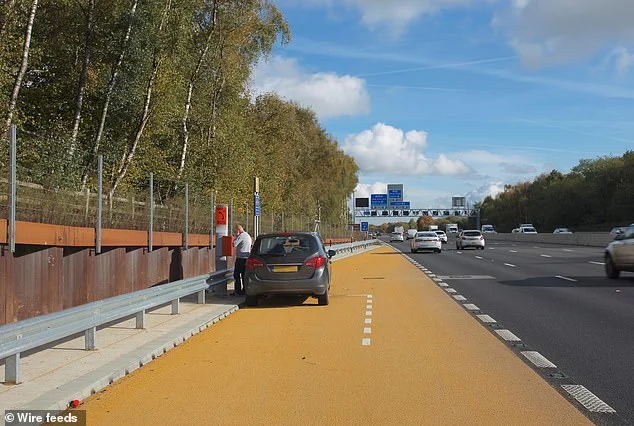
The core of the problem appears to be a disconnect between the theoretical gains and the practical reality on the ground. While the intention was to speed up traffic, the actual experience for many drivers seems to be the opposite.
Read More: Why night trains do not run on Saturdays in London
Slower Journeys: Counterintuitively, many smart motorway sections are experiencing slower journey times. This is attributed to factors such as the introduction of variable speed limits, which, while intended to manage flow, can sometimes create bottlenecks, and the inherent risk associated with broken-down vehicles in live lanes, leading to hesitancy and traffic jams.
Economic Losses: The failure to significantly ease traffic congestion translates directly into economic costs. Lost productivity due to longer commutes and the cost of delays ripple through the economy, undermining the very goals smart motorways were designed to achieve.
The Costly Paradox: The initial outlay for converting conventional motorways to smart ones is substantial. When these investments fail to deliver the promised economic returns, the "value for money" equation deteriorates significantly.
| Scheme Aspect | Stated Objective | Reported Reality | Implication for Value for Money |
|---|---|---|---|
| Traffic Flow | Reduce congestion, improve journey times | Slower journeys, increased traffic jams in some areas | Investment fails to meet core objective, economic losses incurred |
| Economic Impact | Boost productivity, reduce business costs | Increased delays, lost productivity | Promised economic gains not realized, potential net loss |
| Infrastructure | Efficient use of existing network | High conversion costs, ongoing maintenance | Significant capital expenditure without commensurate returns |
The core insight from these reports is that the promised economic benefits of smart motorways are largely absent, suggesting a fundamental flaw in their design or implementation, leading to a poor return on public investment.
Safety Under the Microscope: A Mixed and Troubling Record
While National Highways, the body responsible for England's road network, often touts smart motorways as their "safest roads," official reports reveal a more complex and deeply concerning safety record. The removal of the hard shoulder, a dedicated safe space, is the central point of contention and a recurring theme in safety discussions.
The data presents a stark contrast to the claims of universal safety:
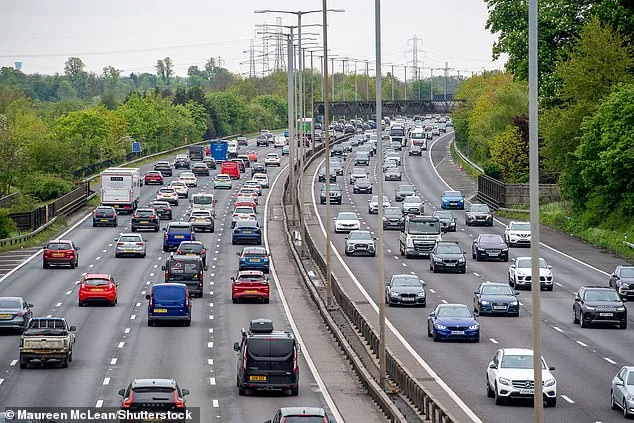
Breakdowns in Live Lanes: All-Lane Running (ALR) motorways, which have no hard shoulder at all, have seen a significantly higher proportion of breakdowns. Statistics indicate that 56% of breakdowns logged on England's motorways last year occurred on smart sections.
Increased Risk of Fatalities/Serious Injuries: While National Highways claims to have met safety objectives, reports also highlight a "mixed safety record", with a noted slight increase in the numbers killed or seriously injured on specific stretches, such as the M3 and the M1 between junctions 29 and 42.
Driver Anxiety: Surveys and anecdotal evidence consistently point to increased anxiety among drivers when using smart motorways, particularly those without a hard shoulder. This heightened stress can itself contribute to dangerous driving behaviour.
The AA's investigation revealing a breakdown rate nearly three times higher on smart motorways compared to conventional ones is a critical piece of evidence. It begs the question: how can a road be considered safe when the very design inherently increases the risk of drivers being stranded in potentially lethal situations?
Read More: Ian Huntley, Soham Killer, Dies After Serious Prison Attack in HMP Frankland
"The reports display a remarkable lack of curiosity over how the danger has increased from vehicles stopped in live running lanes… they raise more questions than they answer." - Chris Todd, Director of Transport Action Network
The crucial takeaway is that the statistical claims of smart motorway safety are contested by real-world data, which points to a higher incidence of breakdowns and concerning safety metrics in critical areas, directly challenging the narrative of enhanced security.
The Technology Conundrum: Boon or Bust?
Smart motorways rely heavily on advanced technology to function, from variable speed limits and electronic signs to systems designed to detect stopped vehicles. However, the effectiveness and reliability of this technology are coming under increasing scrutiny, with evidence suggesting it is not always delivering on its promises and, in some cases, failing at critical moments.
The promise was that technology would compensate for the removal of the hard shoulder, acting as a safety net. But the reality appears to be more precarious:
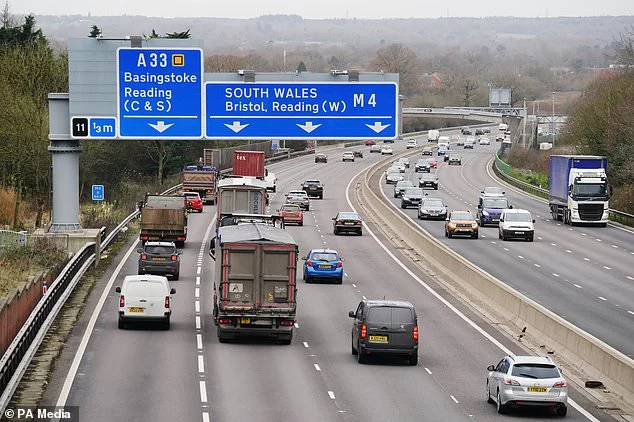
Detection System Failures: While National Highways claims advanced technology means breakdowns are more likely to be detected, there have been documented cases of technology failure. This raises a terrifying prospect: a vehicle stopped in a live lane, with no hard shoulder, and the detection system failing to alert authorities or other drivers.
Effectiveness Under Question: The speed and accuracy of these detection systems are paramount. If they are not sufficiently fast or reliable, the perceived safety net becomes a fragile illusion, leaving drivers vulnerable.
Maintenance and Upkeep: The sophisticated technology requires constant maintenance and upgrades. Are these systems being adequately funded and maintained to ensure they function flawlessly 24/7? The cost of maintaining this technology must also be factored into the overall value for money assessment.
"Many of the schemes have slower journeys which causes traffic jams, loses the country cash and worsened the safety record of motorways." - The AA
The very technology that is supposed to make smart motorways safer and more efficient appears to be a weak link, contributing to both the economic inefficiency and the safety concerns.
Read More: Kalaburagi-Bengaluru Vande Bharat Train Carries 5.7 Lakh Passengers in 2 Years
The reliance on technology to mitigate the risks of smart motorways is proving to be a vulnerability, with reports of failures and questions about its consistent effectiveness, casting doubt on the foundational safety assumptions.
The Future of Our Motorways: Reconsideration or Regression?
Given the mounting evidence of poor value for money and concerning safety implications, a critical re-evaluation of Britain's smart motorway policy is not just warranted, it's imperative. The current approach, where existing schemes largely remain while future expansions are debated, feels like a reluctant compromise rather than a decisive strategy.
The question isn't just about whether to build more, but whether the existing ALR schemes should be reversed or significantly modified.
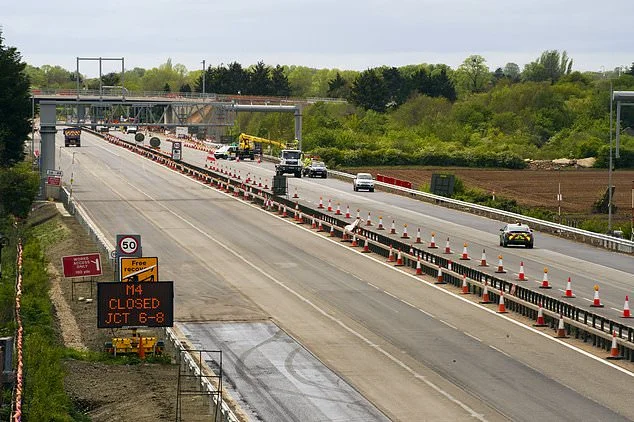
The Hard Shoulder Debate: The call for the "return of the hard shoulder" by organizations like the AA is gaining traction. This would provide a guaranteed safe space for breakdowns, a fundamental element of driver confidence and safety that has been eroded.
Lessons Learned: The "remarkable lack of curiosity" mentioned by Chris Todd suggests that lessons from past incidents and data are not being fully absorbed into policy decisions.
Prioritizing Safety Over Capacity: For years, the narrative has prioritized increasing road capacity. The emerging reality suggests that safety and driver confidence should be the paramount considerations, even if it means a slower rollout of capacity-boosting measures.
The continuation of existing smart motorways, despite their flaws, presents a long-term liability. The cost of potentially retrofitting safety measures or even reverting to a hard shoulder could be immense, but the human cost of inaction is far greater.
Read More: Prisoner Charged in Ian Huntley Murder; Funeral Costs Cause Debate
"Our latest analysis continues to show that overall, smart motorways remain our safest roads." - National Highways spokesperson
This statement, in direct contradiction to the findings of several independent reports, highlights a critical communication and transparency gap.
The path forward demands a serious reconsideration of the smart motorway strategy, prioritizing driver safety and economic sense over a potentially flawed pursuit of road capacity, and questioning the conflicting safety narratives being presented.
Conclusion: A Crisis of Confidence on Our Highways
The official reports on Britain's smart motorways are more than just a critique of infrastructure; they are a profound indictment of a policy that appears to have prioritized perceived efficiency over tangible safety and economic reality. The promise of smoother, faster, and more economical journeys is, for many, a broken promise.
The evidence points to a worrying trend:
Economic Drain: Smart motorways are failing to deliver on their economic objectives, representing poor value for money.
Safety Compromised: The removal of the hard shoulder has demonstrably increased the risk of breakdowns in live lanes and is linked to a concerning safety record, despite official reassurances.
Technology as a Weakness: The reliance on sophisticated technology is proving to be a critical vulnerability, with documented failures.
Driver Anxiety: Public confidence in these roads is demonstrably low, leading to increased stress for drivers.
The repeated insistence by National Highways that these roads are their safest, in the face of contradictory findings from bodies like the AA and organizations like Transport Action Network, raises serious questions about transparency and accountability.
Read More: Bengaluru Red Line Metro Cost at ₹776 Crore Per Km, Central Govt Halts Project
The path forward requires:
A Full Public Inquiry: To rigorously examine the decision-making processes, safety data, and economic assessments related to smart motorways.
Reversal of All-Lane Running: Where feasible and safe, the reinstatement of the hard shoulder on existing ALR sections should be a priority.
Independent Safety Audits: Regular, independent audits of smart motorway safety performance, with findings made publicly accessible.
Prioritization of Driver Welfare: Future road infrastructure projects must prioritize proven safety measures and driver confidence over speculative gains in capacity.
Until these critical issues are addressed, the smart motorway experiment will continue to be a source of anxiety for drivers and a stain on the nation's infrastructure investment record. The time for bold questions and decisive action is now.
Sources
The Guardian: https://www.theguardian.com/uk-news/2026/feb/06/smart-motorways-poor-value-report-aa
This is Money: https://www.thisismoney.co.uk/money/cars/article-14760821/New-major-concern-smart-motorways-flaw.html
H-F Insights: https://www.h-f.co.uk/insights/smart-motorways-the-increasing-risk-cost/





/newsfirstprime/media/media_files/2025/09/20/bmrcl-2025-09-20-14-28-14.jpg)

