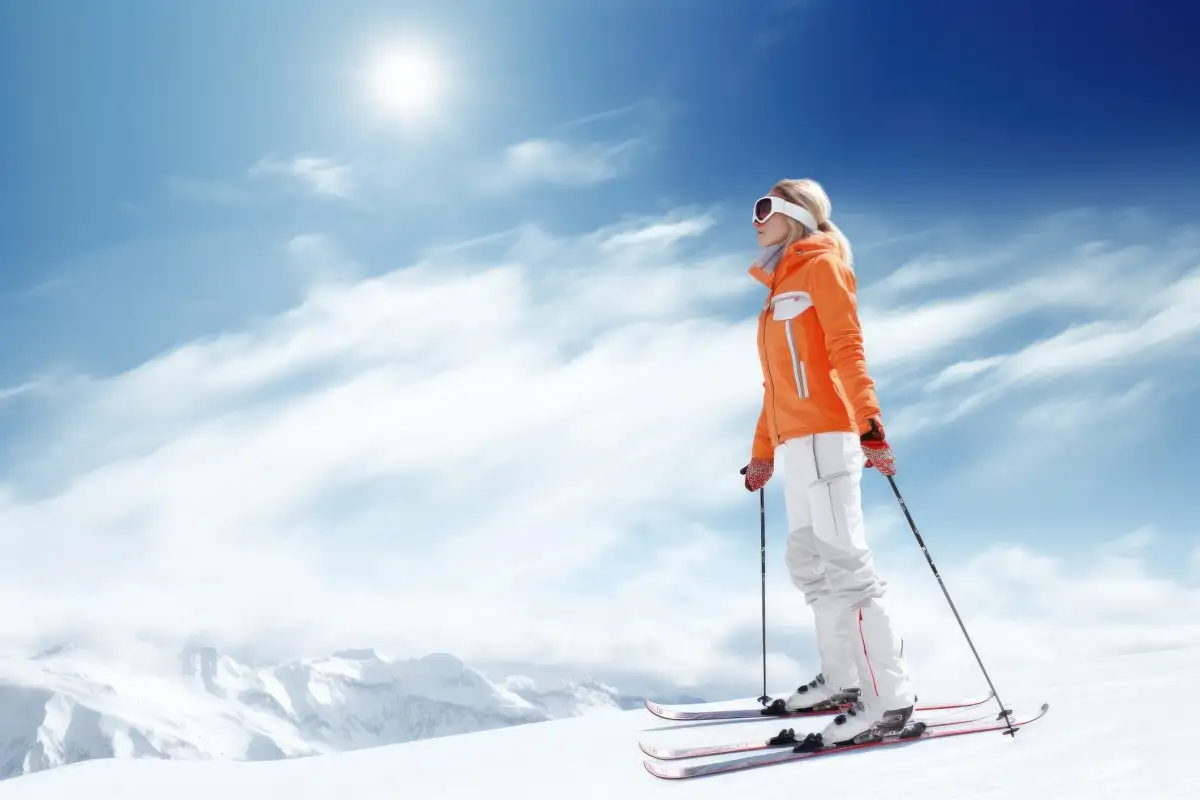
Skiing, a sport often perceived as a simple descent, involves a counterintuitive set of physical demands. While natural instinct might suggest leaning away from a slope, proper technique requires a forward posture and meticulous balance to maintain control and ensure a smooth ride. This balance is not merely physical but also mental, demanding a skier's unwavering attention.

Skiing offers a unique engagement with the environment, often making participants forget the physical exertion due to the constant need to focus on the terrain and their movements. The act of skiing itself becomes a complex interplay between the skier's body, the equipment, and the unforgiving forces of gravity and friction.

The Physics of Forward Lean
A fundamental principle in downhill skiing is the need to lean forward, a stark contrast to the instinct to lean backward. This forward inclination is crucial for maintaining control over the skis.
Read More: FIFA World Cup 2026 Revenue Reaches $15 Billion With New Ticket Prices

Control vs. Instinct: Every instinct tells you to lean back when faced with a steep slope. However, this can cause skis to slide out, leading to a loss of control.
Forward Lean Benefits: Leaning forward allows a skier to exert more control over their skis. This posture helps keep the skier's weight over their feet, enabling better steering and stopping.
Fore-aft Balance: Maintaining proper weight distribution from front to back is described as a fundamental aspect of effective skiing, particularly during longer turns.
Maintaining Edges and Grip
The ability to grip the snow, or "edge," is paramount for controlling speed and direction. This involves subtle adjustments to body position and ski angles.

Body Angles: To create higher edge angles, skiers need to create corresponding angles in their bodies.
Foot Placement: A common tip is to keep the chin over the big toe of the outside foot. This indicates a balanced stance where the weight is correctly distributed.
Grip on Ice: Questions regarding how to get skis to grip on icy surfaces highlight the sophistication of technique required, even in challenging conditions.
The Mental Aspect of Skiing
Beyond the physical demands, skiing requires a significant mental focus, often described as a meditative or all-encompassing experience.
Full Attention: The dynamic nature of the mountain demands the skier's full attention, often leading to a forgetting of physical exertion.
Instinct vs. Refinement: Skiing challenges natural instincts, guiding skiers to refine their technique, enhance balance, and tune their reflexes. Mistakes are viewed as opportunities for improvement.
Mindfulness on the Mountain: For some, the mountain becomes a place where worries recede, and the body's innate responses take precedence. The environment itself seems to possess a form of "knowledge" about how to navigate its slopes.
Cross-Country Skiing: A Different Challenge
While downhill skiing relies on gravity, cross-country skiing presents a distinct challenge that emphasizes endurance and self-propulsion.
Earning Every Inch: In cross-country skiing, speed and progress are not granted by gravity. Skiers must actively generate all forward momentum.
Uphill Struggle: Steep inclines in cross-country skiing are met with strenuous effort rather than mechanical assistance like ski lifts. Each mile per hour is hard-earned.
Expert Insights
Sources suggest that mastering skiing involves challenging innate responses. One article notes that "Mistakes are your roadmap to improvement." This implies a learning process where understanding and correcting errors are integral to developing advanced skills. The concept of "fore-aft balance" is repeatedly emphasized as a core element for effective skiing.
Conclusion
Skiing is a sport that necessitates a deliberate departure from instinctual reactions. The requirement to lean forward, maintain precise balance, and constantly adjust to the terrain underscores its complex physical and mental demands. Whether on steep downhill slopes or traversing varied cross-country terrain, the skier's ability to adapt and refine their technique is key to control and progression. The inherent challenges of skiing can lead to a profound sense of engagement and a unique connection with the natural environment.
Read More: Ina Forrest Aims for Gold Again at Milan Cortina 2026 Paralympic Games
Sources:
Lean into the abyss: the counterintuitive beauty of skiing: https://www.thehindu.com/sci-tech/science/counterintuitive-beauty-physics-skiing-winter-olympics-2026/article70641451.ece
17 skiing tips for beginners (2023): https://skiblog.com/skiing-tips-beginners
Skiing Technique – Lateral Balance & Edging: https://www.section8ski.com/2010/09/skiing-101-lateral-balance-edging/
Mastering the Art of Functional Skiing: 3 Secrets to Perfect Long Turns: https://nielscraenen.substack.com/p/mastering-the-art-of-functional-skiing
What Cross-Country Skiing Reveals About the Human Condition (Published 2018): https://www.nytimes.com/interactive/2018/01/31/magazine/winter-olympics-cross-country-skiing.html
Down the Mountain | Magazine | The Harvard Crimson: https://www.thecrimson.com/article/2026/2/14/skiing-endpaper/