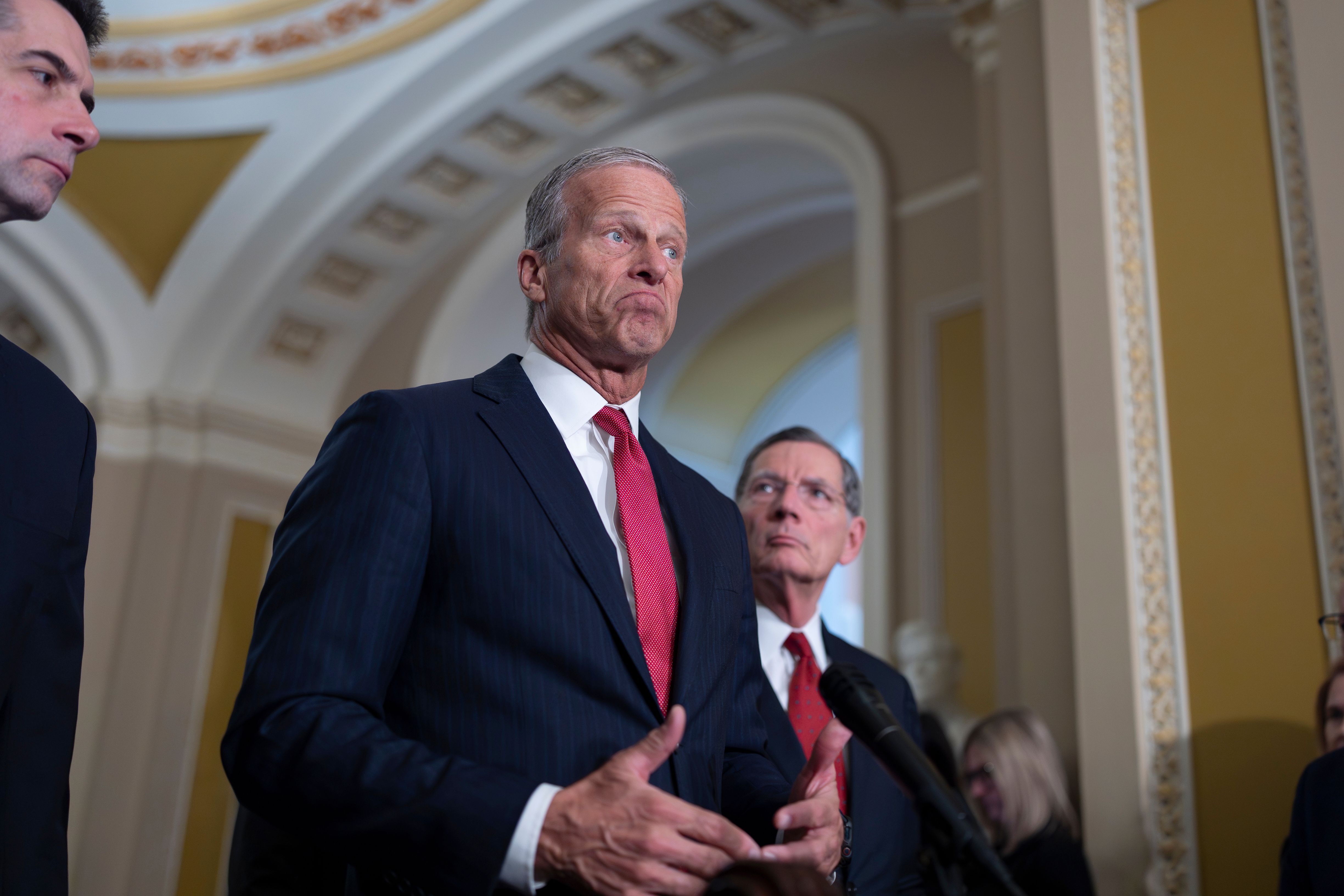
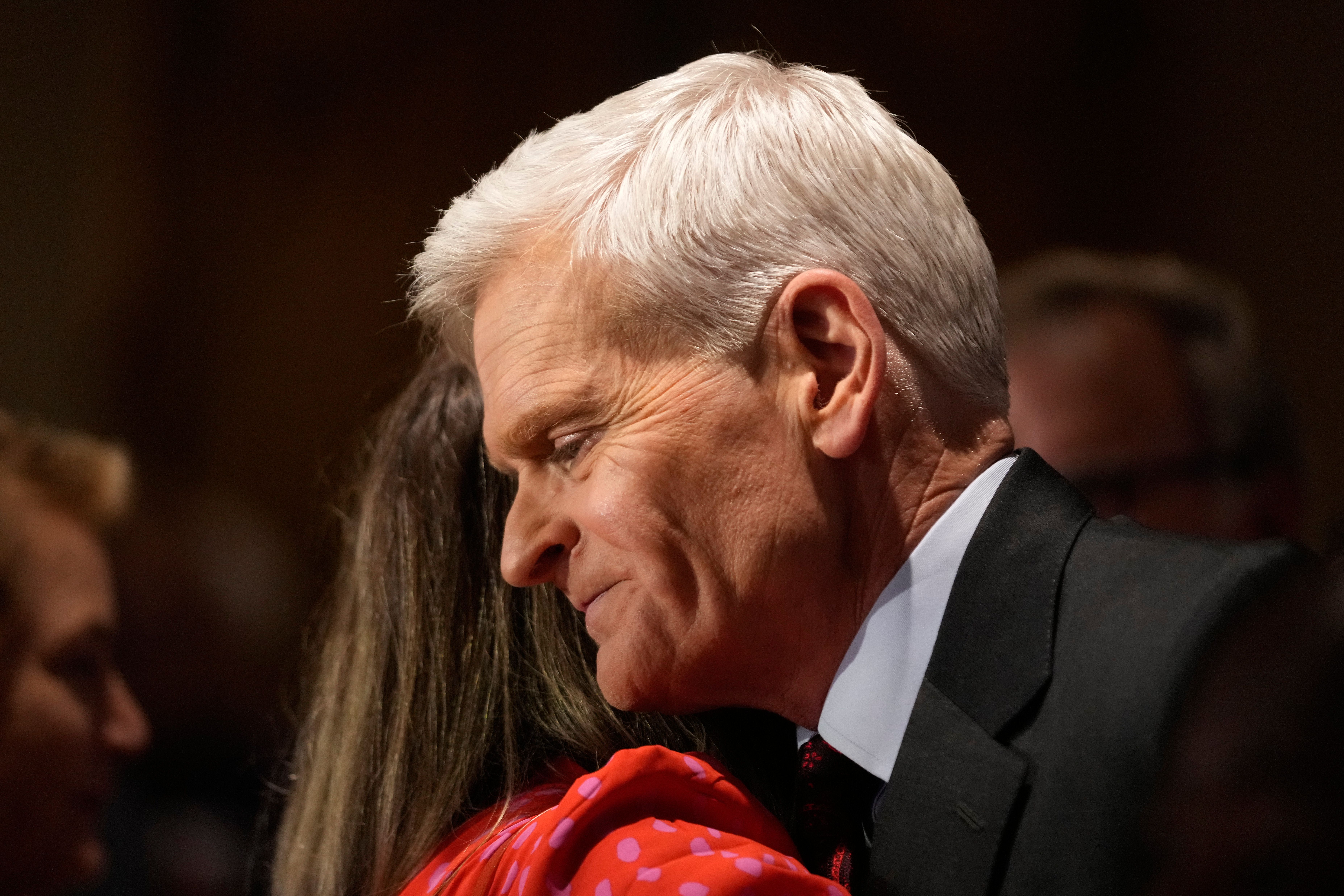
On Wednesday, Senator Todd Young (Indiana), a man who built a brand on the parchment limits of presidential violence, chose the President over the Constitution. Young, a 53-year-old former Marine, rejected a measure to restrict Donald Trump’s authority to wage war against Iran. This pivot came days after the President used his social media platform to threaten Young and four other Republicans with political extinction. Young claimed his shift was a bargain; he traded his vote for "written assurances" regarding the ongoing military operations, though the war itself remains unstopped by any legislative hand.

THE BARGAIN OF THE FORMER HAWK
Young has historically aligned with Democrats to scrub old combat authorizations. He previously pushed to restore the "proper constitutional role" of Congress. However, the reality of an active conflict in Iran—and a direct threat from the executive—altered his math.
Read More: Taiwan Holds Nantou County Drills to Prepare for State Collapse

The Threat: Trump declared that senators who voted to rein him in "should never be elected to office again."
The Pivot: Days after being castigated, Young abandoned the resolution, arguing that a doomed vote was less valuable than private promises from the White House.
The Precedent: In January, Young supported similar constraints on strikes in Venezuela following the raid against Nicolás Maduro. That resolve vanished when the target shifted to Tehran.
THE OBLITERATION PARADOX
While the Senate maneuvers through procedural thickets, the executive narrative remains a knot of contradictions. Since late 2025, Trump has maintained that Iran’s nuclear program is non-existent, yet he continues to justify military escalation to prevent a nuclear threat.

"We obliterated their nuclear capability… it was called Iran and its nuclear capability, and we obliterated that very quickly and strongly and powerfully." — Donald Trump (Multiple statements, Oct 2025 – Feb 2026)
| Date | Claimed Status of Iran's Nuclear Program | Administrative Action |
|---|---|---|
| Oct 13 | "Obliterated" | Preparation for strikes |
| Jan 08 | "Knocked out" | Deployment of forces |
| Feb 24 | "Total obliteration" | Special Envoy Witkoff warns of "imminent threat" |
Despite the rhetoric of total destruction, the administration’s special envoy, Steve Witkoff, recently characterized the Iranian nuclear threat as "imminent." This friction suggests a gap between the President’s desire for a 'mission accomplished' victory lap and the military’s appetite for continued kinetic pressure.

FRAGMENTS OF CONGRESSIONAL WILL
The bipartisan push to limit war powers, led by Senator Tim Kaine, arrived only after the battle began. In June, a similar attempt failed following strikes on Tehran’s nuclear facilities. The current effort faces a certain veto.
The Loyalists: MAGA-aligned figures like Steve Bannon argue the voter base will accept any shift the President makes, moving from isolationism to "unconditional surrender" hawkishness.
The Outliers: A small faction of Republicans, including Thomas Massie and Tim Burchett, find themselves at a disadvantage as the party ethos shifts back toward the interventionist patterns of the Netanyahu influence.
The Reality: With the war ongoing, it is unclear if any successful resolution would change the physical facts of the ground war or simply serve as a post-hoc protest.
BACKGROUND: THE DECAY OF OVERSIGHT
The struggle for war powers is not new, but it has grown increasingly frantic under the current administration. Congress has spent years attempting to decouple from conflicts in Yemen and address the killing of Jamal Khashoggi, usually resulting in executive bypasses. The Iran conflict represents the latest collapse of legislative leverage, as individual senators trade constitutional principles for 'assurances' that the executive is not legally bound to keep.
Read More: Marco Rubio's sharp words at hearing cause anger and laughter April 6
' War Powers ' ' Executive Authority ' ' Constitutional Role '