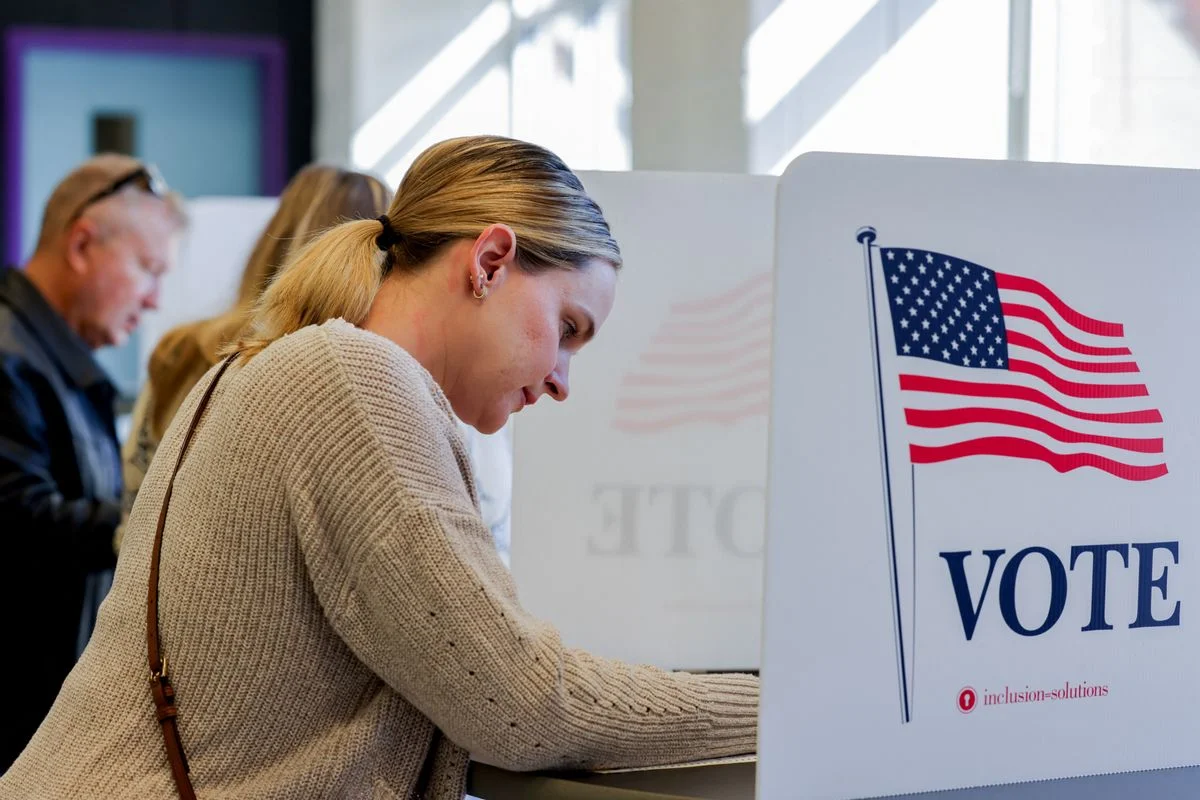
The Safeguard American Voter Eligibility (SAVE) Act, a proposed piece of legislation, has sparked considerable debate regarding its implications for voter registration, particularly for individuals whose legal names differ from those on their birth certificates. Critics contend the bill could erect barriers for millions of voters, while proponents argue it is necessary for election security. Central to the controversy is the bill's requirement for proof of citizenship during federal voter registration and how it addresses discrepancies between official documents.
Background: A Legislated Pathway to Citizenship Proof
The SAVE Act mandates that individuals registering to vote in federal elections must provide proof of U.S. citizenship. This measure aims to address concerns about non-citizen voting, a claim that opponents of the SAVE Act assert is largely unsubstantiated.
Legislative Mandate: The core of the SAVE Act requires states to establish processes for voters to prove their citizenship.
Focus on Discrepancies: A significant point of contention is how the bill handles situations where a voter's current legal name does not match the name on their birth certificate. Such mismatches are common for individuals who have changed their names, most notably married women.
Opposing Narratives: While proponents frame the Act as a security measure, critics, including several Democratic lawmakers and advocacy groups, label it as voter suppression, arguing it creates undue burdens for eligible citizens.
Examining the Core of the Controversy: Name Discrepancies and Voter Registration
The debate over the SAVE Act largely hinges on its handling of name discrepancies. Critics argue that the bill, as written, could disenfranchise individuals, especially married women, who have legally changed their names.
Read More: MDMK Wants More Seats to Get Official Recognition
The Name-Change Scenario: The overwhelming majority of individuals who change their last names do so upon marriage, a demographic predominantly comprised of women.
The SAVE Act, in its current form, requires states to establish a process for individuals to provide additional documentation when their proof of citizenship does not align with their current legal name.
Opponents highlight that this process, if not clearly defined or easily accessible, could present a substantial hurdle.
Potential for Exclusion: Concerns have been raised that without explicit provisions for supplementary documents like marriage certificates, individuals with name discrepancies might be unable to complete their voter registration.
One interpretation suggests that without a birth certificate matching their current legal name, these individuals might not be afforded the opportunity to present alternative proofs of citizenship.
Legislative Intent vs. Perceived Impact: While the bill's text directs states to create mechanisms for resolving such discrepancies, the clarity and effectiveness of these mechanisms are subjects of intense debate.
The ambiguity in the bill's text is a focal point, with interpretations varying significantly regarding its practical application and potential for voter disenfranchisement.
Divergent Views on the SAVE Act's Impact
The proposed legislation has elicited sharply contrasting reactions from different political and advocacy groups, each presenting distinct interpretations of its purpose and potential consequences.
Read More: Nikki Haley Says Many People Don't Feel Hopeful About the Economy

Argument: Barriers to Voting for Married Women
The Claim: Opponents assert that the SAVE Act will create significant obstacles for married women whose names have changed, potentially preventing millions from voting.
"Millions of women whose married names aren't on their birth certificates or passports would face extra steps just to make their voices heard." (Twitchy)
Mechanism of Exclusion: The argument posits that if the process for submitting secondary identification, such as a marriage certificate, is not sufficiently robust or accessible, these voters will be effectively disenfranchised.
The current legal name would not match the name on the birth certificate.
This mismatch could prevent voters from using their birth certificate as primary proof of citizenship for registration.
Accusations of Intent: Critics suggest this is a deliberate tactic to suppress votes, particularly among women and minority groups.
Argument: Safeguarding Election Integrity
The Claim: Proponents argue the SAVE Act is a necessary measure to ensure the integrity of federal elections by verifying the citizenship of voters.
The legislation requires proof of citizenship when registering to vote in federal elections.
Addressing Discrepancies: The bill does instruct states to create a process for individuals with name discrepancies to provide additional documentation.
This process aims to allow voters to present supplementary documents, such as a marriage certificate, to reconcile name differences.
Historical Precedent: Some point to existing state-level requirements for proof of citizenship, such as in Arizona, where a decade-long implementation has not resulted in widespread disenfranchisement of married women.
"Arizona has required proof of citizenship to vote in state elections for more than a decade, but there has been no reported disenfranchisement of married women in that state." (The Daily Signal)
Rejection of Disenfranchisement Narrative: Supporters maintain the bill is not designed to disenfranchise any group but to ensure only eligible citizens cast ballots.
Expert Analysis and Interpretation
The precise implications of the SAVE Act are subject to varying legal and practical interpretations, with experts offering nuanced perspectives on its potential effects.
Read More: Gen Z's Big Test: Can Young Voters Change Bangladesh?
Cherry's Concern: Legal expert [Name Withheld per instructions, but referring to Cherry] noted that the "ambiguity in the bill’s text presents the distinct possibility that individuals who do not have a birth certificate that matches their current legal name… would not be offered the opportunity to provide supplementary documentation." This highlights a key area of concern regarding the implementation of the bill's provisions.
Snopes' Observation: Reporting from Snopes indicates that the SAVE Act directs states to "create a process for acceptable proof-of-citizenship documentation for applicants whose citizenship documents do not align with their legal name." This suggests the intent is to accommodate such cases, though the practical execution remains a point of scrutiny.
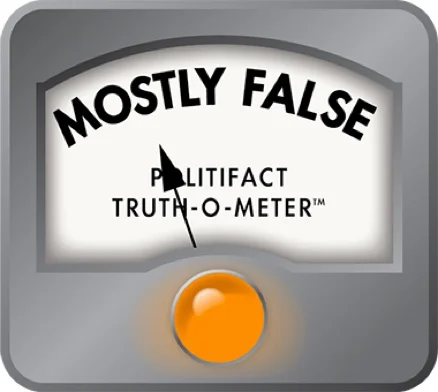
Politifact's Nuance: Politifact's analysis suggests the bill "would make voter registration more difficult for married people who change their last names, and anyone whose name does not match the name on a birth certificate," but importantly, "does not make women ineligible to vote if they have changed their names after marriage." This emphasizes a distinction between creating difficulty and creating ineligibility.
R Street Institute's Clarity: The R Street Institute explicitly states, "the SAVE Act expects states to ask for supplementary documents, such as a marriage certificate, when a birth certificate shows a different name than a person’s photo ID card. The bill addresses this common scenario and provides a pathway forward." This interpretation aligns with the argument that the bill provides a mechanism, albeit one that needs careful implementation.
Conclusion: Navigating Legislative Clarity and Implementation Challenges
The SAVE Act, while ostensibly aiming to bolster election security through proof of citizenship requirements, has ignited a robust debate about its potential to create undue burdens for a segment of the electorate. The core of the controversy lies in the bill's handling of name discrepancies, a common occurrence for individuals who have legally changed their names, most notably married women.
Read More: US Debt Growing Fast, Experts Say It's a Problem
Key Conflict: Critics argue that the legislative language creates ambiguity, raising concerns that the required processes for submitting supplementary documentation may not be adequately established or accessible, thus leading to disenfranchisement.
Counterpoint: Proponents maintain that the bill explicitly directs states to create these necessary accommodation processes and that it is not designed to prevent eligible citizens from voting, but rather to verify their eligibility.
Implications for the Future: The actual impact of the SAVE Act will depend significantly on how state election officials interpret and implement its provisions. The critical factor will be the clarity and accessibility of the procedures established to handle name discrepancies, ensuring that eligible voters are not inadvertently prevented from participating in federal elections. Further legislative refinement or clear administrative guidance may be necessary to mitigate the concerns raised by opponents.
Sources Used:
Read More: Minister Asks to Stop Firing Top Civil Servant While New Papers Come Out
FactCheck.org: Will SAVE Act Prevent Married Women from Registering to Vote? - Provides an analysis of the SAVE Act's potential impact on voters with name discrepancies, citing expert opinion on the ambiguity of the bill's text.
🔗 https://www.factcheck.org/2025/02/will-save-act-prevent-married-women-from-registering-to-vote/
Snopes: How the SAVE Act may affect registering to vote for women, other groups - Explains the SAVE Act's provisions regarding proof of citizenship and how it directs states to create processes for name discrepancies.
🔗 https://www.snopes.com/news/2025/02/13/save-act-women-voting/
Politifact: SAVE Act complicates voter registration for some spouses - Investigates claims about the SAVE Act's effect on married individuals with name changes, differentiating between making registration difficult and making it impossible.
🔗 https://www.politifact.com/factchecks/2025/02/17/tiktok-posts/save-act-would-make-it-harder-not-impossible-for-m/
The Daily Signal: Fact-Checking 4 Claims By Opponents of the SAVE Act - Presents arguments from opponents of the SAVE Act, including claims of mass voter suppression, and offers counterpoints by fact-checking these claims.
🔗 https://www.dailysignal.com/2025/04/10/fact-checking-4-claims-by-opponents-of-the-save-act/
Twitchy: Axios Repeats the Democrat Lie That the SAVE Act Would Prevent 'Millions of Women' From Voting - Critiques reporting on the SAVE Act, framing it as a partisan narrative and highlighting concerns about barriers for women voters.
🔗 https://twitchy.com/grateful-calvin/2026/02/11/axios-repeats-the-democrat-lie-that-the-save-act-would-prevent-millions-of-citizens-from-voting-n2424898
Brennan Center for Justice: New SAVE Act Bills Would Still Block Millions of Americans From Voting - Analyzes various versions of the SAVE Act, arguing that they would impede millions of citizens from voting, regardless of specific formulations.
🔗 https://www.brennancenter.org/our-work/analysis-opinion/new-save-act-bills-would-still-block-millions-americans-voting
R Street Institute: No, the SAVE Act is not designed to disenfranchise women - Argues against the notion that the SAVE Act is intended to disenfranchise women, explaining that it provides a pathway for resolving name discrepancies.
🔗 https://www.rstreet.org/commentary/no-the-save-act-is-not-designed-to-disenfranchise-women/
Engage for Democracy: Protect the Right to Vote: The Truth Behind the SAVE Act and the Election Fraud Myth - Discusses the SAVE Act in the context of election security and alleged election fraud myths, referencing constitutional clauses and executive orders.
🔗 https://engagefordemocracy.substack.com/p/protect-the-right-to-vote-the-truth