


Sarytogan Graphite has secured an additional A$2.05 million investment from Sarsenov Investment, following the receipt of formal regulatory clearances from the Kazakhstan Ministry of Industry and Construction (MIC). This influx of capital—formalized via placement capacity under ASX Listing Rules—moves the company toward the completion of its Definitive Feasibility Study (DFS), expected by mid-2026.
The move consolidates a unique shareholding structure, with the European Bank for Reconstruction and Development (EBRD), Sarsenov, and founding director Dr. Mueller now controlling over half of the firm's equity.
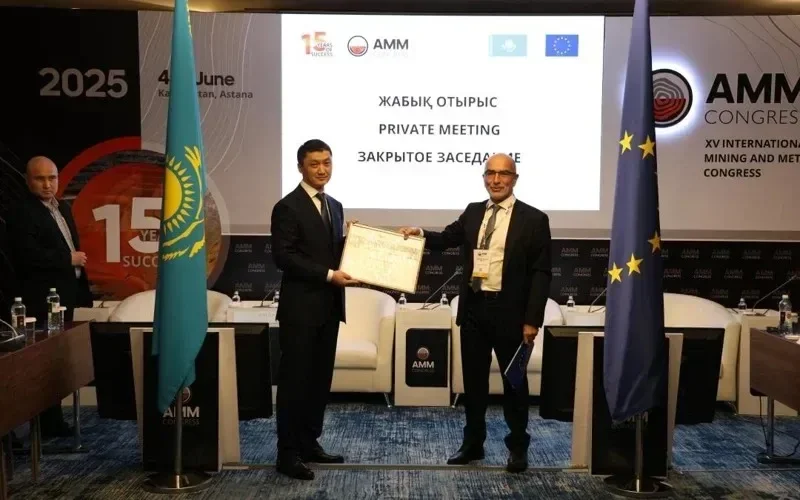
Strategic Realignment and Ownership
The funding round brings the involvement of the Sarsenov family—major stakeholders in Central Asia’s rail logistics—to a central governance role.
The investment is conditional on the appointment of a Sarsenov nominee to the Sarytogan Board.
The financing serves as a liquidity bridge to accelerate the transition from exploration to production, mitigating risks inherent in high-tonnage mining projects.
Recent technical progress includes the procurement of critical water permits, a necessary step for the project's downstream purification facility aspirations.
| Stakeholder | Role / Strategic Influence |
|---|---|
| EBRD | European development finance; institutional validator |
| Sarsenov Investment | Local rail infrastructure connectivity; equity partner |
| EU Commission | Strategic status granting; supply chain policy support |
The Geopolitical Utility of the Deposit
The Sarytogan project, situated near Karaganda, functions as a fulcrum for European efforts to decouple critical mineral supply chains from China. Since the EU designated the deposit a "strategic project" in June 2025, the narrative surrounding the mine has shifted from mere exploration to an integrated component of the "green and digital transition."
Read More: FIFA World Cup 2026 Revenue Reaches $15 Billion With New Ticket Prices

Supply Chain Integration: The project aims to provide three product streams: industrial microcrystalline, ultra-high-purity fines, and spherical purified graphite for battery anodes.
Operational Scale: The deposit holds a JORC-compliant resource of 229Mt at 28.9% TGC, distinguishing it as a high-grade asset in a market often defined by lower-yield, harder-to-process deposits.
Logistics: By leveraging Kazakhstan’s rail infrastructure, the company is positioning its Agydyr facility to serve as a high-volume corridor between Central Asian resources and European manufacturers.
Investigation into Regulatory Hurdles
While the project maintains momentum, the structural reliance on both state-level regulatory cooperation in Kazakhstan and EU strategic classification introduces layers of dependency.
Management acknowledges that the DFS is the primary benchmark for success. Recent trial mining of 20-tonne samples has focused on verifying flotation performance, an essential step to prove that the material can meet the strict purity requirements of international battery manufacturers. The current phase, involving extensive infill drilling and bulk testing, is intended to validate the site's multi-generational potential while ensuring that environmental compliance remains in lockstep with the Subsoil Use Law adopted in Kazakhstan—a policy framework the EBRD actively helped shape.
The upcoming Extraordinary General Meeting (EGM) on 25 March 2026 represents the final procedural gate for these specific capital arrangements. Beyond this, the project remains tied to the wider, often volatile, fluctuations in global graphite pricing and the political stability of the Eurasian transit routes.
Read More: FireFly Metals Finds Big Copper-Gold Near Green Bay, Canada


