The news of beloved comedian Rajpal Yadav surrendering to Tihar Jail has sent ripples through the entertainment world. While the official story points to cheque-bounce cases, a deeper dive reveals a pattern of legal wrangling and alleged non-compliance that left the Delhi High Court with no choice but to order his immediate incarceration. His reported somber farewell, "There’s no other way out, there are no friends," hints at a desperation that goes beyond a simple financial mishap. This isn't just about a bounced cheque; it's about a series of broken promises, a judiciary pushed to its limits, and the stark reality that even Bollywood stars aren't above the law.

The Legal Tightrope: A Trail of Court Orders and Delayed Payments
Rajpal Yadav, a face synonymous with laughter for decades, now finds himself on the wrong side of justice, facing a six-month prison sentence. The saga began with multiple cheque-bounce cases, a legal consequence for issuing cheques that couldn't be honored. This isn't a new phenomenon in the financial world, but for a public figure like Yadav, the implications are magnified.
Read More: Diler Movie Diwali 2026 Release Possible For Ibrahim Ali Khan
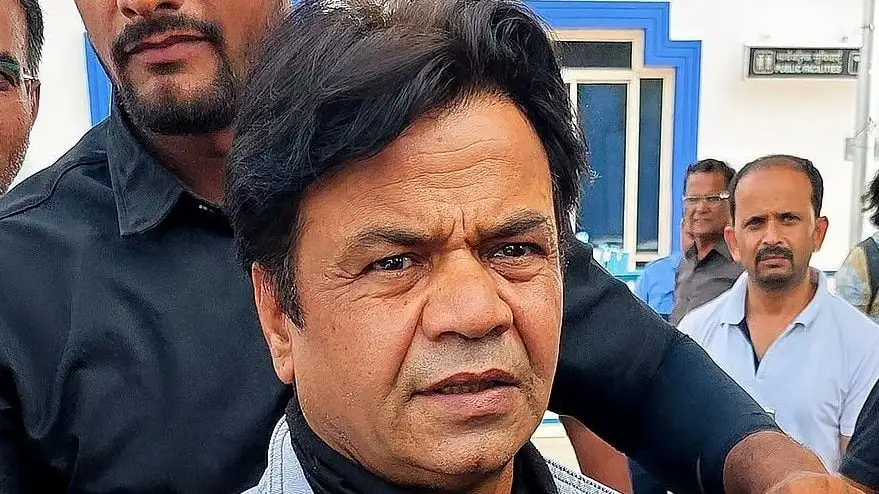
The Core of the Issue: At the heart of this predicament are cases stemming from bounced cheques, an offense that can carry significant penalties.
The Amount in Question: While the specific details of all cases aren't fully laid out, one report mentions a sum of ₹2.5 crores being involved, a considerable amount that points to a deeper financial entanglement than a minor oversight.
Timeline of Non-Compliance: The Delhi High Court's strong stance stems from what it perceived as a pattern of delayed compliance and broken assurances.
February 2nd: The High Court initially directed Yadav to surrender.
Court Observation: The court noted repeated breaches of undertakings by Yadav to repay the complainant.
February 4th: A request for an extension was explicitly rejected.
Yadav's Counsel's Plea: During hearings, Yadav's lawyer reportedly mentioned an attempt to arrange ₹50 lakh, requesting an additional week to complete payment.
High Court's Frustration: The court expressed strong disapproval of non-compliance, highlighting that the surrender order was issued in the presence of Yadav's counsel.
Justice's Impartiality: Justice Sharma of the High Court emphasized that the law rewards compliance, not contempt, and that no special circumstances would be created for individuals based on their background or industry.
The Surrender: Following the court's refusal to extend the deadline, Rajpal Yadav surrendered at Tihar Jail on Thursday, February 6th, 2026, around 4 PM.
The Public Persona vs. The Legal Reality
It's a jarring contrast: the larger-than-life comedian who brings joy to millions now facing imprisonment for financial indiscretions. How does a situation escalate to this point? What were the underlying circumstances that led to multiple bounced cheques?
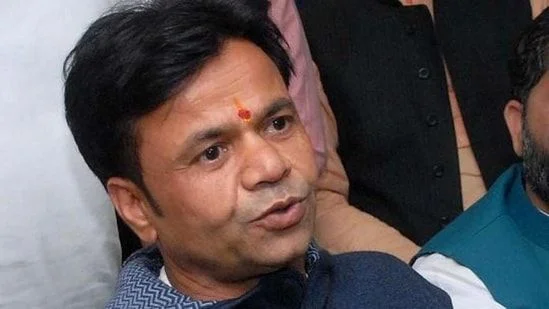
Decades of Laughter: Yadav's career is marked by memorable roles that have provided comic relief to audiences. This starkly contrasts with his current legal plight.
The Plea for Understanding: His reported statement, "Mere paas paise nahin hain (Sir, what to do?)," paints a picture of financial distress. But how did this financial distress manifest into bounced cheques that triggered such severe legal action?
Seeking an Extension: The repeated attempts to seek extensions for surrender suggest a desire to avoid jail time. Was this a tactic to buy time, or a genuine struggle to meet financial obligations?
The Court's Perspective: The High Court's firm stance, stating it had already shown "sufficient leniency," indicates that they believed Yadav had been given ample opportunity. Did the court feel his actions were disrespectful to the judicial process?
"The court could not overlook the complainant’s position and that justice requires a balance between compassion and discipline." – Delhi High Court
This quote from the High Court underscores the judicial philosophy at play. While there might be a desire for compassion, the need for discipline and adherence to the law, especially concerning financial obligations, ultimately prevailed.

Was it a Case of Mismanagement or Deeper Financial Distress?
The narrative of bounced cheques often raises questions about the individual's financial health and business acumen. For a well-known actor, it’s natural to question how such a situation arose.
Financial Entanglements: Did Yadav have multiple business ventures or personal loans that led to a cascade of financial obligations? The sum of ₹2.5 crores suggests significant dealings.
The Nature of the Debt: Was this debt related to his film productions, personal investments, or other private dealings? The lack of explicit detail leaves room for speculation.
The "No Friends" Lament: His poignant statement, "There’s no other way out, there are no friends," could be interpreted in several ways. Is it a genuine feeling of abandonment, or an admission of having exhausted all avenues of financial or legal support? Did he reach out to associates or colleagues for help, only to be met with silence?
The Role of Advisors: Did financial advisors or legal representatives fail to guide him effectively, or did he make decisions that were inherently risky?
The court's observation about Yadav "repeatedly breached his undertakings" is a critical piece of evidence. This implies a deliberate pattern of non-fulfillment, rather than a one-off incident.
A Judicial Stance: Upholding the Law, Regardless of Stature
The Delhi High Court's handling of this case appears to be a clear message: the law is blind to fame and fortune. The refusal to grant further extensions, despite Yadav's stature, emphasizes the principle of equal application of justice.
Read More: Cassie Ventura Leaves US After Diddy Trial Testimony
No Special Treatment: The court explicitly stated that individuals cannot be afforded special circumstances based on their background or industry. This is a vital point in maintaining public trust in the judicial system.
Compliance Over Contempt: The court's view that the law rewards compliance, not contempt, directly addresses Yadav's alleged pattern of behavior. His surrender, though late, is a form of compliance, but the prior non-compliance seems to have sealed his fate.
The Complainant's Rights: The court's acknowledgment of the complainant's position and the need for a balance between compassion and discipline highlights the rights of those who have been wronged financially.
The Path Forward: The court did offer a sliver of hope, stating that upon surrender, Yadav would be at liberty to move an appropriate application seeking relief. This suggests that while jail time is inevitable for now, there might be possibilities for early release or further legal recourse within the prison system.
The consistent refusal to extend deadlines and the observation of repeated breaches of undertakings indicate the Delhi High Court felt Rajpal Yadav had exhausted its patience, prioritizing adherence to the law over individual celebrity status.
Conclusion: A Grim Reminder of Financial Responsibility
Rajpal Yadav's surrender is a stark reminder that financial obligations carry legal weight, irrespective of one's public persona. While the laughter he has provided us will endure, his current situation serves as a cautionary tale. The questions linger: What were the precise financial dealings that led to this? And how did a series of broken promises erode his legal standing to the point of no return? The judicial process, it seems, demands accountability, and in this instance, Rajpal Yadav has been made to face the consequences of his actions. The path ahead for him involves serving his sentence and then potentially seeking relief, but the immediate reality is six months behind bars, a stark contrast to the freedom of the stage and screen.
Sources: