Primary voters have stopped looking for winners and started looking for echoes. New data from a national NBC News poll shows a jagged shift in how people choose candidates. In the upcoming struggle for Congressional Control, voters are abandoning the tactical math of "who can win" in favor of the emotional safety of "who thinks exactly like me."
Voters are prioritizing ideological purity over the ability to actually secure a general election victory.
"Seven in 10 Republican primary voters prefer a candidate who comes closest to their views, while 27% prefer a candidate who has a better chance of winning the general election."
THE ASYMMETRIC CALCULUS
The urge to find a twin in the voting booth is lopsided across the two-party fence. While Republicans have largely abandoned the "electability" ghost, Democrats remain caught in a stuttering hesitation between their desires and the pragmatism of the ballot box.

| Voter Group | Prioritize Ideology | Prioritize Electability |
|---|---|---|
| Republicans | 70% | 27% |
| Democrats | 56% | 42% |
Republican voters have decoupled fundraising and ideology from the old rules of "broad appeal."
Democratic voters are more fragmented, nearly split on whether a candidate should be a perfect representative of their soul or a blunt tool to beat the opposition.
The gap suggests a Fractured Electorate where the definition of "winning" has changed from "holding office" to "holding the line."
THE PLASTIC DEFINITION OF WINNING
Research from the Northwestern University Institute for Policy Research indicates that "electability" isn't a fixed target but a hallucination that varies by party. The way a voter perceives a winner depends on what they value most, creating a loop where ideology becomes its own proof of viability.
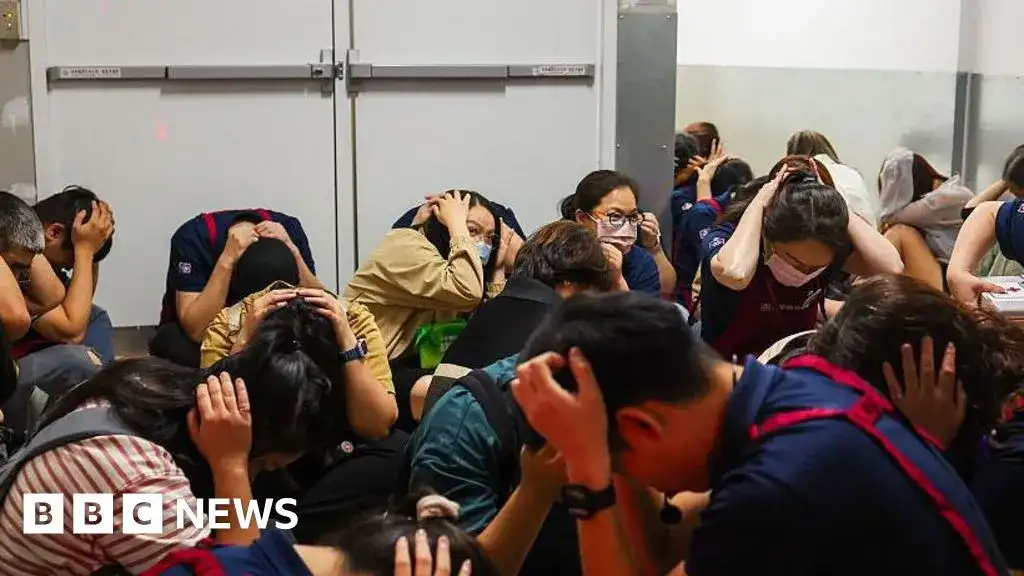
Read More: Taiwan Holds Nantou County Drills to Prepare for State Collapse
Democrats equate "moderation" with being electable; they view the middle ground as a survival strategy.
Republicans link "fundraising success" to electability; the money pile is seen as the ultimate signal of a candidate's strength.
These differing Perceptions ensure that both sides are moving in opposite directions, convinced their specific brand of purity is the only way to succeed.
DECAYING INSTITUTIONS
The backdrop to this internal purity testing is a scorched landscape for both organizations. Public trust has thinned into a translucent layer of skepticism.
"Only 30% of voters viewing the Democratic Party positively and 37% viewing the Republican Party positively."
The Democratic Party is currently weathering Poll Numbers that rank lower than ICE (Immigration and Customs Enforcement), a fact that highlights a deep-seated rot in brand loyalty. Independents, the supposed arbiters of the general election, remain largely repelled by both options. For many, like 25-year-old Marley Ross, the choice is not about a champion but about navigating a thicket of uncertainty where no candidate feels like a clean fit.
As the primaries begin, the focus on "sameness" suggests a future of rigid, unbending representatives. The old logic—that one must move to the center to win the whole—is being treated as an ancient, discarded myth by the people actually pulling the levers.
Read More: Aboriginal Voters Turned Away From SA Polling Stations on Election Day