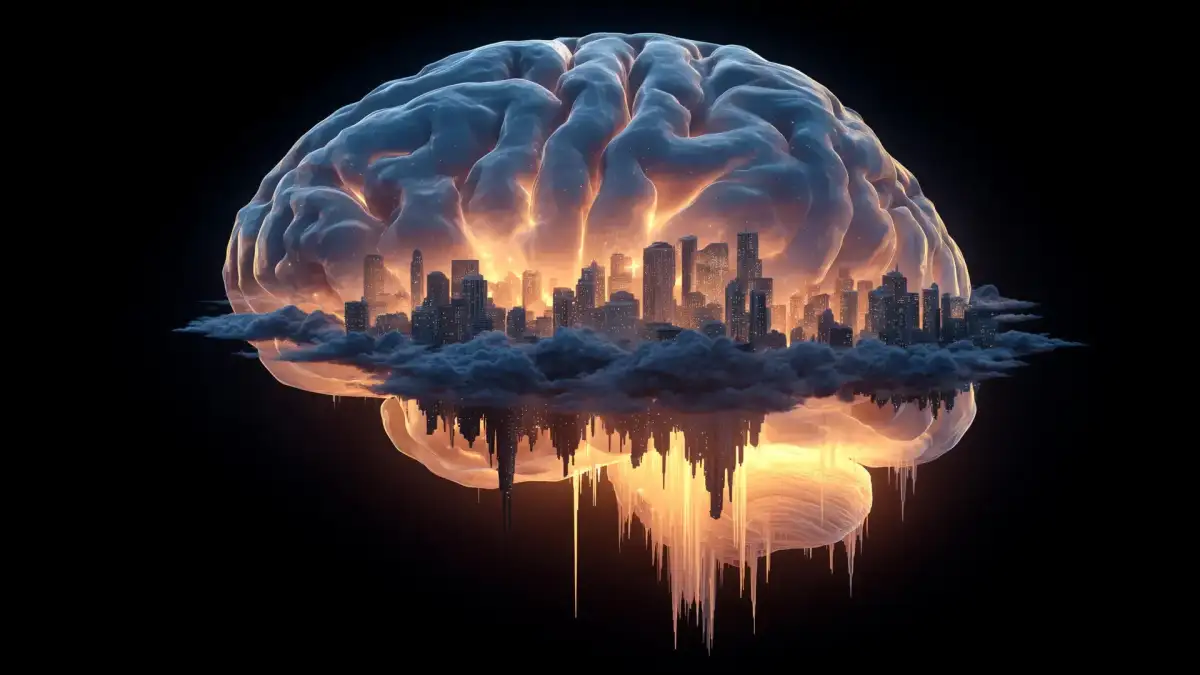
Recent studies indicate that dreams are far from arbitrary occurrences. Instead, they appear to be intricate tapestries woven from an individual's personal traits, lived experiences, and current emotional landscape. This new wave of research challenges the long-held notion of dreams as mere chaotic mental static.

Key findings suggest that dreams function as a "multimotive simulation space," actively processing and transforming daily life rather than simply replaying it. This transformation appears influenced by fundamental social motives, with concerns like protecting family members surfacing in dream narratives. Personality, emotional states, and thinking patterns all play a discernible role in shaping dream content.

Personality and Life Events Shape Dream Narratives
The analysis of thousands of dream reports reveals that individual characteristics profoundly influence what transpires in our sleeping minds.

Personal experiences and traits are significant predictors of dream content.
Dreams are described as a dynamic mental process, actively remixing reality by blending an individual's identity with their past.
People who place greater emphasis on dreams tend to report more vivid and emotionally charged dream experiences.
Individuals prone to frequent, fragmented reflection are more likely to describe dreams as disjointed and rapidly shifting.
Dreams as a Dynamic Process, Not Mere Reflection
Contrary to the idea that dreams are simple replays of waking life, research points to a more complex process.
Read More: Theology explains anxiety as lack of trust in God

While dreams may incorporate elements of daily experience, they appear to transform them.
Themes such as restriction, isolation, and anxiety have been noted to appear more frequently in dream reports.
Dreams are not entirely chaotic; they exhibit clear patterns linked to the dreamer's internal state and life circumstances.
The Role of Artificial Intelligence and Future Directions
Emerging technologies are opening new avenues for understanding dreams.
Artificial intelligence is being explored as a tool to advance dream research, potentially offering new ways to analyze complex dream data.
While some have speculated that dreams could be portals to other realities or offer glimpses into the future, current scientific consensus does not support these claims.
Research continues into the underlying neurophysiology of dreams and how they interact with different sleep stages, particularly REM sleep, where much of dreaming activity occurs.
Background on Dream Research
The purpose and nature of dreams have long been a subject of fascination and scientific inquiry. Various theories have been proposed, including those suggesting dreams reveal hidden desires or aid in memory consolidation. Evolutionary biologists posit that dreams may serve as simulations for threat preparedness. Despite these efforts, a definitive, universally accepted answer to "why we dream" remains elusive. Studies have explored dream phenomenology and its connection to brain activity, acknowledging that dreams become more complex as sleep progresses through various stages.