

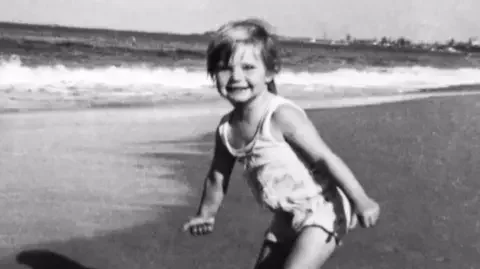
The NSW Director of Public Prosecutions has moved to reconsider its refusal to prosecute the 1970 disappearance of Cheryl Grimmer. This shift follows persistent pressure from the Grimmer family and the surfacing of a witness who claims to have seen a teenager carrying a child on the day the three-year-old vanished from Fairy Meadow Beach. While the NSW Homicide squad assesses "significant new evidence," the legal apparatus faces its own history of procedural friction regarding a 1971 confession that remains the central, yet inadmissible, anchor of the case.

"The family is considering the contents of their correspondence and the implications of their response." — Ricki Nash, brother of the missing child.
The Mechanics of an Admissible Truth
The core of the stagnation rests on a 17-year-old suspect who, in 1971, detailed the killing of the toddler to police. His narrative was granular:

He claimed to have hidden the body under leaves and dirt.
He admitted to throwing a towel in a drain.
He confessed to the impulse of wanting to keep the child's swimsuit.
The confession was later deemed legally fragile, leading to the collapse of the case in 2019 when a judge ruled the police interview did not meet the standards for protecting a minor's rights. The suspect now denies any involvement, leaving a void between what was spoken in a precinct decades ago and what can be proven in a modern court.
Read More: Philadelphia Man Charged with Voting in 5 Presidential Elections While Under Deportation Order

Friction in the Timeline
| Year | Event | Result |
|---|---|---|
| 1970 | Cheryl vanishes from changing sheds. | Extensive beach searches find nothing. |
| 1971 | Teenager confesses to the murder. | Evidence buried by procedural gaps. |
| 2023 | New witness tells BBC of seeing an abduction. | Police contact the witness after 53 years. |
| 2026 | DPP offers a "special review." | Legal status of the confession remains the pivot point. |
The Witness and the Echo
The recent movement is tethered to a man who approached a BBC podcast claiming he saw a youth carrying a small child on that January afternoon. This late-entry testimony acts as a corroborative ghost to the original police theory. Former Homicide Detective Damian Loone suggests this information provides the grit necessary to re-engage the DPP. The bureaucracy of justice is now forced to weigh the memory of a 1970 beachgoer against the dusty transcripts of a teen's retracted admission.

Background: The Migrant’s Map
In 1968, Carole and John Grimmer moved from Bristol, UK, to Wollongong, seeking the standard Australian suburban dream. The disappearance happened on a Monday in January 1970, when Carole left her four children—Ricki, Stephen, Vaughan, and Cheryl—at the changing sheds while she packed the car.
The family was part of the post-war migration wave.
Ricki Nash (then Grimmer) was tasked with watching his siblings.
The sheds at Fairy Meadow became the last known location of the child.
The current review by the DPP is not a guarantee of trial; it is a re-evaluation of risk regarding whether the old confession can be salvaged or if the new witness provides a path around it.
Read More: MAFS Bride Gia Fleur Leaves Scott McCristal for Alan Wallace in February 2026