


Péter Magyar, having seemingly engineered a seismic political shift in Hungary, is pushing for a swift transition of power, eyeing an early May installation of his new government. In the wake of a decisive electoral victory, Magyar has declared a desire for a "complete change in regime" and has formally called for President Tamas Sulyok to convene parliament as early as May 5th. This accelerated timeline underscores a perceived urgency to dismantle the structures of the outgoing administration, with Magyar even suggesting current officials, including the president himself, should resign voluntarily.
The election results signal a stark departure from the Viktor Orbán era, with Magyar pledging to end Hungary's perceived drift towards Russia and re-establish ties with European allies. His immediate foreign policy pronouncements suggest a significant recalibration: he has explicitly stated opposition to fast-track EU membership for Ukraine while the conflict persists and vowed to prevent any resumption of accession talks. This stance directly challenges Orbán's previous use of veto power to obstruct EU sanctions on Russia and halt aid to Kyiv.
Read More: Taiwan Holds Nantou County Drills to Prepare for State Collapse
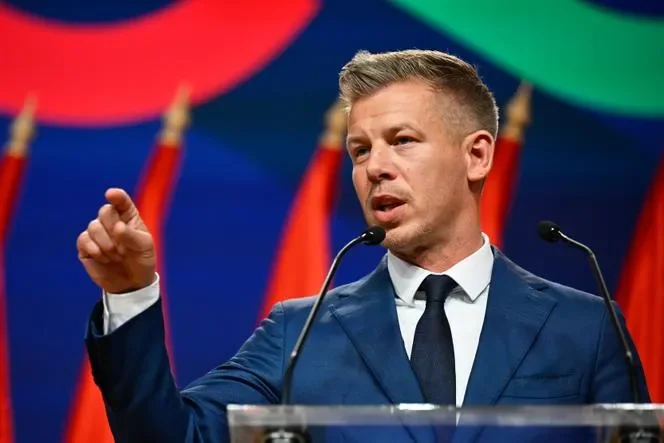
Magyar has also adopted a somewhat enigmatic posture on certain domestic issues, largely sidestepping discussions on LGBTQ+ rights during his campaign, despite his platform emphasizing the fight against corruption and the revival of Hungary's economy. He also acknowledged congratulatory messages from Moscow and Beijing, expressing their willingness to engage with the incoming government, a move that contrasts with his stated aim of pivoting away from Russia. His past alignment with Orbán's Fidesz party, even featuring a childhood poster of Orbán as a "liberal anti-communist," adds a layer of complexity to his political trajectory. The political landscape post-Orbán is further complicated by U.S. President Donald Trump's past support for the ousted leader, a relationship Magyar has yet to explicitly define.
Shifting Alliances and Uncertain Futures
Magyar's declared intent to engage in dialogue with Russian President Vladimir Putin, should the latter initiate contact, presents a potentially direct channel for addressing the conflict in Ukraine. He has indicated a desire to directly implore Putin to end the war. This contrasts with Orbán's long-held antagonism towards Ukrainian President Volodymyr Zelensky. Magyar's victory has been met with welcoming signals from many EU leaders, who see it as an opportunity for Hungary to reintegrate more fully into the European fold, particularly concerning Sweden's accession to NATO, which Orbán had previously obstructed.
Read More: Marquez Wins Hungarian Sprint Race After Shoulder Surgery
Background and Context
The election marks a significant upheaval in Hungarian politics, with Magyar's party achieving a resounding victory over Viktor Orbán's nationalists. Magyar, who has blamed past political disagreements for the end of his marriage to Judit Varga, has framed his campaign around rooting out corruption and restoring democratic norms. His rhetoric paints a stark picture of Hungary's current state, describing the country as "plundered, looted, betrayed, indebted and ruined," and emphasizing that there is "no time to waste" in initiating a new era.
Read More: FBI Analysts Review Georgia 2020 Election Data in Fulton County






/2026/04/09/69d7832173b01342912424.jpg)