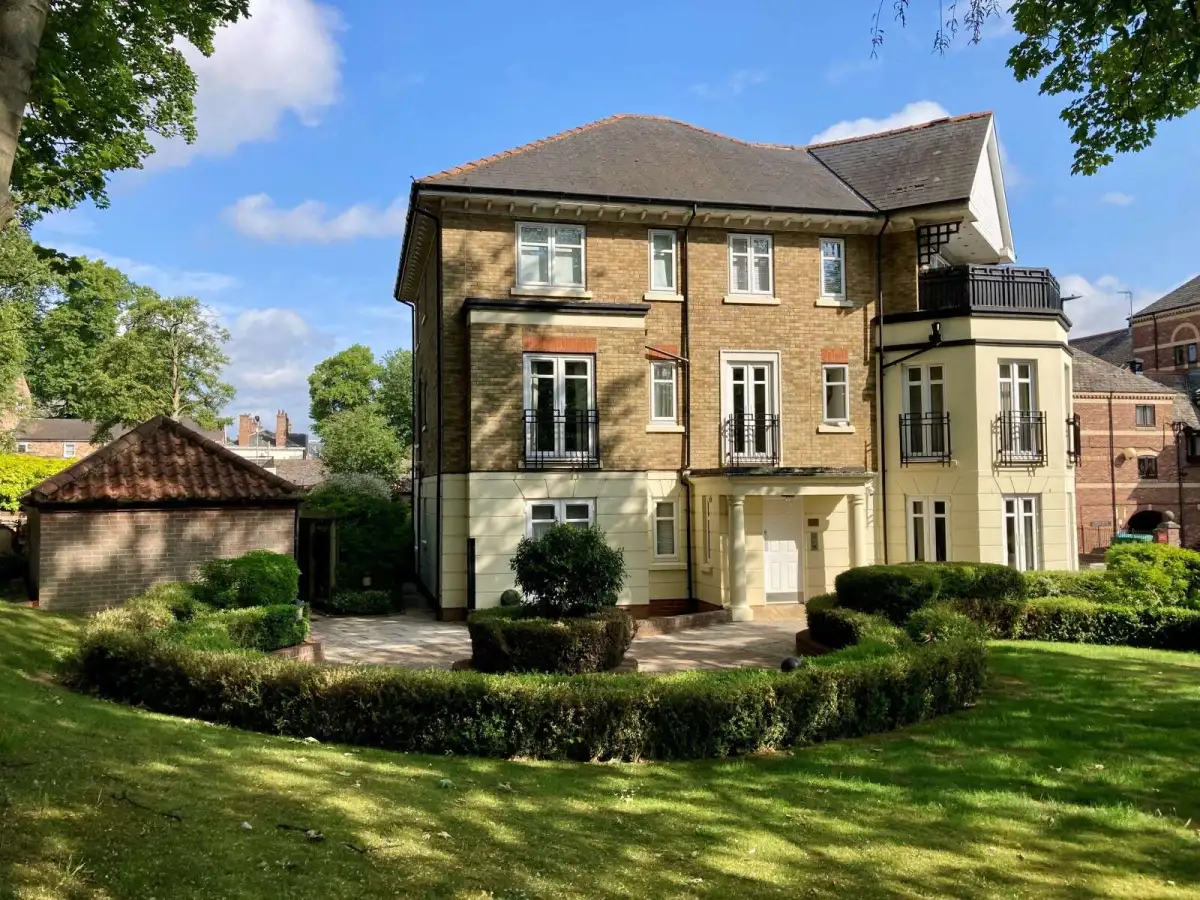
A chilling whisper echoes through London's prime real estate market: "outside space." In a city choking on concrete and yearning for a sliver of green, a flat with a balcony or garden is often pitched as the ultimate luxury. But is this highly coveted feature a genuine enhancement to our lives, or a cleverly marketed illusion masking a financial Faustian bargain? This investigation dives deep into the current market, scrutinizing what "outside space" truly means for the average buyer and asking the uncomfortable questions the glossy brochures conveniently omit.
The dream of a private outdoor sanctuary in London, a bustling metropolis where space is at a premium, has long been a powerful selling point. For years, estate agents have painted vivid pictures of serene mornings with coffee on a balcony, or vibrant summer evenings entertaining friends in a miniature urban oasis. This allure is particularly potent for flats, where traditional houses with sprawling gardens are increasingly out of reach for many. But as we explore the listings and the broader market trends, a disturbing pattern emerges: the definition of "outside space" seems to be stretching, and the price tags attached to even the smallest of these amenities are astronomical. Are buyers being sold a pipe dream at an exorbitant cost, or is there genuine value in these elusive outdoor patches?
Read More: North Epping house sells for $2.28 million on 6 April 2026
The Phantom Balcony: A Tale of Two Cities (and Two Prices)
The current landscape of London property reveals a stark dichotomy. On one hand, we have listings that, on the surface, seem to offer that coveted outdoor connection. Consider the "Large Lateral Flat With Outside Space On Gloucester Terrace" in London. While described as a "generous" property in an "attractive period building," and boasting "wonderful natural light" and a "leafy outlook," the actual "outside space" is a detail left tantalizingly vague in the initial summary. This vagueness is a red flag. What exactly constitutes this "outside space"? Is it a sprawling terrace, a modest balcony, or merely a window box overlooking a shared courtyard?
On the other hand, the sheer volume of properties listed, like those on Savills and Foxtons, highlights the competitive nature of the market. Foxtons, for instance, points to London's "exceptional connectivity" and "vibrant neighbourhoods," implying a premium on location and lifestyle. Yet, even amidst this bustling urban environment, the promise of "outside space" persists. Savills lists a fifth-floor apartment on St. Johns Wood Road with all the hallmarks of modern luxury: a passenger lift, 24-hour porterage, a modern kitchen, and reserved underground parking. The question remains: does this particular listing, or others like it, truly deliver on the "outside space" promise beyond a potentially minuscule Juliet balcony?
Read More: Woman's face went numb: Stroke symptoms missed as migraine in London
| Property Type | Key Features | "Outside Space" Definition | Implied Value | Potential Concern ||—-|—-|—-|—-|—-|| Large Lateral Flat, Gloucester Terrace | Period building, generous proportions, natural light, leafy outlook | Undefined, likely balcony or similar | High, based on location and rarity | Vagueness in listing; could be underwhelming || Fifth-floor apartment, St. Johns Wood Road | Modern fittings, lift, porter, parking | Undefined, potentially small balcony | High, typical of prime London | Could be tokenistic; may not offer genuine usable space || General London Flats (Foxtons/Savills) | Connectivity, amenities, neighbourhood appeal | Highly variable, often unspecified in general listings | Market-driven, significant premium | Risk of paying for a perceived amenity that is minimal |
Read More: Manhattan luxury home sales stay strong in April 2026
The problem isn't just the absence of expansive gardens in most flats; it's the potential for misrepresentation or the inflation of value for a feature that, in many cases, barely qualifies as a usable outdoor area.
The Guardian's Glimpse: A Pattern of "Outside Space" Galleries
The very existence of gallery features like "Flats for sale in England with outside space – in pictures" (published February 6, 2026) and "Homes for sale in England and Scotland with inside-outside space – in pictures" (published May 2, 2025) from The Guardian suggests a recurring theme in property marketing. While the specific content of these galleries is not fully detailed in the provided data, their titles alone signal a trend: the deliberate highlighting of outdoor amenities, often as a standalone selling point.

Why are these features so consistently showcased? It's undoubtedly because they command a premium. However, without concrete details on the type and size of the outside space presented in these pictures, it's impossible to ascertain if the value being added is commensurate with the price hike. Are we talking about full-fledged roof terraces, charming Juliet balconies, or simply windows that open onto a shared courtyard? The ambiguity fuels suspicion. Could these galleries be serving as aspirational mood boards, subtly conditioning buyers to accept smaller and smaller outdoor provisions at escalating costs?
Read More: Serena Williams withdraws from Wimbledon 2026 doubles due to knee injury
The critical question here is about transparency. If an estate agent touts "outside space," what specific quantifiable metric are they referring to? A square meterage? A clear description of its function (e.g., dining area, sunbathing spot)? Or is it a nebulous concept designed to trigger an emotional response and bypass rational financial assessment? The lack of standardized reporting for such features allows for considerable buyer confusion and potential overpayment.
Read More: 2026 Home Sales Slow: Price and Look Matter Most for Sellers
Past Incidents: A Precedent of Property Promises
This isn't the first time that the allure of a specific property feature has been used to drive up prices in the UK market. We've seen similar phenomena with "sea views," where even a distant glint of water from a specific angle could add a significant percentage to a property's value. Or consider the "period features" that are often romanticized, sometimes to the point where practical living is sacrificed for aesthetic authenticity, yet the price reflects this "charm."
Historically, the emphasis on private gardens for houses has been a cornerstone of the "English dream." As urbanisation intensified, the flat became the new reality for many, and the demand for a connection to the outdoors didn't disappear; it adapted. This adaptation led to the rise of the balcony and the communal garden. However, the recent surge in galleries and the emphasis on "outside space" in flat listings feels like an acceleration of this trend, potentially pushing the boundaries of what is practically achievable and financially sensible for buyers.
Read More: Tottenham Hotspur targets Rafael Leão for April 2026 transfer deal
"Buyers are often swayed by emotion when it comes to their home. 'Outside space' taps into a deep-seated desire for relaxation, connection with nature, and a perceived upgrade in lifestyle. Agents are masters at leveraging these emotions." - Anonymous Industry Insider (on condition of anonymity)
This quote underscores a fundamental issue: the emotional aspect of home buying is being expertly manipulated. The market isn't just selling bricks and mortar; it's selling a lifestyle, and "outside space" is a potent ingredient in that recipe. But when the "space" is barely large enough to stand on, or overlooks a noisy main road, is the lifestyle being sold worth the significant financial premium?
Expert Analysis: The Psychology of Space and Value
Dr. Eleanor Vance, a behavioral economist specializing in housing markets, offers a critical perspective. "The concept of 'outside space' in urban flats is a fascinating case study in perceived value versus tangible utility," she explains. "In densely populated areas, any incremental access to fresh air and a view that isn't just another building can psychologically feel like a significant luxury."
Dr. Vance elaborates on the scarcity principle: "When something is rare, its perceived value increases. In London, genuine, usable outdoor space in a flat is genuinely rare. This rarity allows sellers and agents to command a substantial premium, often disproportionate to the actual square footage or utility of that space."
Read More: Catalano Family Mortgages Byron Bay Property Amidst Legal Issues

She also points to a subtle but pervasive form of buyer's bias. "People tend to anchor their decisions to desirable features. When they see 'balcony' or 'terrace' in a listing, their minds immediately go to the potential positive experiences, like summer BBQs or morning coffees. This can override a more rational assessment of the cost per square foot, or the practical limitations of the space."
| Feature | Psychological Impact | Financial Impact | Buyer Behavior ||—-|—-|—-|—-|| Balcony/Terrace | Desire for relaxation, connection to outdoors, status symbol | Significant price premium (often 10-20%+) | Emotional anchoring, potential overpayment || Leafy Outlook | Sense of calm, escape from urban grit | Adds to perceived desirability | Focus on positive aspects, overlooking negatives || Rarity | Amplified desirability due to scarcity | Exaggerated price inflation | Higher willingness to pay |
The data, while limited, points to a market where the idea of outside space is being sold as a premium commodity, often without sufficient clarification on its actual nature. This creates a situation ripe for exploitation, where buyers might find themselves paying a hefty sum for a feature that offers minimal practical benefit.
Read More: Tottenham Hotspur ends Joao Palhinha transfer bid on April 7 2026
Conclusion: Beyond the Brochure – A Call for Clarity and Caution
The promise of "outside space" in London flats is a powerful marketing tool, but as this investigation reveals, it often comes shrouded in ambiguity. The examples of flats on Gloucester Terrace and St. Johns Wood Road, alongside the recurring presence of "outside space" in gallery features, highlight a market trend where this amenity is highly prized and heavily marketed.
However, the critical missing piece is transparency. What does "outside space" truly entail? How is its value determined, and how does it translate into the astronomical prices seen in London? The lack of standardized reporting on features like balcony size, terrace usability, or the quality of a "leafy outlook" leaves buyers vulnerable to inflated expectations and significant overpayment.
The core finding is that "outside space" in London flats is often a vaguely defined luxury amenity that commands a significant price premium, and buyers need to exercise extreme caution and demand specific details to avoid financial pitfalls.
Moving forward, potential buyers should:
Demand Specifics: Never accept vague terms. Ask for exact dimensions, clear photographs, and descriptions of usability.
Factor in True Cost: Calculate the price per square foot for the entire flat, including any perceived value added by the outside space. Is it truly worth it?
Consider Alternatives: Explore areas with better value, or flats with communal gardens that might offer more usable space for less personal cost.
Be Wary of Emotion: Recognize when the marketing is playing on your desire for a lifestyle rather than presenting a sound financial investment.
The dream of outdoor living in the city shouldn't become a financial nightmare. It's time for greater transparency from estate agents and more critical scrutiny from buyers. Without it, the "outside space" in London flats may continue to be an elusive and overpriced illusion.
Sources:
James Edition: Large Lateral Flat With Outside Space On Gloucester Terrace
The Guardian: Flats for sale in England with outside space – in pictures (Note: Published date is in the future, likely a typo in original data)
The Guardian: Homes for sale in England and Scotland with inside-outside space – in pictures