


The Kerala Governor, Rajendra Vishwanath Arlekar, has signed off on the Malayalam Bhasha Bill, turning a local language push into a cross-border legal fight. The Karnataka State Border Area Development Authority (KSBADA) is now moving to become a party in a lawsuit before the Kerala High Court to stop the law. At its core, the bill forces Malayalam as the compulsory first language in all schools—government and aided—up to Class 10. For the Kannada-speaking families in the Kasaragod district, this ink on paper feels like a wall built around their speech.

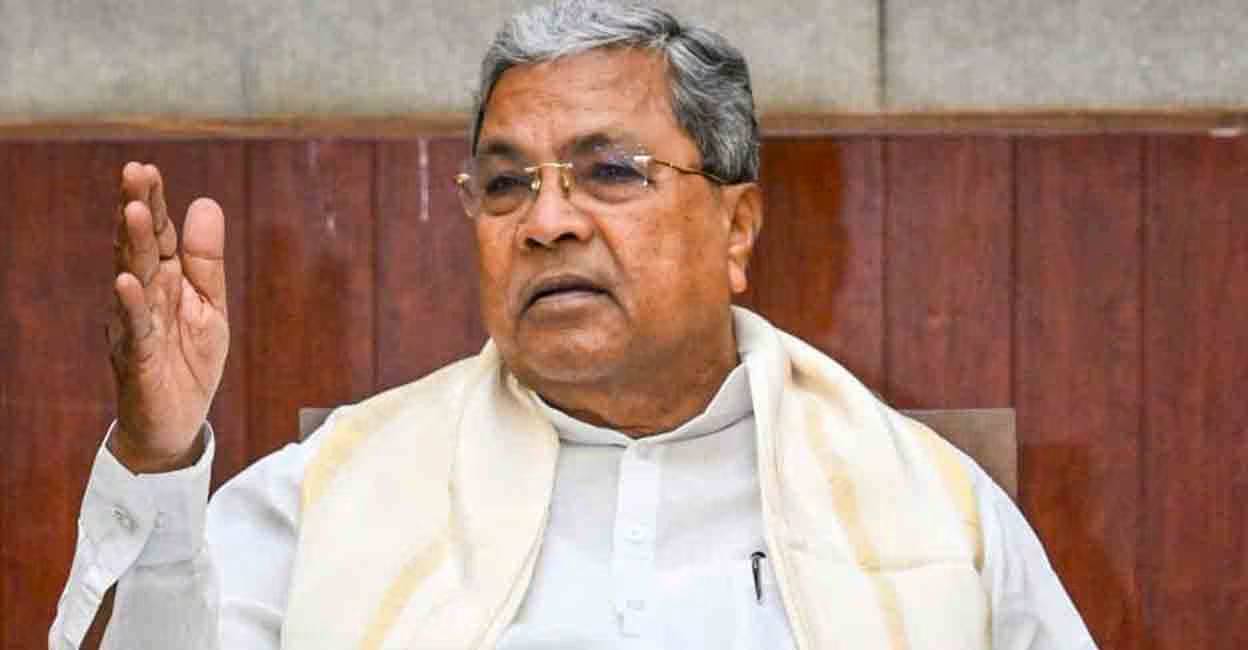
"India’s unity rests on respecting every language and a citizen’s right to learn in their mother tongue… Promotion can't be imposition." — Siddaramaiah, Karnataka Chief Minister.
The new law mandates Malayalam as the primary language of instruction, potentially displacing Kannada in 202 schools located in the border belts.

The Paperwork of Identity
The friction sits in the fine print of the Malayalam Language Bill, 2025. While the state claims it is merely "promoting" its heritage, the rules look like a ' mandatory requirement ' for every child, regardless of what they speak at home.
Read More: Teachers Try New Ways to Help Students Learn Better in 2024
Clause 6(1): Fixes Malayalam as the compulsory first language.
Clause 7(2): Offers a clunky loophole for those with different mother tongues, but critics say the pressure remains.
Section 2(6): Warns that students might be forced to learn a script they don't know just to pass school.
Karnataka’s leadership argues this move is unconstitutional. They point to ' Articles 30 and 350A ', which are supposed to protect people who speak "minority" tongues. In the dusty taluks of Manjeshwaram and Kasaragod, the daily talk is a mix of Tulu and Kannada, not the official Malayalam spoken in the south of the state.

Comparative Control: Two States, One Method
Both states are playing the same game of ' language protection ' while complaining when the other does it. Karnataka has its own strict laws linking the Kannada language to jobs and factory policies.
| Feature | Kerala's Malayalam Bill | Karnataka’s Language Act |
|---|---|---|
| Schooling | Compulsory first language to Class 10 | Mandatory Kannada in schools |
| Public Offices | New "Development Dept" for oversight | Portals require Kannada proficiency |
| Signage | Demanded for border stations/highways | Strictly enforced in shops/offices |
| Minority Protection | Contested in Kasaragod | Often debated in Belagavi |
The Political Theater of the Border
The BJP in Karnataka, led by R Ashoka, has accused the Congress government of being quiet when it suits them, suggesting that ' Priyanka Gandhi ' and others ignore the rights of Kannadigas to keep peace with their political allies in Kerala. Meanwhile, the KSBADA is demanding more than just school changes. They want:
Read More: State PU Colleges Have Too Many Students Per Teacher, Affecting Quality
Kannada teachers hired for Kannada-medium schools.
Official signs at police stations and railway stations in the local script.
Government hiring in border areas to reflect the people living there.
Background: A History of Overlap
The Kasaragod belt, specifically north of the Chandragiri River, has always been a messy mix of cultures. Historically, students here study Kannada as their first language and pick Hindi, Sanskrit, or Urdu as extras. By making Malayalam the "first" language, the state effectively demotes the language the community has used for generations. The Kerala Governor has promised a "thorough review," but the signing of the bill suggests the bureaucratic machinery is already moving. The courts will now have to decide if a state’s power to "promote" its tongue stops where a student’s right to their own "mother tongue" begins.