
A recent hefty fine levied against a winning jockey in the prestigious Kentucky Derby is stirring unease among racing enthusiasts and raising critical questions about the fairness and consistency of disciplinary actions in the sport. While the outcome of the race remains unchanged, the incident with jockey Junior Alvarado and his mount Sovereignty shines a spotlight on the rules governing the use of the riding crop and the penalties for their violation. But is this just an isolated event, or part of a larger pattern of leniency or strictness that leaves fans and participants bewildered?
The recent saga involving Junior Alvarado, the jockey who guided Sovereignty to a thrilling $2 million victory in the 151st Kentucky Derby, has culminated in a significant financial penalty. Alvarado was fined a staggering $62,000, representing 20 percent of his winnings. The transgression? Exceeding the permitted number of times he used his riding crop during the race. According to reports, Alvarado struck Sovereignty eight times, two more than the Horseracing Integrity and Safety Authority (HISA) rules allow. This incident, while not affecting the race's official result, has ignited a debate: are these rules and their enforcement truly serving the best interests of horse welfare and the integrity of the sport?
Read More: Circle of Dreams Horse Ready for War Hammer Million Race
The background to such regulations is rooted in a growing concern for the well-being of racehorses. For years, critics have pointed to the excessive use of the riding crop as a potential source of animal cruelty and a factor that can unfairly influence race outcomes. This has led to stricter guidelines being implemented across various racing jurisdictions. In this instance, HISA, a relatively new governing body aiming to standardize and improve safety and integrity in American horse racing, has stepped in. But as we'll see, enforcement and interpretation can be complex.
Read More: Terry Rozier faces new bribery charges in gambling probe
A Pattern of Punishments?
This isn't the first time athletes in high-stakes competitions have faced sanctions for rule breaches. We've seen similar situations unfold in other demanding sports, sometimes with drastically different outcomes. Consider the case of Alex Palou, a dominant force in IndyCar racing. Palou was ordered to pay a colossal $12 million to McLaren for breaching his contract. This legal battle stemmed from Palou backing out of two agreements with McLaren, opting instead to remain with his existing team, Chip Ganassi Racing.
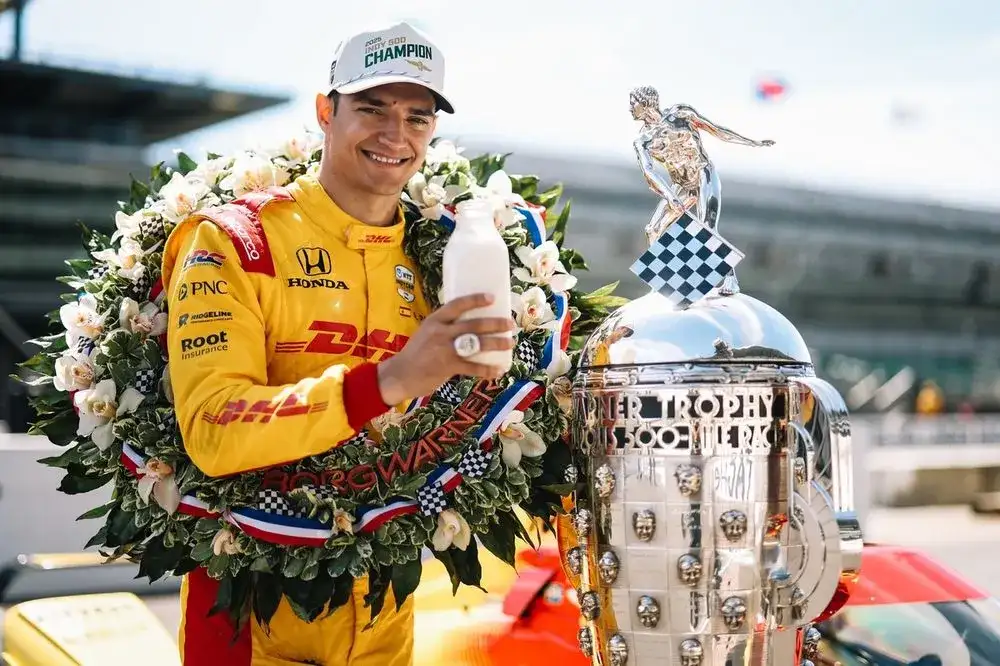
The disparity in penalties is stark: a $62,000 fine for a jockey's infraction versus a $12 million judgment for a contractual dispute.
| Athlete | Sport | Violation | Penalty | Context |
|---|---|---|---|---|
| Junior Alvarado | Horse Racing | Riding crop misuse (8x) | $62,000 fine | Exceeded HISA's permitted number of strikes; did not affect race result. |
| Alex Palou | IndyCar | Contract breach | $12M to McLaren | Backed out of agreements; McLaren cited reduced sponsorship payouts due to Palou's non-arrival. |
| Jamie Kah | Horse Racing | COVID-19 lockdown breach | Fined | Broke curfew and 5km radius rules during Melbourne lockdown; involved with other jockeys in a private gathering. |
While the nature of the infractions is different – one relating to animal welfare rules and the other to commercial agreements – the scale of the financial consequences raises eyebrows. Does a fine equivalent to a substantial portion of a jockey's winnings truly reflect the severity of the infraction, especially when compared to the multi-million dollar judgments seen in other sports?
Read More: Bangalore Horse Track Trials 7 April 2026 Shibra and Starzella Results
The "Too Many Hits" Dilemma: Rules and Enforcement
The core of Alvarado's penalty lies in exceeding the allowed number of riding crop strikes. HISA's rules are designed to prevent excessive use, which can be interpreted as detrimental to the horse. But how strictly are these rules applied, and is there room for interpretation?
What constitutes "excessive" use? Is it purely a numbers game, or does the manner of the strike also play a role?
Was Alvarado's use aggressive, or simply enthusiastic during a hard-fought race? The report notes his late surge, suggesting the crop was used to motivate Sovereignty during a critical moment.
How consistent is HISA's enforcement across all races and all jockeys? Are there clear guidelines for stewards, or is it left to their discretion?
The fact that the violation "does not impact the race results in any way" is a key point. Sovereignty’s victory stands. This suggests that HISA’s current focus is on penalizing the act of excessive crop use rather than altering the competitive outcome. But if the penalty doesn't affect the win, what is its primary purpose? Deterrence? Punishment? Or a symbolic adherence to welfare guidelines?

Beyond the Crop: Broader Issues of Athlete Conduct
The Jamie Kah incident from August 2021 offers another lens through which to view athlete conduct in racing. Kah, a champion jockey, was fined along with several other riders for breaching Melbourne's COVID-19 lockdown rules. They were reportedly found at a rental home, outside their designated 5km radius and in violation of curfew. This action drew condemnation from racing authorities and was met with stern warnings from state officials about the prolonged impact of such "selfish" behavior.
Read More: Barry Cable Perth court trial in 2024 for child abuse charges removes his football honors
What's striking here is the type of infraction: a clear violation of public health orders, leading to a fine. While not directly related to racing performance, it speaks to an athlete's broader responsibility and adherence to societal rules. The penalties in these instances are often a mix of financial sanctions and potential suspensions, aiming to punish and deter.
Comparing these cases:
Alvarado's penalty focuses on in-race horse welfare.
Kah's penalty addresses off-track public safety compliance.
Palou's situation is about contractual obligations and commercial damages.
The critical question is: does the racing industry, and its governing bodies like HISA, have a coherent and equitable framework for addressing all types of misconduct, from on-track technicalities to off-track breaches of conduct and contractual disputes? Or are punishments seemingly arbitrary, depending on the specifics of the infraction and the sport's unique culture?
Read More: Emerald Harmony Doncaster Race 7 April 2026 Win Chances
The Weight of Sponsorship and Dominance
In Alex Palou's case, the $12 million award to McLaren was heavily influenced by the impact on sponsorships. McLaren argued that because Palou’s performance with Ganassi was so dominant, and he reneged on his deal to move to McLaren's IndyCar team, sponsors like NTT Data and General Motors reduced their payouts to McLaren. The implication is that Palou's actions directly cost McLaren significant commercial revenue.

How much is an athlete's performance tied to their commercial value?
Do contractual breaches in sports, especially those impacting revenue, inherently carry heavier financial consequences than performance-related rule violations?
The context provided by NBC News highlights that McLaren had signed Oscar Piastri for its F1 team, and Palou’s IndyCar dominance was a key factor in their perceived value proposition. When Palou stayed with Ganassi, McLaren's promise of fielding a top-tier driver was unmet, directly affecting their ability to secure and retain lucrative sponsorships.
This brings us back to the Alvarado fine. While the Kentucky Derby is a monumental race with massive prize money, the fine is a percentage of the jockey's winnings, not the entire purse or potential sponsorship value. Could the scale of penalty be adjusted to reflect the broader economic impact, or is the focus intentionally on penalizing the jockey directly for their actions in the race?
Conclusion: A Call for Clarity and Consistency
The fine against Junior Alvarado for excessive riding crop use in the Kentucky Derby is more than just a disciplinary action; it's a symptom of ongoing debates about regulation, fairness, and welfare in professional sports. While the immediate impact on the race was nil, the lingering questions are significant:
Are the penalties for horse welfare violations in racing proportionate and consistently applied across different scenarios and individuals?
How does the industry balance the need for athlete discipline with the commercial realities and pressures of high-stakes competition?
Does the current enforcement model truly deter misconduct or simply represent a cost of doing business?
The stark contrast between Alvarado's fine and Palou's judgment, alongside the distinct nature of Jamie Kah's breach, suggests a landscape where penalties can appear disparate. For fans and participants alike, a clearer, more transparent, and consistently applied framework for infractions is crucial. Without it, the integrity of the sport, and the public's trust in its disciplinary measures, will continue to be subjects of intense scrutiny. What HISA and other racing bodies do next, in terms of clarifying rules, ensuring consistent enforcement, and demonstrating a commitment to equitable outcomes, will be critical in shaping the future of horse racing's ethical landscape.
Read More: Derby Track Favorite Withdraws After Christmas Day Stall Incident
Sources:
CBS Sports: https://www.cbssports.com/general/news/jockey-of-kentucky-derby-winner-sovereignty-fined-62000-for-using-riding-crop-too-many-times-during-race/
Autosport: https://www.autosport.com/indycar/news/palou-ordered-to-pay-12m-to-mclaren-in-contract-breach-case/10792288/
NBC News: https://www.nbcnews.com/news/us-news/alex-palou-ordered-pay-mclaren-racing-12m-breach-contract-suit-rcna255566
Daily Mail: https://www.dailymail.co.uk/news/article-9931523/Jamie-Kah-Melbourne-lockdown-breach-Champion-jockey-fined-Airbnb-party.html