The Stone, the Logic, and the Unknowable
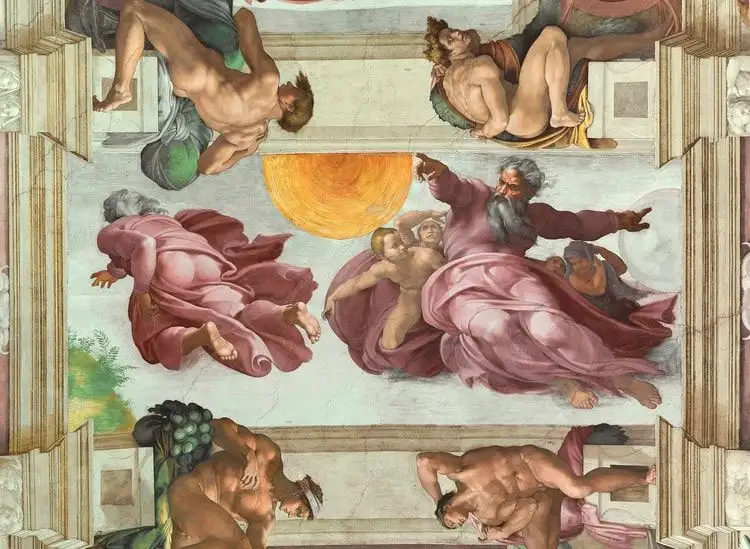
The question of whether an omnipotent being, commonly understood as God, can violate the fundamental laws of logic, or perform logically impossible acts, forms a significant point of contention, particularly within discussions involving figures like podcaster Tim Pool. This quandary, often framed by the paradox of an unliftable stone, probes the very definition of power and its relationship to reality's underlying structure.

The core of the issue lies in conflicting assertions: if God is all-powerful, must He be capable of creating a stone too heavy for Him to lift? The conundrum presents a logical bind: if God can create such a stone, then He is not all-powerful, as there's something He cannot do (lift the stone). Conversely, if God cannot create such a stone, then He is not all-powerful, for there's something He cannot do (create the stone). This classic paradox, echoing discussions on 's operations, touches upon the idea that divine power might be constrained by logical coherence, or that such a request inherently describes a nonsensical state of affairs, rather than a genuine limitation.
Read More: Why philosophers say suffering proves God does not exist in 2026

Discussions surrounding this topic suggest that attempting to reconcile omnipotence with logical impossibilities may lead to paradoxes rather than clear answers. Some perspectives argue that logic itself originates from a divine source, meaning God is not beholden to it, while others posit that the very concept of a logical contradiction describes something that cannot be done, irrespective of any power. This leads to an impasse where defining divine capabilities runs headlong into the limitations of human understanding and language.

Logic as Divine, or Divine as Illogical?
The debate often veers into whether God is beyond logic, or if logic originates from God. The assertion that "laws of logic point beyond themselves to God" suggests a foundational role for the divine in structuring reality, including its logical frameworks. However, this raises further questions about how we discern this supposed transcendence. If God is indeed beyond logic, the means by which we could comprehend or affirm this state become opaque.
Read More: What is the concept of God in world religions today 20 May 2026
A common response in theological and philosophical circles is that the essence of God is ultimately beyond full human comprehension in this life. This viewpoint suggests that our attempts to fit divine attributes, such as omnipotence, into our finite logical systems will inevitably produce friction. Some thinkers draw parallels between God's power, knowledge, and love, suggesting a unified divine essence where attributes are indistinguishable, a concept explored in analyses of 's philosophical theology.
The Paradox of Limitation
When confronted with the paradox of omnipotence, particularly the "stone paradox," some analyses point to a potential vagueness in human language as the root of the problem. The "burrito challenge," a similar thought experiment about a hot sauce too hot for God to eat, is suggested to contain an implicit assumption that the "God" in question is omnipotent. The flaw, in this view, is not in any conceivable limit to divine power but in how we phrase the question, leading to a perception of contradiction that may not exist in reality.
Read More: Atheists Report Feeling 'Love of Jesus' and Morality Without Faith
Furthermore, some scholars argue that if God cannot alter necessary truths, He might also be incapable of altering contingent truths. This line of reasoning, if accepted, would imply a lack of power over both categories, potentially leading to the conclusion that such a God, defined by these constraints, could not exist. This challenges the very framework of divine omnipotence when juxtaposed with immutable laws.
Background Murmurings
The discussion surrounding God's omnipotence and its relation to logic is not new. Historical figures like Thomas Aquinas have grappled with these concepts, exploring the nature of being and power. Contemporary philosophical discussions, often found on platforms like Stack Exchange and Substack, continue to dissect these ideas, referencing concepts such as 's approach to predication and 's work on axiomatic metaphysics. These ongoing dialogues highlight a persistent engagement with the problem, suggesting that definitive answers remain elusive, and the debate is more about refining questions and understanding inherent conceptual difficulties. The Stanford Encyclopedia of Philosophy also contains entries on 'omnipotence,' underscoring the academic seriousness with which this paradox is treated.