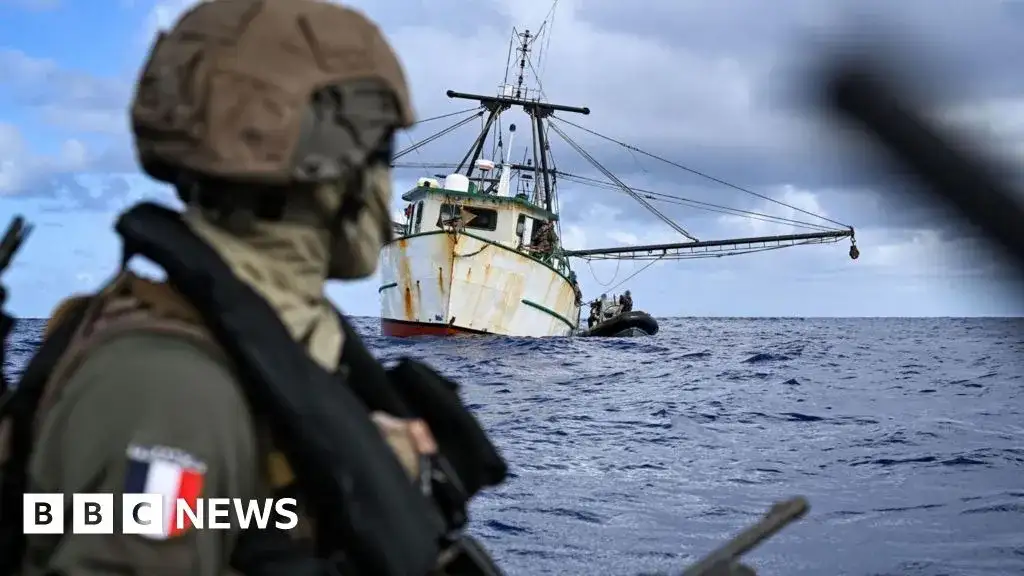
French authorities have seized nearly 12 tonnes of cocaine in the waters around Polynesia over the past month. This significant amount of illicit drugs, intercepted from multiple vessels, highlights the ongoing challenge of drug trafficking through the Pacific. The operations underscore a broader trend noted by international bodies, indicating a rise in organized criminal activity and drug transit in the region.
Significant cocaine seizures have been made in French Polynesian waters, totaling almost 12 tonnes within the last month.
Timeline of Major Seizures and Events
French authorities have reported a series of substantial cocaine seizures in and around French Polynesia over the past year, reflecting a period of intensified drug interdiction efforts.
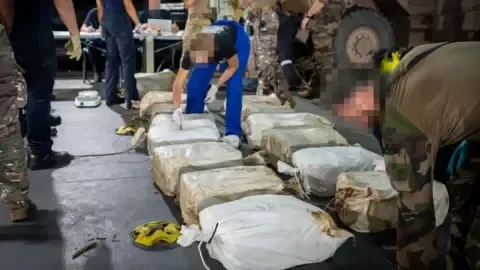
Recent Month (August/September 2025 inferred):
Nearly 12 tonnes of cocaine seized around Polynesia.
At least three separate seizures involving between two and five tonnes each.
August 4, 2025:
A yacht intercepted in French Polynesia carrying 900 kg of cocaine and 180 kg of methamphetamines, valued at €331 million.
A sailboat carrying 1.6 tonnes of cocaine and 232 kg of methamphetamines, along with weapons, was intercepted.
December 2024:
A Spanish-flagged fishing vessel, Raymi, was boarded south of French Polynesia’s Exclusive Economic Zone.
524 kg of cocaine was found on the Raymi, which had 14 crew members from Colombia and Ecuador.
September 25, 2025:
Two French naval vessels seized nearly 10 tonnes of cocaine from an unflagged fishing vessel off the West African coast, acting on intelligence from multiple agencies.
Another report states French Navy seized 9.6 tons of cocaine from a fishing vessel off the coast of West Africa on the same date.
The data indicates a pattern of large-scale drug seizures occurring in distinct geographical areas, including French Polynesia and off the West African coast, often involving naval operations and international intelligence sharing.
Read More: Third Teen Charged in Fatal Stabbing Near Melbourne Hospital on Wednesday
Trafficking Routes and Market Dynamics
The Pacific Ocean, and specifically French Polynesia, has become a focal point for the transit of narcotics, primarily from South America to markets in Australia and New Zealand.
Pacific Transit Hub: French Polynesia's vast maritime zone is identified as a major transit area for drugs.
Intelligence shared between French authorities and regional law enforcement agencies has clearly established the Pacific as a major transit area.
Drugs are trafficked from narcotic-production zones in South America to markets like Australia.
Other Transit Points:
Labs in Southeast Asia are reportedly using Pacific islands such as Palau or Papua New Guinea as transit points for drugs destined for the US market.
The news magazine Proceso suggests French Polynesia is a popular route for methamphetamine and cocaine trafficking originating from Mexico.
Market Focus:
Large amounts of drugs are transported from North and South America for Australian and New Zealand markets.
Australia is noted as one of the major new markets for trafficked drugs.
The analysis of seized shipments points to a sophisticated network of drug routes, with the Pacific playing a crucial role as a conduit for significant quantities of cocaine and methamphetamine.
International Cooperation and Intelligence
The success of these interdictions is attributed to robust cooperation and intelligence sharing among various national and international law enforcement agencies.
Information Exchange:
Seizures often result from intelligence provided by maritime intelligence units, anti-drug authorities, and national crime agencies.
Intelligence sharing between French authorities and regional law enforcement agencies such as the US, Australia, and New Zealand has been crucial.
Collaborating Agencies:
French Customs Service, OFAST (French Office for Biodiversity), and the command of the gendarmerie in French Polynesia.
Regional partners include Australia's Border Force, New Zealand Customs, and the United States Homeland Security Investigations.
The British National Crime Agency has also contributed intelligence.
International Operations:
French naval vessels, operating under initiatives like Operation Corymbe off West Africa, are actively involved.
The US Coast Guard has also conducted significant drug seizures in international waters.
The interconnectedness of international law enforcement, facilitated by timely intelligence sharing, is a key factor in disrupting drug trafficking operations.
Scale of Drug Trafficking in the Pacific and Beyond
The volume of drugs intercepted, particularly cocaine, indicates a substantial scale of illicit trade, with French authorities playing a significant role in global interdiction efforts.

Record Busts:
The French Navy seized a record 87.6 tonnes of drugs worldwide in 2025, with 58 tonnes being cocaine.
The haul on the yacht in French Polynesia was described as a first in the territory's history.
Recent Interceptions:
Off the West African coast, French naval vessels have intercepted large quantities of cocaine, with one operation involving nearly 10 tonnes.
Since the beginning of 2025, 54 tonnes of drugs have been intercepted in the West African operational area by the French Navy.
Market Value: The seized drugs represent significant financial value, with the August 4th haul on the yacht alone valued at €331 million (approximately $360 million USD).
The scale of recent seizures, both in French Polynesia and other global hotspots like West Africa, underscores the pervasive nature of the international drug trade and the extensive efforts required for its containment.
Read More: Noumea Welcomes Cruise Ships with French and Island Charm
Expert Analysis
International organizations and law enforcement officials have highlighted the evolving nature of drug trafficking and the strategic importance of regions like the Pacific.
"Organized criminal groups trafficking cocaine and methamphetamine have expanded their presence in the Pacific."— United Nations
French Home Affairs Minister Bruno Retailleau remarked on the significance of the seizures, stating the Pacific is a major transit area.
The French Ministry of Overseas Territories has prioritized the protection of its territories against the "growing pressure of drug trafficking."
The consistent emphasis from various sources on the expansion of organized crime and the Pacific's role as a transit zone provides a clear signal of the persistent and evolving threat.

Conclusion and Implications
The series of substantial cocaine seizures by French authorities in and around French Polynesia over the past month demonstrates a significant, ongoing drug trafficking challenge in the Pacific. The scale of these operations, totaling nearly 12 tonnes, coupled with seizures in other strategic locations like West Africa, indicates that organized criminal groups are utilizing established and emerging routes to move large quantities of narcotics.
The success of these interdictions is directly linked to enhanced international cooperation and intelligence sharing among agencies from France, the United States, Australia, and New Zealand. This collaborative approach is critical in mapping and disrupting transit routes that connect production zones in South America and Mexico to lucrative markets in Australia and potentially elsewhere.
Read More: Three hearses burned in Roselands arson attack on 4 April 2026
The trend identified by the United Nations, pointing to the expansion of organized criminal groups in the Pacific, suggests that these seizures, while significant, may represent only a portion of the total illicit trade. The increasing involvement of minors in drug-related court cases, as reported by Radio France Internationale, further indicates a deepening societal impact.
Moving forward, continued and strengthened international collaboration, coupled with adaptive strategies to counter evolving trafficking methods, will be essential for French authorities and their partners to address this persistent threat effectively. The vastness of the French Polynesian maritime zone presents a considerable challenge for effective surveillance and interdiction.
Sources
French authorities seize 2.4 tonnes of cocaine from Pacific vessel
Source Context: News report detailing a specific cocaine seizure, contributing to the overall monthly total.
Link: https://www.nzherald.co.nz/world/over-the-past-month-french-authorities-have-seized-nearly-12-tonnes-of-cocaine-around-polynesia/5ECSS4SRXFAEDJCPGBYCXH2XXRTU/
French navy seizes nearly 10 tonnes of cocaine off West African coast
Source Context: Report on a large cocaine seizure by French naval vessels off the coast of West Africa, providing context on French interdiction efforts in other regions.
Massive cocaine and meth haul seized on yacht in French Polynesia worth €331 million
Source Context: Details a specific large seizure on a yacht in French Polynesia, highlighting its historical significance and market value, and discussing transit routes.
Link: https://www.rnz.co.nz/international/pacific-news/568893/massive-cocaine-and-meth-haul-seized-on-yacht-in-french-polynesia-worth-euros-331-million
Record cocaine bust in French Polynesia
Source Context: Reports on a specific cocaine bust on a Spanish-flagged vessel, providing details on the amount and origin of the crew.
Link: https://fijionenews.com.fj/record-cocaine-bust-in-french-polynesia/
French navy seizes 9.6 tons of cocaine from fishing boat off coast of West Africa
Source Context: Similar to the BBC report, this article details a large French naval seizure off West Africa, reinforcing the scale of operations in that region.
Link: https://www.cbsnews.com/news/french-navy-seizes-cocaine-fishing-boat-coast-west-africa/
Sailboat carrying US $381M in drugs from Mexico intercepted in French Polynesia
Source Context: Covers a significant seizure on a sailboat originating from Mexico, providing details on drug types, quantities, and mentions the territorial waters' vastness.
Link: https://mexiconewsdaily.com/news/narcoboat-historic-cocaine-haul-french-polynesia/

/cloudfront-ap-southeast-2.images.arcpublishing.com/nzme/RVI7RFHOI34HTKKRUG3LS6DNVY.jpg)